









Defunding Big Abortion: Can Alternatives Fill the Gap?

This is Issue 110 of the On Point Series.
Executive Summary
- Poised to lose state and federal funding, Planned Parenthood has argued it’s irreplaceable and that alternative providers cannot absorb its entire Medicaid client base, particularly contraceptive clients. These concerns are unwarranted.
- Thousands of alternative providers, including federally qualified health centers, rural health clinics, and doctor’s offices, provide comprehensive health care that Planned Parenthood doesn’t and are important options that can help fill any gaps.
- Pregnancy resource centers can also help fill the gap through the various kinds of free assistance they provide, including ultrasounds, STI tests, education on fertility awareness-based methods for women seeking to manage their fertility, material resources, and counseling.
- Some states that have defunded Planned Parenthood in the past serve as examples that the abortion business is replaceable. By redirecting Medicaid funding to the thousands of alternative women’s health providers, taxpayer funding will instead go to providers who offer real health care, not the nation’s largest abortion chain.
Introduction
Big Abortion is being defunded. In June 2025, the United States Supreme Court ruled in Medina v. Planned Parenthood South Atlantic that states have the right to exclude abortion providers like Planned Parenthood from state Medicaid programs.[1] Then, in July 2025, President Trump signed H.R. 1 (the One Big Beautiful Bill Act) into law, excluding large abortion providers from Medicaid, including Planned Parenthood.[2] As Planned Parenthood and other big abortion businesses challenge this exclusion in court, Planned Parenthood and its advocates have argued that the abortion provider is irreplaceable and that alternative providers cannot absorb its entire Medicaid client base, particularly contraceptive clients.[3] But these concerns are unwarranted. Thousands of alternatives already provide comprehensive health care that Planned Parenthood doesn’t and are important options that can help fill the gap. Additionally, some data from states that have excluded Planned Parenthood from state family planning programs indicates that many factors affect access to health care, and that the health care system adapts after Planned Parenthood stops receiving taxpayer funding.
Alternatives to Planned Parenthood
Federally Qualified Health Centers
Federally qualified health centers (FQHCs) are frequently highlighted as an obvious alternative to Planned Parenthood. These health centers qualify to receive grant funding from the Health Resources and Services Administration (HRSA) in order to make health care available in underserved communities.[4] To participate in HRSA’s Health Center Program, FQHCs must be certified by the Centers for Medicare & Medicaid Services (CMS)[5] to meet certain requirements, including being structured as a nonprofit or public agency[6] and being governed by a board that includes health center patients.[7] Additionally, FQHCs offer services on a sliding fee scale and must not turn away patients due to inability to pay.[8] HRSA also certifies FQHC “Look-Alikes” that meet program requirements but typically do not receive Health Center funding.[9] FHQCs are estimated to serve one in 10 Americans,[10] with the Charlotte Lozier Institute (CLI) estimating that there are 5,500 FQHC service sites that provide women’s health care across the country.[11]
Rural Health Clinics
Rural health clinics (RHCs) receive a special all-inclusive flat reimbursement rate from Medicare, and Medicaid programs in all states are required to cover RHC services.[12] To qualify as a rural health clinic, a health center must be located in a non-urbanized area designated as a Health Professional Shortage Area (HPSA) or Medically Underserved Area (MUA).[13] As part of an effort to address physician shortages, RHCs are typically required to be staffed at least half the time by a nurse practitioner or similar provider.[14] Although RHCs are not required to meet the same standards as FQHCs, such as having nonprofit status or sliding-scale payments, many do.[15] Rural health clinics serve more than one in 10 Americans, including over 60% of rural Americans,[16] and CLI estimates that 3,300 RHCs provide women’s health services nationwide.[17]
Other doctor’s offices
Another key source of care for low-income American women is Medicaid providers apart from those that qualify as FQHCs or RHCs. One 2021 survey by the Kaiser Family Foundation (KFF) found that approximately 78% of OB/GYNs accept Medicaid, including 77% of those in private office-based practices.[18] Seventy-two percent were estimated to be accepting new patients, and higher shares of OB/GYNs in rural areas, as well as in the Midwest and South, reported serving patients on Medicaid.[19]
Pregnancy centers
Pregnancy centers are a sometimes-overlooked option. Yet, they are an important part of the safety net for women and families, especially as they offer various kinds of assistance at no charge to clients. Of the approximately 2,750 pregnancy centers nationwide, around 82% provided ultrasounds in 2022, according to a survey by CLI.[20] Over a third (36%) were estimated to provide testing for sexually transmitted infections, with more than a quarter (28%) providing STI treatments.[21] Additionally, more than one in 10 pregnancy centers offer fertility awareness-based methods (FABMs) for women seeking to manage their fertility[22] – an increasingly needed service as an estimated 22% of women ages 18-24 who used contraception in the past year have reported using an FABM as their primary method of avoiding pregnancy.[23] Furthermore, nonmedical pregnancy centers offer other important services like counseling, material resources, and help accessing other resources in the community.
Could Alternatives Fill the Gap?
Abortion and health care advocates have sometimes raised concerns that FQHCs and other alternatives will not be able to accommodate all of Planned Parenthood’s Medicaid-funded clients, particularly those who go to Planned Parenthood for contraception. In a recent analysis published by the Guttmacher Institute, the authors reiterate this claim, suggesting that removing Planned Parenthood from the Medicaid program would reduce women’s access to contraception and that other clinics that serve publicly funded patients, including FQHCs, could not fill the gap.[24] In fact, the Guttmacher report’s findings indicate that women who choose to will still be able to obtain contraception, even if Planned Parenthood is no longer a Medicaid provider.
According to a fact sheet based on the report, publicly funded clinics would need to absorb the entirety of Planned Parenthood’s contraceptive clients, including a projected 56% increase in the contraceptive patient load at federally qualified health centers.[25] However, although FQHCs and other clinics are an important alternative to Planned Parenthood, they are not the only option for Planned Parenthood clients, as noted above. While the methodology used in the Guttmacher report yields the conclusion that clinics rather than doctor’s offices served the largest percentage of total clients of publicly funded providers,[26] other surveys indicate that large percentages of Medicaid enrollees and uninsured women are served by private doctor’s offices. Guttmacher’s estimates include all women served by publicly funded clinics, regardless of insurance coverage, and only Medicaid-funded visits to private providers. The benefit of this approach is that some taxpayer funding, such as Title X, is applied to entire clinics rather than individual patients. However, this serves to simultaneously inflate the total number of women with a likely need for taxpayer-funded contraception who are served by publicly funded clinics by including women whose contraception was not publicly funded (such as women who used private insurance or paid out of pocket at these clinics), and underestimate the number of women served by private doctor’s offices by excluding those who were uninsured, underinsured, or who may have chosen not to use their Medicaid coverage. In contrast, a 2024 survey by the Kaiser Family Foundation (KFF) found that 52% of uninsured women and 72% of women on Medicaid reported obtaining contraception from a doctor’s office.[27] Similarly, a different analysis by Guttmacher authors of data from the Behavioral Risk Factor Surveillance System found that large percentages of women with public insurance or no insurance obtained contraception from private doctor’s offices or in-store clinics or pharmacies.[28] More than 50% of women with public insurance received contraception this way in 25 out of 26 states with available data.
Additionally, the Guttmacher report acknowledges that despite drops in the number of women served at publicly funded clinics, the majority of women continue to have access to contraception.[29] Between 2010 and 2020, there was a sharp drop in the number of women who received services from publicly funded providers of contraception, which the report notes was largely due to fewer women obtaining contraception from clinics participating in Title X.[30] Starting in 2019, the majority of Planned Parenthood centers decided to exit the Title X program and forgo that funding as a result of the Protect Life Rule, which prevented funds from going to abortion centers.[31] However, the Guttmacher authors acknowledge that large majorities of women continued to access contraception even after Planned Parenthood chose to stop participating in Title X.[32] Reinforcing this point, the 2024 KFF survey found approximately 82% of women of reproductive age used a method of contraception in the past year, including those who used it for other medical purposes, with most of the remainder not using contraception due to pregnancy, trying to conceive, or inability to conceive.[33]
Furthermore, the Guttmacher authors acknowledge that shifts in service provision as a result of COVID-19 also drove patient volumes, and that new alternatives likely filled part of the gap.[34] Unlike previous eras, contraception is now widely available online at a low cost, sometimes covered by Medicaid.[35] Additionally, the U.S. Food and Drug Administration approved the first over-the-counter oral birth control pill in 2023.[36] While limited medical oversight of potent hormonal medications has significant downsides and can carry risks,[37] these new developments do mean that Planned Parenthood and other clinic providers are no longer the only option for women seeking contraception.
Despite the widespread availability of contraception, the Guttmacher report cautions that women may be unable to access their preferred method;[38] similarly, a report published by KFF notes that FQHCs and RHCs do not always provide the full range of contraceptive options,[39] making it more difficult for low-income women to use the method of their choice. However, women’s contraceptive choices are not solely driven by access or affordability; KFF’s 2024 survey data shows that just 15% of the women who were not using their preferred contraceptive method cited cost concerns as the reason, although uninsured women were more likely to report that they stopped using a particular method due to cost.[40] Only 9% reported that their preferred method was unavailable. Still, it is not clear that all preferred methods are widely provided by Planned Parenthood. For instance, of women who were not using their preferred method, 41% would prefer permanent contraception, including 18% who preferred female sterilization and 23% who preferred male sterilization for their partner.[41] Planned Parenthood is not a major provider of permanent sterilization, reporting just 26 female sterilizations and 5,388 vasectomies in its 2023-2024 report,[42] or approximately 1% of the more than 500,000 vasectomies performed each year.[43]
Alternatives Provide Comprehensive Health Care that Planned Parenthood Does Not
Much of the debate on the replaceability of Planned Parenthood has focused on contraception access. Compared to alternative providers, Planned Parenthood is not a major provider of other health care services. According to an analysis of Medicaid data by the Kaiser Family Foundation, in 2021, Planned Parenthood served just 11% of Medicaid family planning clients, a category which includes not just contraception but STI services, pap smears, breast exams, and other related health care such as pregnancy testing.[44] Contraception made up the bulk of Planned Parenthood’s family planning services, with 85% of Planned Parenthood’s female Medicaid family planning clients receiving contraception, according to the KFF analysis.[45] In comparison, only 57% received STI services, and 47% were provided “gynecological services, including pregnancy testing,” equating to approximately 5-6% of all women on Medicaid receiving family planning services.[46] As described above, Planned Parenthood’s contraceptive clients can be served by other providers, and Planned Parenthood serves only a small fraction of Medicaid enrollees who are seeking other family planning services.
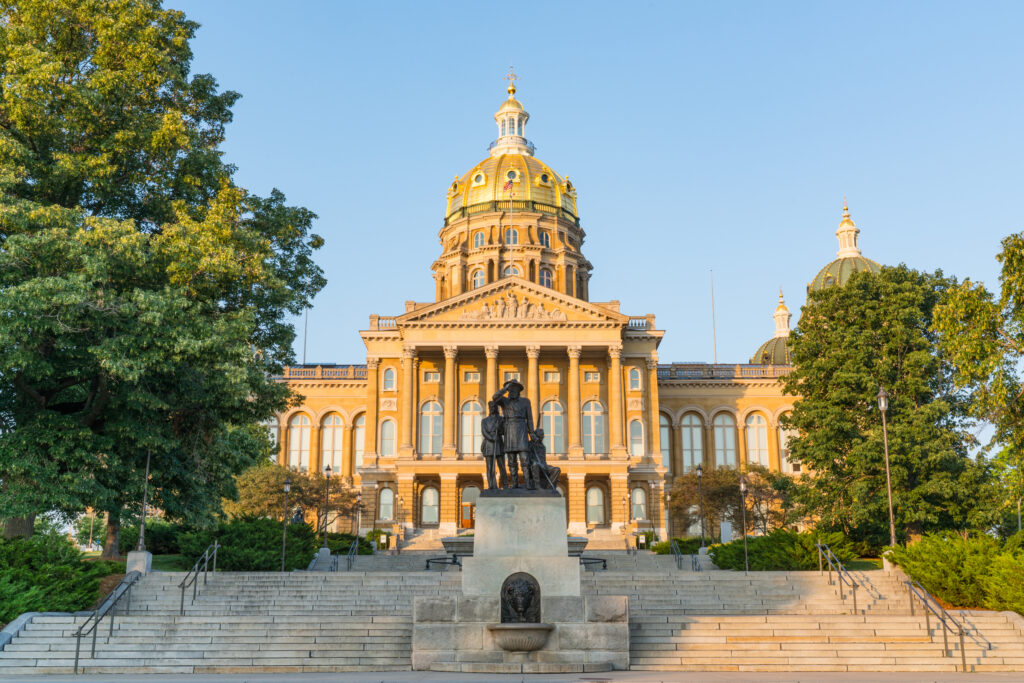
Furthermore, Planned Parenthood’s Medicaid family planning clients are concentrated in a few states, with Planned Parenthood serving less than 5% of women on Medicaid in over half the states.[47] In Iowa, where Planned Parenthood recently closed four centers,[48] Planned Parenthood served just 7% of Medicaid family planning clients in 2021.[49] In Michigan and Texas, other states that have recently seen Planned Parenthood closures,[50] Planned Parenthood served 4% and 0.2%, respectively.[51] Many other Medicaid providers are available to fill any gaps left by Planned Parenthood’s exit from the Medicaid program. For example, of the four Iowa Planned Parenthood centers that recently closed, all have multiple OB/GYN clinics that accept Medicaid within a five-mile radius, and most of these clinics have multiple OB/GYNs on staff.[52]
In contrast to Planned Parenthood, FQHCs and other alternatives provide a substantially greater volume of preventive care. In 2024, FQHCs provided 2,287,075 pap test visits for 2,063,097 patients,[53] compared to the 173,397 pap tests reported by Planned Parenthood.[54] If FQHCs were to absorb all Planned Parenthood pap test clients, they would need to increase their total volume of pap test patients by just 8%. FQHC service sites provided mammograms (which Planned Parenthood does not offer) to 1.9 million patients in 2024.[55] FQHCs provided 4.5 million HIV test visits to 3.9 million patients,[56] while Planned Parenthood reported just 769,851 HIV tests.[57] These numbers reflect services performed by FQHCs and Look-Alikes alone; rural health clinics, doctor’s offices, and pregnancy centers serve thousands of women in addition to those seen at federally qualified health centers. Beyond these services, FQHC and RHC service sites and private doctor’s offices provide important care that is unavailable at most or all Planned Parenthoods, including pediatric and dental care, mental health care, and care for patients with chronic diseases. Pregnancy centers provide education, material resources, and counseling, helping clients access the services they need.
Some advocates have raised concerns that patients will lose access to primary care services if Planned Parenthood locations close,[58] but Planned Parenthood is not a major provider of primary care. In its 2024 annual report, Planned Parenthood reported 61,249 primary care visits.[59] Elsewhere, Planned Parenthood has reported a total of 1,539,160 Medicaid-funded non-abortion visits.[60] Assuming that all primary care visits were made by Medicaid enrollees (which is unlikely, since Planned Parenthood also sees clients who are not enrolled in Medicaid), this would mean that primary care represented at most 4% of Medicaid non-abortion visits; the actual percentage is likely lower. Planned Parenthood’s annual report notes that primary care “may include treatment of acute and chronic disease, minor office procedures, evaluations for referral to specialists, authorization for hospital care, health assessments, and well-person/well-child preventive maintenance” and that some centers offer limited family practice services.[61] However, these services are not available at every location, and when services are available, they are often limited. Of 42 Planned Parenthood centers that have closed or have announced upcoming closures since the beginning of 2025, just 16 offered a minimum of basic primary care screenings like blood pressure, thyroid, or cholesterol screening, with one center cautioning that services provided were limited and that the center could not serve as patients’ primary care provider.[62] Only two of these 16 centers advertised comprehensive primary care that included management of chronic diseases.[63]
Past Defunding Efforts Suggest that Planned Parenthood Is Replaceable
To emphasize its role in reproductive health care in the United States, Planned Parenthood has highlighted past examples of state action to exclude the abortion business from state family planning programs that make publicly funded contraception, STI testing, and other reproductive health care available to low income people.[64] Planned Parenthood argues that these examples of state-level defunding illustrate the adverse impact that Planned Parenthood’s exclusion from government programs has on women’s access to health care and contraception. State family planning environments are complex, and many cultural and economic factors play a role in available services, whether women access those services, and abortion and birth rates in each state. This article will not exhaustively analyze each state program, but a brief look at the numbers in a few key states shows that the presence or absence of Planned Parenthood is not the sole driver of factors related to women’s use of family planning safety net programs.
Planned Parenthood points to an 86% drop in the number of women served by Iowa’s family planning program after Planned Parenthood stopped participating in the program in 2017.[65] However, as CLI has noted previously, Iowa birth and abortion totals were lower in 2019 than in 2016, the year before Planned Parenthood left the program.[66] Despite continuing concerns about the low numbers of women accessing contraception via Iowa’s family planning program, in 2023, the total number of abortions performed in Iowa was lower than the total performed in 2016, as estimated by the Guttmacher Institute.[67] Total Iowa births as well as the subset of births covered by Medicaid were down approximately 8% from 2016.[68] Planned Parenthood’s exclusion from Iowa’s family planning program did not lead to obvious increases in births and abortions in the state.
Similarly, after Planned Parenthood was excluded from Kansas’ Title X program in 2011, setting off litigation that was finally resolved in 2014, reports from the U.S. Department of Health and Human Services (HHS) showed that Kansas Title X clients dropped from 38,461 in 2011 to 24,047 in 2015, or a decline of more than 14,000.[69] Media coverage attributed this steep drop to Planned Parenthood’s exit from the Title X program,[70] but data from the Guttmacher Institute suggests that in reality, most of the decline was due to fewer clients served by health departments, rather than solely attributable to Planned Parenthood’s exclusion from Title X.[71] Based on Guttmacher’s estimates, contraceptive clients served by Planned Parenthood centers in Kansas participating in Title X fell by only 2,680 between 2011 and 2015, meaning that the majority of the drop was among non-Planned Parenthood providers.[72]
Planned Parenthood has also cited a report from advocacy organization Every Texan[73] on the impact of Texas’ decision to exclude the abortion business from Texas’ family planning program (now called Healthy Texas Women) in 2012. The report notes that in the early years after Planned Parenthood exited the program, the family planning program enrolled fewer participants, and those enrollees made fewer visits for services.[74] Other research has found that counties with Planned Parenthood centers saw drops in long-acting reversible contraceptive placements compared to counties without Planned Parenthoods.[75] However, in 2016, Texas began a concerted effort to increase access, automatically enrolling eligible women and expanding outreach to raise awareness of available services, which Every Texan acknowledges led to a “sharp increase” in enrollment.[76] Additionally, Texas more than doubled the number of providers participating in its family planning program. Every Texan cautions that enrollment numbers alone are not a sufficient measurement of access, because a lower percentage of enrolled participants utilized services in 2023 than in 2011.[77] But although the percentage of enrollees using services fell, the number of clients served actually increased because more people were enrolled in 2023 than in 2011.[78] Healthy Texas Women reported 142,220 clients accessing services in 2023,[79] compared to 115,226 in 2011 served by the family planning program.[80] Evidence suggests that enrollment and participation in Texas’ family planning programs have been driven by the state’s investment and promotion, rather than by Planned Parenthood’s participation in the program.
Conclusion
To protest defunding, Planned Parenthood and its advocates have pointed to the health care that the abortion chain provides to low-income women, but these services are dwarfed by thousands of alternatives around the country that do not focus on abortion. When Planned Parenthood has been defunded at the state level, state programs have adapted, and women have gone elsewhere for care. Planned Parenthood is the dominant abortion chain in the United States, responsible for more than 400,000 abortions a year.[81] Over the past few decades, Planned Parenthood has seen fewer clients, even as abortion totals have soared and revenue has increased, including government funding. Planned Parenthood’s real business, and its main focus, is abortion.[82] Redirecting Medicaid funding to the thousands of alternative women’s health providers will not prevent women from accessing health care; it means that taxpayer funding will go to providers of real health care, not the nation’s largest abortion chain.
Tessa Cox is Senior Research Associate at Charlotte Lozier Institute.
[1] Medina v. Planned Parenthood South Atlantic, 606 US _ (2025), https://www.supremecourt.gov/opinions/24pdf/23-1275_e2pg.pdf
[2] Pub. L. No. 119-21, https://www.congress.gov/bill/119th-congress/house-bill/1
[3] See, e.g., “Federally Qualified Health Centers Could not Readily Replaced Planned Parenthood,” Guttmacher Institute, last updated June 4, 2025, accessed September 9, 2025, https://www.guttmacher.org/news-release/2025/federally-qualified-health-centers-could-not-readily-replace-planned-parenthood.
[4] “Health Center Program Award Recipients,” HRSA, last reviewed June 2024, accessed September 9, 2025, https://www.hrsa.gov/opa/eligibility-and-registration/health-centers/fqhc
[5] “Federally Qualified Health Centers (FQHCs) and the Health Center Program,” RHIhub, last updated August 11, 2025, accessed September 9, 2025, https://www.ruralhealthinfo.org/topics/federally-qualified-health-centers
[6] “Chapter 1: Health Program Eligibility,” HRSA, last reviewed March 2025, accessed September 9, 2025, https://bphc.hrsa.gov/compliance/compliance-manual/chapter1
[7] “What is a Health Center?,” HRSA, last reviewed April 2025, accessed September 9, 2025, https://bphc.hrsa.gov/about-health-center-program/what-health-center
[8] Ibid.
[9] “Health Center Program Look-Alikes,” HRSA, last reviewed June 2024, accessed September 9, 2025, https://www.hrsa.gov/opa/eligibility-and-registration/health-centers/fqhc-look-alikes. Though “Look-Alikes” (LAL) do not receive specific Health Center program funding, their designation as LALs make them eligible to receive funding for services provided to Medicare and Medicaid patients, drug discounts, and other funding and technical assistance. See https://bphc.hrsa.gov/funding/funding-opportunities/health-center-program-look-alikes
[10] “America’s Health Centers: By the Numbers,” National Association of Community Health Centers, August 16, 2025, accessed September 9, 2025, https://www.nachc.org/resource/americas-health-centers-by-the-numbers/
[11] “Fact Sheet: Community Health Centers Outnumber Planned Parenthood Facilities 15 to 1,” Charlotte Lozier Institute, last updated May 12, 2025, accessed September 9, 2025, https://lozierinstitute.org/fact-sheet-community-health-centers-outnumber-planned-parenthood-facilities-15-to-1/
[12] “Rural Health Clinics (RHCs),” RHIhub, last updated April 7, 2025, accessed September 9, 2025, https://www.ruralhealthinfo.org/topics/rural-health-clinics
[13] “Fact Sheet: Rural Health Clinic,” CMS, June 2007, accessed September 9, 2025, https://www.cms.gov/files/document/rhcfactsheetpdf
[14] “Rural Health Clinics,” CMS, last modified September 10, 2024, accessed September 9, 2025, https://www.cms.gov/medicare/health-safety-standards/certification-compliance/rural-health-clinics
[15] RHIhub, “Rural Health Clinics,” https://www.ruralhealthinfo.org/topics/rural-health-clinics
[16] “Sixty Percent of Rural Americans Served by Rural Health Clinics,” NARHC, April 7, 2023, accessed September 9, 2025, https://www.narhc.org/News/29910/Sixty-Percent-of-Rural-Americans-Served-by-Rural-Health-Clinics
[17] Charlotte Lozier Institute, “Fact Sheet: Community Health Centers Outnumber Planned Parenthood Facilities 15 to 1.”
[18] Gabriela Weigel, Brittni Frederiksen, Usha Ranji, et al., “OBGYNs and the Provision of Sexual and Reproductive Health Care: Key Findings from a National Survey,” KFF, February 25, 2021, accessed September 9, 2025, https://www.kff.org/report-section/obgyns-and-the-provision-of-sexual-and-reproductive-health-care-key-findings-from-a-national-survey-medicaid/
[19] Ibid.
[20] “Hope for a New Generation,” Charlotte Lozier Institute, last updated December 2024, accessed September 9, 2025, https://lozierinstitute.org/wp-content/uploads/2024/12/Pregnancy-Center-Report-Dec-2024-Interactive.pdf
[21] Ibid.
[22] Ibid.
[23] Brittni Frederiksen, Karen Diep, Alina Salganicoff, “Contraceptive Experiences, Coverage, and Preferences: Findings from the 2024 KFF Women’s Health Survey,” KFF, November 22, 2024, accessed September 9, 2025, https://www.kff.org/womens-health-policy/contraceptive-experiences-coverage-and-preferences-findings-from-the-2024-kff-womens-health-survey/
[24] Jennifer J. Frost, Nakeisha Blades, Ayana Douglas-Hall, et al., “Publicly Supported Family Planning Services in the United States: Likely Need, Availability and Use, 2020,” Guttmacher Institute, May 2025, accessed September 9, 2025, https://www.guttmacher.org/report/publicly-supported-FP-services-US-2020
[25] Guttmacher Institute, “Federally Qualified Health Centers Could not Readily Replaced Planned Parenthood.”
[26] Frost et al., “Publicly Supported Family Planning Services in the United States.”
[27] Frederiksen et al., “Contraceptive Experiences, Coverage, and Preferences: Findings from the 2024 KFF Women’s Health Survey.”
[28] Hannah Olson and Megan L. Kavanaugh, “Where do Female Contraceptive Users get their Methods, and does this Differ by Insurance Coverage? A State-Level Examination,” Contraception 145 (2025), https://doi.org/10.1016/j.contraception.2025.110834
[29] Frost et al., “Publicly Supported Family Planning Services in the United States.”
[30] Ibid.
[31] Mary E. Harned, “The Protect Life Rule: Defunding Abortion in Title X,” On Point, no. 106 (2025), https://lozierinstitute.org/the-protect-life-rule-defunding-abortion-in-title-x/
[32] Frost et al., “Publicly Supported Family Planning Services in the United States.”
[33] Frederiksen et al., “Contraceptive Experiences, Coverage, and Preferences.”
[34] Frost et al., “Publicly Supported Family Planning Services in the United States.”
[35] E.g., see: “Where can I get birth control pills online?” Free the Pill, November 4, 2022, accessed September 9, 2025, https://freethepill.org/resources/where-can-i-get-birth-control-pills-online
[36] “FDA Approves First Nonprescription Daily Oral Contraceptive,” FDA, July 13, 2023, accessed September 9, 2025, https://www.fda.gov/news-events/press-announcements/fda-approves-first-nonprescription-daily-oral-contraceptive
[37] Ingrid Skop, “Fact Sheet: Opill, the First Over-the-Counter-Hormonal Contraception,” Charlotte Lozier Institute, October 12, 2023, accessed September 9, 2025, https://lozierinstitute.org/fact-sheet-opill-the-first-over-the-counter-hormonal-contraception/
[38] Frost et al., “Publicly Supported Family Planning Services in the United States.”
[39] Brittni Frederiksen, Usha Ranji, Ivette Gomez, et al., “Recent Policy Proposals Could Weaken Reproductive Health Safety Net as More People Become Uninsured,” KFF, July 28, 2025, accessed September 10, 2025, https://www.kff.org/womens-health-policy/issue-brief/recent-policy-proposals-could-weaken-the-reproductive-health-safety-net-as-more-people-become-uninsured/
[40] Frederiksen et al., “Contraceptive Experiences, Coverage, and Preferences.”
[42] “A Force for Hope: Planned Parenthood Annual Report 2023-2024,” Planned Parenthood, accessed September 10, 2025, https://www.plannedparenthood.org/uploads/filer_public/ec/6d/ec6da0d6-98e5-4278-8d11-99a5cba8e615/2024-ppfa-annualreport-c3-digital.pdf
[43] “Vasectomy,” Cleveland Clinic, last reviewed April 16, 2025, accessed September 10, 2025, https://my.clevelandclinic.org/health/procedures/4423-vasectomy
[44] Brittni Frederiksen, Ivette Gomez, Alina Salganicoff, “The Impact of Medicaid and Title X on Planned Parenthood,” KFF, April 16, 2025, accessed September 10, 2025, https://www.kff.org/medicaid/issue-brief/the-impact-of-medicaid-and-title-x-on-planned-parenthood/
[45] Ibid.
[46] Ibid.
[47] Ibid.
[48] See https://sbaprolife.org/lifesavinglaws#pp
[49] Frederiksen et al., “The Impact of Medicaid and Title X on Planned Parenthood.”
[50] See https://sbaprolife.org/lifesavinglaws#pp
[51] Frederiksen et al., “The Impact of Medicaid and Title X on Planned Parenthood.”
[52] CLI analysis of https://secureapp.dhs.state.ia.us/providersearche/Default.aspx
[53] See HRSA Data Warehouse, national data from 1,359 awardees, Table 6A: Selected Diagnoses and Services Rendered, https://data.hrsa.gov/topics/healthcenters/uds/overview/national/table?tableName=6A&year=2024; national data from 153 Look-Alikes, Table 6A: Selected Diagnoses and Services Rendered, https://data.hrsa.gov/topics/healthcenters/uds/overview/national-lookalikes/table?tableName=6A&year=2024
[54] Planned Parenthood Annual Report 2023-2024.
[55] See HRSA Data Warehouse, national data from 1,359 awardees, Table 6A: Selected Diagnoses and Services Rendered, https://data.hrsa.gov/topics/healthcenters/uds/overview/national/table?tableName=6A&year=2024 national data from 153 Look-Alikes, Table 6A: Selected Diagnoses and Services Rendered, https://data.hrsa.gov/topics/healthcenters/uds/overview/national-lookalikes/table?tableName=6A&year=2024
[56] Ibid.
[57] Planned Parenthood Annual Report 2023-2024.
[58] See, e.g., Sara DiNatale, “He Relied on Planned Parenthood for Primary Care. Now Trump Cuts Leave Him Doctorless,” July 28, 2025, accessed September 10, 2025, https://www.sfchronicle.com/politics/article/planned-parenthood-disabled-20786785.php
[59] Planned Parenthood Annual Report 2023-2024.
[60] Kari White, Samuel L. Dickman, Julia Strasser, et al., “The Risks of Excluding Qualified Family Planning Providers from Medicaid,” JAMA 334, no. 10 (2025): 857-858, doi:10.1001/jama.2025.124941
[61] Planned Parenthood Annual Report 2023-2024.
[62] CLI analysis of Planned Parenthood center websites; see “Wellness and Preventive Care in Saint Johnsbury, VT,” Internet Archive, accessed September 10, 2025, https://web.archive.org/web/20241103021517/https://www.plannedparenthood.org/health-center/vermont/saint-johnsbury/05819/st-johnsbury-health-center-4092-91770/wellness-preventive-care
[63] Planned Parenthood San Mateo and Planned Parenthood Westside (Santa Cruz)
[64] “IPM: ‘Defunding’ Planned Parenthood Would Have Devastating Consequences for Communities Across the Country,” Planned Parenthood, February 3, 2025, accessed September 10, 2025, https://www.plannedparenthood.org/about-us/newsroom/press-releases/ipm-defunding-planned-parenthood-would-have-devastating-consequences-for-communities-across-the-country
[65] Ibid.
[66] Tessa Cox, “Abortion Reporting: Iowa (2019),” Charlotte Lozier Institute, December 16, 2020, accessed September 10, 2025, https://lozierinstitute.org/abortion-reporting-iowa-2019/
[67] Rachel K. Jones, Elizabeth Witwer, Jenna Jerman, “Abortion Incidence and Services Availability in the United States, 2017,” Guttmacher Institute, September 2019, accessed September 10, 2025; see also Monthly Abortion Provision Study https://www.guttmacher.org/monthly-abortion-provision-study
[68] CLI saved results August 11, 2025 at http://wonder.cdc.gov/controller/saved/D149/D445F853
[69] “Title X Family Planning Annual Report: 2011 National Summary,” HHS, last revised August 2014, accessed September 10, 2025, https://opa.hhs.gov/sites/default/files/2020-07/fpar-2011-national-summary.pdf; “Title X Family Planning Annual Report: 2015 National Summary,” HHS, last revised July 2017, accessed September 10. 2025, https://opa.hhs.gov/sites/default/files/2020-07/title-x-fpar-2015.pdf
[70] Roxana Hegeman, “Feds Push Back on State Targeting Planned Parenthood Funds,” September 24, 2016, accessed September 10, 2025, https://apnews.com/domestic-news-domestic-news-general-news-03c09aa8420a4bce98a413449129d2f8#
[71] Jennifer J. Frost, Mia R. Zolna, Lori F. Frohwirth, “Contraceptive Needs and Services, 2010,” Guttmacher Institute, July 2013, accessed September 10, 2025, https://www.guttmacher.org/sites/default/files/report_pdf/contraceptive-needs-2010.pdf; Jennifer J. Frost, Lori F. Frohwirth, Nakeisha Blades, et al., “Publicly Funded Contraceptive Services at U.S. Clinics, 2015” Guttmacher Institute, April 2017, accessed September 10, 2025, https://www.guttmacher.org/sites/default/files/report_downloads/publicly_funded_contraceptive_services_2015_tables_1-7.pdf
[72] Ibid.
[73] “Limited Access: How Provider Exclusion Has Reshaped Care for Texas Women,” Every Texan, May 2025, accessed September 10, 2025, https://everytexan.org/wp-content/uploads/2025/06/ProviderExclusion_Report_EveryTexan_May2025.pdf
[74] Ibid.
[75] Amanda J. Stevenson, Imelda M. Flores-Vazquez, Richard L. Allgeyer, et al., “Effect of Removal of Planned Parenthood from the Texas Women’s Health Program,” NEJM 374, no. 9 (2016): 853-860, doi:10.1056/NEJMsa1511902
[76] Every Texan, “Limited Access: How Provider Exclusion Has Reshaped Care for Texas Women.”
[77] Ibid.
[78] See average monthly enrollment of 434,842 in 2023: “Texas Women’s Health Programs Report: Fiscal Year 2023,” Texas HHS, accessed September 10, 2025, https://www.hhs.texas.gov/sites/default/files/documents/texas-womens-health-programs-report-2023.pdf (p. 12), compared to average monthly enrollment of 127,536 in 2011: Lesley French, “HHS Women’s Health Update,” Texas HHS, March 1, 2018, accessed September 10, 2025, https://web.archive.org/web/20230328030604/https://everytexan.org/images/HHSC_Presentation_to_Texas_House_Womens_Health_Caucus__With_Eligibility_Slide_3.1.2018.pdf (p. 9).
[79] Texas HHS, “Texas Women’s Health Programs Report: Fiscal Year 2023.” (p. 9)
[80] French, “HHS Women’s Health Update.”
[81] Planned Parenthood Annual Report 2023-2024.
[82] James Studnicki, John W. Fisher, Elyse Gaitan, et al., “Inducing Demand for Abortion in the Absence of Medical Necessity: Planned Parenthood and Abortion Drugs,” Fortune Journal of Health Sciences 8, no. 2 (2025): 516-522, doi:10.26502/fjhs.301