



Search Icon
close-panel

Charlotte Lozier Institute

Phone: 202-223-8073
Fax: 571-312-0544

2776 S. Arlington Mill Dr.
#803
Arlington, VA 22206

Get Notifications

Sign up to receive email updates from Charlotte Lozier Institute.

This field is for validation purposes and should be left unchanged.

close-panel

Become A Defender of Life

Your donation helps us continue to provide world-class research in defense of life.

DONATE

Charlotte Lozier Institute

Phone: 202-223-8073
Fax: 571-312-0544

2776 S. Arlington Mill Dr.
#803
Arlington, VA 22206

The
Voyage of Life

Be amazed. Modern medicine and science tell us more about the development of each human being from fertilization to birth than ever before.  Join us on a journey where science enlightens us at every step, from the first time a human heart beats, toes wiggle, ears hear music, and unborn eyes see light – all before being born into the world.  It’s a journey you’ll never forget!
Pregnancy Calendar &
Due Date Calculator

Calculate Now
Prev
Weeks 0 and 1
Week 2
Week 3
Week 4
Week 5
Week 6
Week 7
Week 8
Week 9
Week 10
Week 11
Week 12
Week 13
Week 14
Weeks 15 & 16
Weeks 17 & 18
Weeks 19 & 20
Weeks 21 & 22
Month 6
Month 7
Month 8
Month 9
Birth
Next
Pregnancy Phases
Human Prenatal Age
  • Preparing for Pregnancy
Sperm formation, egg maturation and ovulation

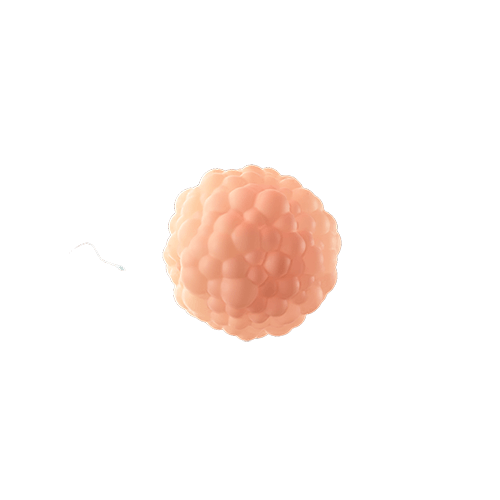
A new human being forms at fertilization, when a man’s sperm fuses with a woman’s egg. Within the next two decades, that newborn becomes a 30 trillion cell adult! Before a new life can form, a woman’s body must prepare for pregnancy, and a man’s body must produce sperm.

Human Prenatal Age
  • Post-conception week 0
  • Days of life 0-6
  • Gestational Week 2
Fertilization and journey to the uterus

The sperm and the egg unite to create a unique single-celled human, the zygote. From day one the unborn baby has all the genetic instructions to form the child’s distinct hair color, height and gender. There is enough genetic variation that no two humans will ever be genetically identical! In the week after conception this tiny life follows a predictable set of cell divisions while travelling through the mother’s fallopian tubes.

Human Prenatal Age
  • Post-conception week 1
  • Days of life 7-13
  • Gestational Week 3
Implantation and hormone changes

Just as infants need a safe, nourishing environment to grow outside the womb, the embryo needs a safe place to grow for the next 37 weeks. This week, the unborn baby attaches to his mother in a process called implantation.

Human Prenatal Age
  • Post-conception week 2
  • Days of life 14-20
  • Gestational Week 4
The emergence of a body plan

At first, the zygote and early embryonic cells can become almost any type of cells in the human body. Now the cells specialize more and more based on their position. Brain tissue and heart tissue begin to develop. This week, a home pregnancy test can accurately confirm the whether a new human life is growing within the mother.

Human Prenatal Age
  • Post-conception week 3
  • Days of life 21-27
  • Gestational Week 5
First heartbeat and neural tube development

In week 5, the heart starts beating rhythmically, moving oxygen throughout the developing baby. Without the beating heart, the unborn baby cannot survive. The neural tube, which becomes the brain and spinal cord, also forms.

Human Prenatal Age
  • Post-conception week 4
  • Days of life 28-34
  • Gestational Week 6
Heartbeat detectable by ultrasound

In week 6, the heartbeat can usually be detected in an ultrasound. The heart keeps beating rhythmically, moving oxygen-rich blood throughout the developing embryo. The eyes, lungs and limbs start taking shape.

Human Prenatal Age
  • Post-conception week 5
  • Days of life 35-41
  • Gestational Week 7
First movements and responses to touch

In week 7, the unborn baby is 10,000 times bigger than he was at conception, about the size of a blueberry. The unborn baby starts moving and responds to light touch. Almost all the major organs have started to form, and the brain starts growing at an average rate of 250,000 neurons per minute.

Human Prenatal Age
  • Post-conception week 6
  • Days of life 42-48
  • Gestational Week 8
Brain activity and new movement patterns

In week 8, brain waves have been recorded from a baby the size of a jellybean, showing that neurons are already beginning to connect. The baby can quickly move his arms and legs, as if startled, showing that the nerves and muscles are already working together. The face is taking shape with eyes, nose, mouth, and a tiny tongue.

Human Prenatal Age
  • Post-conception week 7
  • Days of life 49-55
  • Gestational Week 9
Hiccups and spontaneous movements

In week 9, the unborn baby spontaneously moves his arms, and legs one at a time. The baby even hiccups! The baby’s heartbeat peaks this week around 170 beats per minute, nearly twice as fast as mom’s. Tiny toes start forming. Boys and girls start growing differently.

Human Prenatal Age
  • Post-conception week 8
  • Days of life 56-62
  • Gestational Week 10
Fingers, toes, and right-handedness

By week 10, more than 90% of the body parts have formed. Already, the unborn baby will show a preference for either his right or left hand as he moves in the womb. The unborn baby’s heart now has all four chambers.


Human Prenatal Age
  • Post-conception week 9
  • Days of life 63-69
  • Gestational Week 11
Complex behaviors

In week 11, the baby is called a fetus. The baby moves a lot, and does not usually stay still for more than 5 minutes at a time! The baby can yawn, stretch, and touch his face. The first hair follicles start growing. Male and female genitalia start developing.

Human Prenatal Age
  • Post-conception week 10
  • Days of life 70-76
  • Gestational Week 12
Fingerprints and fingernails

By week 12, the fetus’s heart has beat over 10 million times! The fingernails start growing and fingerprints start forming. If something tickles the sole of the fetus’s foot, he will curl his toes. The earliest in utero surgeries have been performed at this age, although most are performed later in pregnancy.

Human Prenatal Age
  • Post-conception Week 11
  • Days of life 77-83
  • 3 Months Pregnant
  • Gestational Week 13
Facial features and practice breathing

In week 13, the unborn baby’s heart pumps about 6 quarts of blood per day, enough to fill a large slow-cooker. The tissue under the nose has fused, giving the baby a unique facial identity. The fetus practices breathing and starts peeing in the amniotic fluid.

Human Prenatal Age
  • Post-conception Week 12
  • 4 Months Pregnant
  • Gestational Week 14
Goal-oriented hand movements

In week 14, the fetus moves his hands more slowly as he approaches his face, showing that he is planning his movements. This week an ultrasound can reveal whether the baby is a boy or a girl. The intestines start absorbing nutrients and several eyelashes have formed.

Human Prenatal Age
  • Post-conception week 13 & 14
  • 4 Months Pregnant
  • Gestational Weeks 15 & 16
Sensory systems and pain

Scientific advancements provide clear evidence that the unborn baby feels pain by 15 weeks gestation, and possibly even earlier. The unborn baby may start to smile and can move each finger separately. Boys and girls move differently in the womb.

Human Prenatal Age
  • Post-conception week 15&16
  • 4 Months Pregnant
  • Gestational Weeks 17&18
Movements mom can feel

In weeks 17 and 18, the mother may feel her unborn child moving. Also, a fetus as young as 18 weeks responds to a painful procedure with a stress response. Antibodies from the mother may transfer to the fetus now. Mature tastebuds cover the unborn baby’s tongue.

Human Prenatal Age
  • Post-conception week 17&18
  • 5 Months Pregnant
  • Gestational Weeks 19&20
Responding to sound

In weeks 19 and 20, the unborn baby may start responding to loud noises like a car horn. The unborn child clearly responds to a painful procedure with grimacing, recoiling, and a spike in stress hormones. His vocal cords sometimes vibrate as if he is crying. The heart has beat over 20 million times, pumping enough blood each day to fill a small car’s gas tank.

Human Prenatal Age
  • Post-conception week 19&20
  • 5 Months Pregnant
  • Gestational Weeks 21&22
Preparing for life outside the womb

The youngest premature baby to survive was born at 21 weeks gestation (133 days premature). As hospitals invest in life-saving technologies to save their smallest, most miraculous patients, the age of viability gets younger and younger, bringing joy and hope to many families.

Human Prenatal Age
  • Post-conception week 21-25
  • 6 Months Pregnant
  • Gestational Weeks 23-27
Response to sound, pressure, and light

In month six, the fetus responds to loud noises with a startle response. While every baby is different, most of the unborn open their eyes this month. The baby is beginning to sense light, and is already drawn to faces. More than half of premature babies born at the beginning of this month survive, and by the end of the month more than 90% of premature babies survive.

Human Prenatal Age
  • Post-conception week 26-29
  • 7 Months Pregnant
  • Gestational Weeks 28-31
Smelling, hearing, and learning

By month 7, more than 92% of premature babies survive. The unborn baby now cycles through a variety of sleep and wake patterns, starts to smell the amniotic fluid, shows signs of simple learning. Scientists can even measure brain responses to light and sound in the womb. This month, the brain contains more neurons than it will at any other time in life.

Human Prenatal Age
  • Post-conception week 30-33
  • 8 Months Pregnant
  • Gestational Weeks 32-35
Taste, smell, and long-term learning

In month eight the baby’s brain is ready to learn! At 34 weeks, neurons are creating 40,000 new connections every second. With repeated exposures, the unborn baby can learn flavors, nursery rhymes, songs, and even words that he will recognize after birth! He can recognize his mother’s voice and makes happier faces when she eats sweeter foods.

Human Prenatal Age
  • Post-conception week 34-38
  • 9 Months Pregnant
  • Gestational Weeks 36-40
Preparing for birth

In the last month, the baby prepares for birth by gaining about half a pound each week. After 37 weeks, he is considered full-term and he is ready to breathe on his own. After birth, the baby prefers flavors he encountered in the womb. He  will also imitate the melody of his mother’s native language when he cries, so babies from different cultures sound different.

Human Prenatal Age
  • Post-conception week 37+
  • 9 Months Pregnant
  • Gestational Weeks 39+
Labor, delivery, and new beginnings

Around 40 weeks, the baby is born! At birth, the baby is ready to clear amniotic fluid from his lungs and take his first breath. Though his vision is limited, he can already recognize his mother by scent, voice, and even sight. Far from passive beings focused on survival, newborns show an incredible ability to sense, learn, and respond to the world around them.