





There are many competing theories about what causes nausea and vomiting in pregnancy, commonly known as ‘morning sickness.’ Some scientists have proposed that surging levels of hCG contribute to nausea during pregnancy.17 However, more recent research suggests that a placenta-produced hormone known as Growth Differentiation Factor 15 (GDF15) is likely the key biological trigger for nausea during pregnancy. Intriguingly, women do not seem to be as sensitive to GDF15 after a few months, and women with higher baseline levels of GDF15 are less sensitive to the increases in this hormone during pregnancy.18
Become A Defender of Life
Your donation helps us continue to provide world-class research in defense of life.
DONATECharlotte Lozier Institute
Phone: 202-223-8073
Fax: 571-312-0544
2776 S. Arlington Mill Dr.
#803
Arlington, VA 22206
Week 3
Implantation and hormone changes
- Post-conception week 1
- Days of life 7-13
- Gestational Week 3
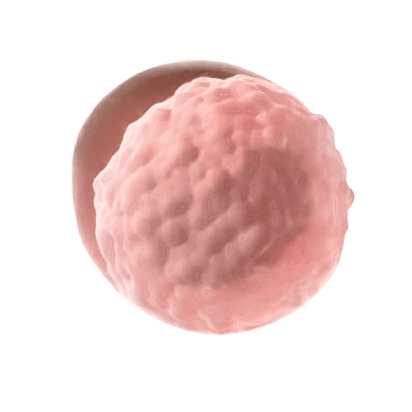
The hollow ball of embryonic cells, called the blastocyst, implants in the lining of the mother’s uterus.1
The inner cells in the blastocyst form the embryo and the outer cells help form the connection between the mother and embryo, which will become the placenta.2
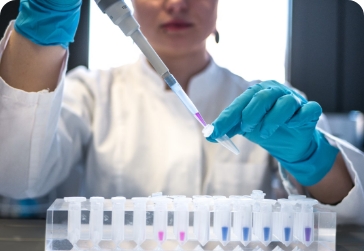
By the end of the week, the developing baby usually produces enough of the hormone hCG to be detected in urine with a home pregnancy test or in blood with a lab test.3
Implantation takes a few days. Around six days after conception, the blastocyst attaches to the mother’s uterine wall, called the endometrium. The blastocyst spends the next few days embedding completely into the endometrium.4
Some women have extremely regular menstrual cycles, so a missed period might be the first sign of potential pregnancy. Other women may have undergone fertility treatments and know the precise day of ovulation and possible conception. However, most women fall into a third category who have irregular periods, are not undergoing any fertility treatments, and are uncertain as to when ovulation and possible conception took place. Regardless of how much information a woman has about her monthly cycle, a woman can take a pregnancy test at any time. Most women learn they are pregnant by 5 ½ weeks gestation.6
A pregnancy test is most reliable when taken about 2 weeks after conception. This is because pregnancy tests detect a vital hormone for sustaining pregnancy called hCG. The hormone hCG is produced by trophoblast cells from the outer layer of the blastocyst that will ultimately give rise to the placenta, the organ specially designed to nourish and support the developing baby. As soon as the tiny embryo implants in the mother’s womb, these trophoblast cells begin releasing hCG, signaling that a new human life is growing.7
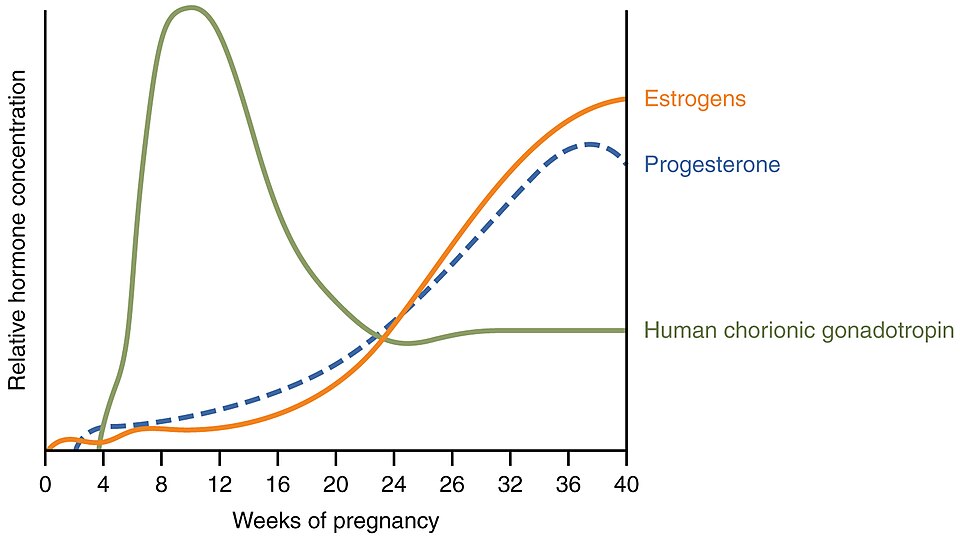
The hCG hormone can be detected in a mother’s blood just 8 days after conception.8 Around 12 to 14 days after conception, it can also be detected in urine with an at-home pregnancy test.9 Therefore, early pregnancy detection is possible at 3-4 weeks’ gestation. hCG levels rise rapidly in early pregnancy, typically doubling every 48 hours. These levels reach their peak between 8 and 11 weeks of pregnancy.10 After this peak, hCG levels gradually decline and stabilize, supporting the pregnancy as the placenta continues to sustain and protect the growing child.
Once the blastocyst implants into the uterine wall, the baby begins receiving nourishment from the mother. Secretions from the uterine lining provide nutrients which get absorbed by special cells on the outside of the blastocyst, called trophoblasts. Trophoblast cells are very important. They take up nutrients, facilitate implantation of the embryo into the mother’s uterine wall, and help form the placenta.11 During gestational week three, the embryo forms a yolk sac from some of the inner cells of the blastocyst. The baby’s first blood cells and future reproductive cells form in the yolk sac.12 Nutrients from the mother are captured in the yolk sac. Later, the yolk sac becomes part of the lining of the digestive system.13
Three key hormones for sustaining a pregnancy are:
- hCG — Human Chorionic Gonadotropin
- Progesterone
- Estrogen
The hormone hCG prompts the corpus luteum, a mass of cells in the mother’s ovaries where the egg was released, to make progesterone. Progesterone stops the mother’s menstrual cycle and maintains the lining of the uterus, allowing pregnancy to continue. 14 The corpus luteum secretes progesterone until about 12 weeks. After 12 weeks, the placenta secretes enough progesterone to support the pregnancy.15 Estrogen increases the blood flow to the uterus and placenta to support the pregnancy.16