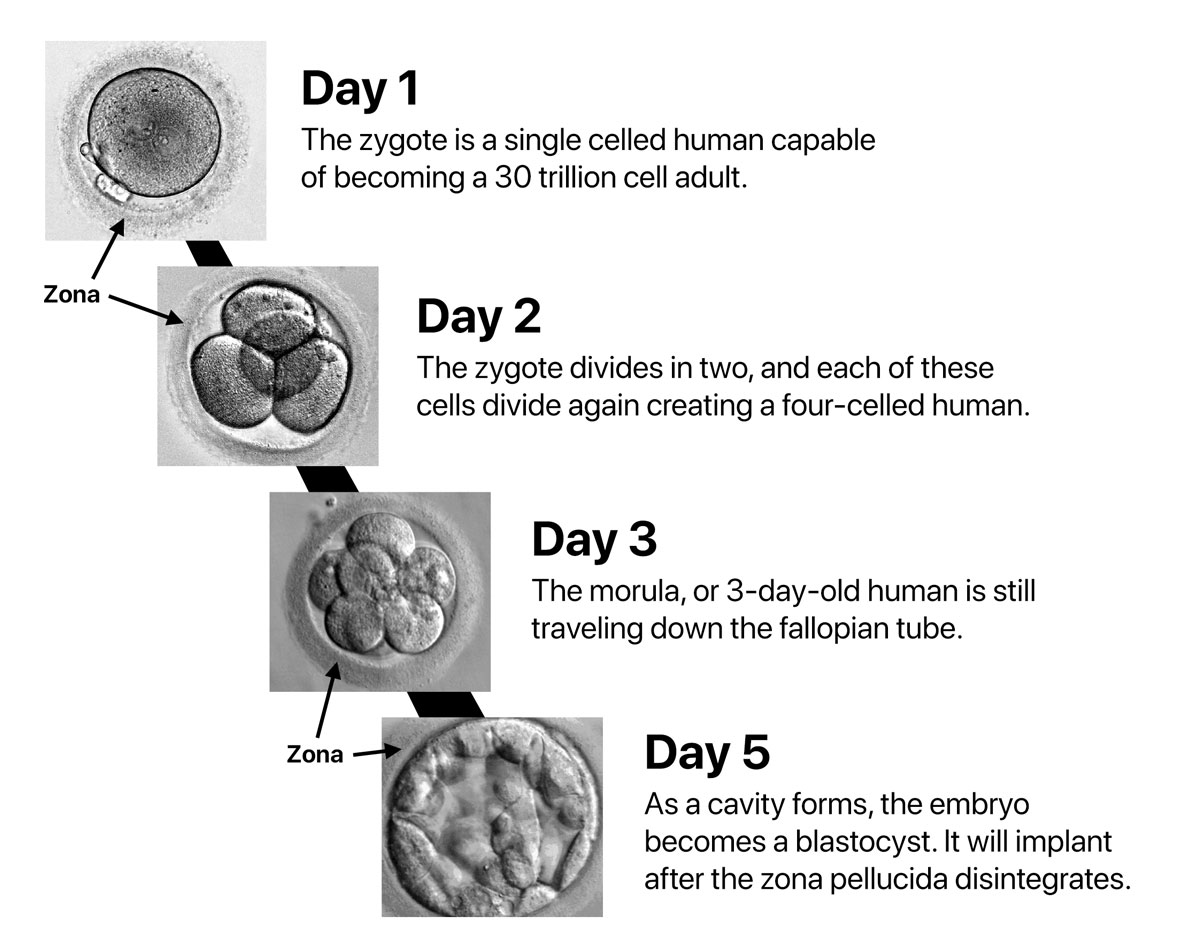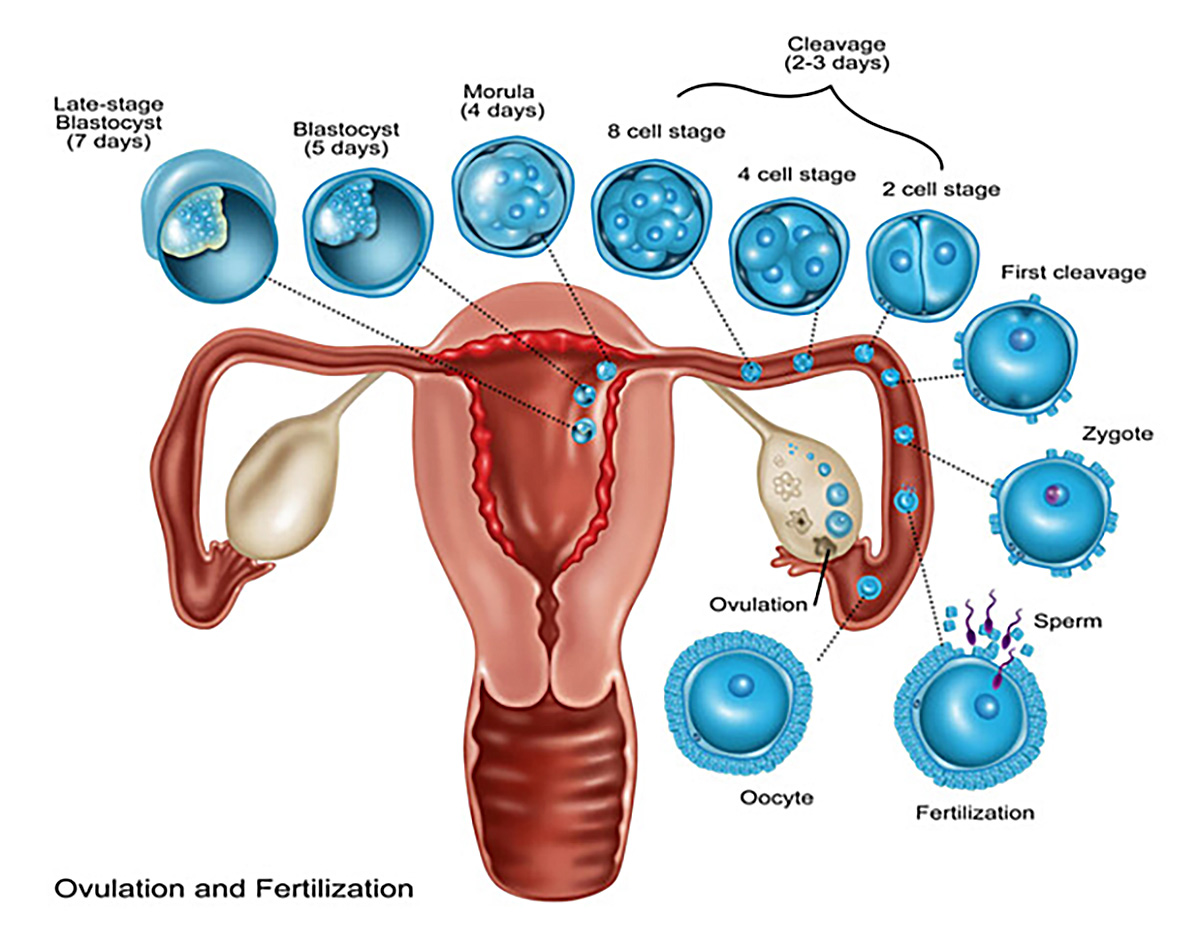











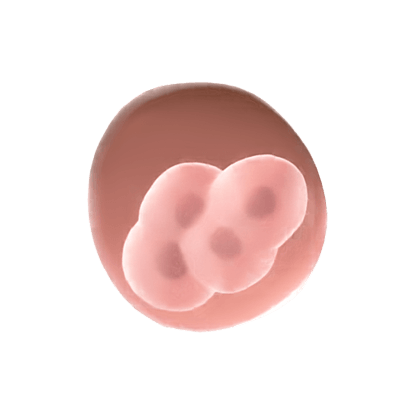
A new life – a unique human individual – is formed at conception, also called fertilization, when a man’s sperm fuses with a woman’s egg inside the fallopian tube. The resulting single-celled human embryo is called a zygote.6 Both the sperm and the egg were alive, but each only contained 23 chromosomes, half the genetic information needed to create a new human being.
The zygote's DNA, packaged into chromosomes, is present on Day 1 and has every instruction the embryo needs to develop, grow and become an adult. The DNA sequence contains astounding genetic variation and serves as the foundation for a person’s biological individuality, including sex, eye color, height, and many other traits. Individuals with a pair of XX sex chromosomes are female and those with a pair of XY sex chromosomes are male.7
![A scanning electron micrograph shows human sperm fertilizing an egg magnified 3500X. In the week following [tooltip anchor="conception"]Sperm-egg fusion[/tooltip], the [tooltip anchor="zygote"]Unique single-celled human[/tooltip] begins dividing and forming a [tooltip anchor="blastocyst"]An embryo ready for implantation[/tooltip], laying the foundation for every system in the body. (Image Credit: Science Source)](https://lozierinstitute.org/wp-content/uploads/2022/10/Human-Spermatozoa-Fertilizing-an-Egg.jpg)