




Search Icon
close-panel

Charlotte Lozier Institute

Phone: 202-223-8073
Fax: 571-312-0544

2776 S. Arlington Mill Dr.
#803
Arlington, VA 22206

Get Notifications

Sign up to receive email updates from Charlotte Lozier Institute.

This field is for validation purposes and should be left unchanged.

close-panel

Become A Defender of Life

Your donation helps us continue to provide world-class research in defense of life.

DONATE

Charlotte Lozier Institute

Phone: 202-223-8073
Fax: 571-312-0544

2776 S. Arlington Mill Dr.
#803
Arlington, VA 22206

Weeks 0 and 1

Sperm formation, egg maturation and ovulation

Human Prenatal Age
  • Preparing for Pregnancy
Highlights
  • A woman’s body prepares for pregnancy by letting eggs mature. The lining of the uterine wall also thickens.1 A man’s body constantly creates new sperm.2

  • Fertility decreases with age. Most women under 30 have an 85% chance of conceiving in a year, but this declines to 44% by age 40.3

  • The sperm and the egg each have half of the genetic information needed to create a new genetically unique human.4

Human development begins at conception, when the sperm and egg fuse to form a single-celled human called a zygote. Over 38 weeks, that tiny human grows into a newborn, and in later years becomes a 30-trillion-cell adult.5 From the start, the zygote has a unique DNA sequence that creates his or her biological individuality.6

What Are the Chances of Conceiving?

For most women under age 30, the chance of conceiving in any single cycle is about 25–30 percent.7

That means pregnancy is common but not automatic. Of all women trying to conceive:

  • 30 percent get pregnant in the first month (1 cycle)
  • 75 percent get pregnant in the first six months (6 cycles)
  • 90 percent get pregnant in the first year (12 cycles).8
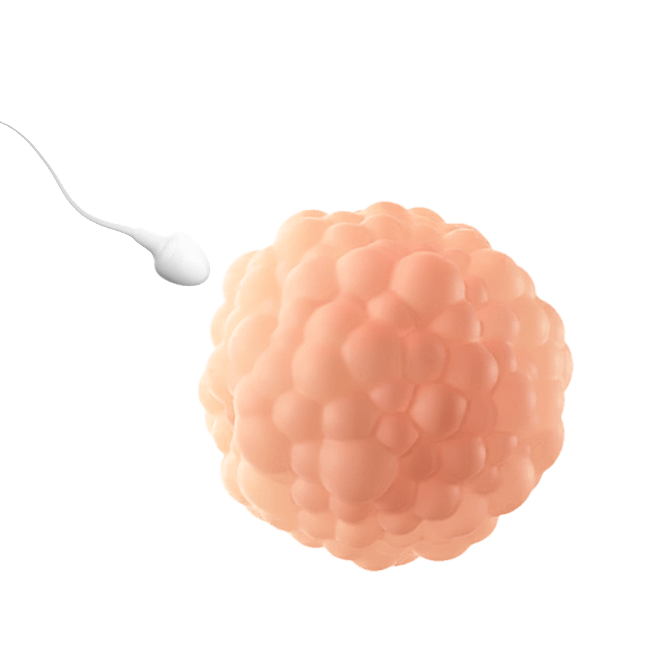
Few processes are as astonishing as the transformation of a single cell into a fully formed human being. (Image Credit: Adobe Stock Photos)
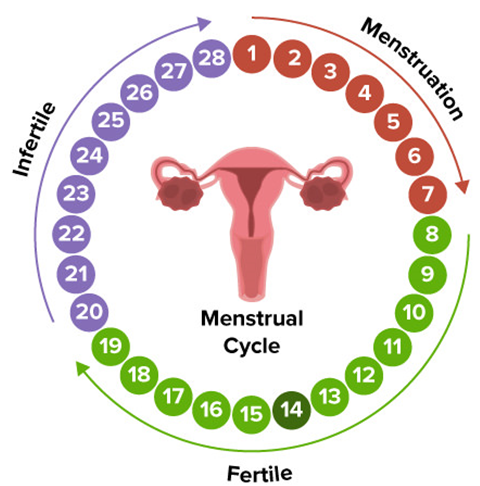
A woman's peak fertile window is usually 12 to 15 days after the start of her last menstrual period. (Image Credit: <a href="https://commons.wikimedia.org/wiki/File:Typical_mentrual_monthly_cycle.png">CK-12 Foundation</a>)
A woman's peak fertile window is usually 12 to 15 days after the start of her last menstrual period. (Image Credit: CK-12 Foundation)

However, a woman’s age matters. Over the course of a year, the likelihood of conceiving declines from about 85 percent for women under 30, to 66 percent for women under 35, to 44 percent by age 40. This reflects natural changes in the ovaries and eggs resulting in decreased fertility with increased age.9

Timing within the menstrual cycle also plays a critical role. The probability of conception rises sharply about a week after the last menstrual period, and peaks around day 12 to 15 before falling back to near zero by day 25.10 For couples hoping to conceive, focusing intercourse during this fertile window makes a significant difference. Small, intentional steps, paired with patience and good timing, can meaningfully improve the chances of welcoming a new life.

Delays in conception can be a painful and deeply personal struggle, but couples facing it are far from alone: it affects about 8 to 12% of couples worldwide.11 For couples experiencing infertility, please read more about ethical alternatives available that seek to diagnose potential underlying health issues.

Alternatives to in-vitro fertilization:
Learn more
Healthy habits that may increase your chance of getting pregnant
  • Use prenatal supplements. Prenatal supplements help prepare the body for pregnancy by providing key nutrients, especially folic acid, that support early fetal development12 and healthy conception.
  • Don’t smoke. Smoking can make it harder to conceive, and it also harms overall health for both mother and baby. Quitting before pregnancy is one of the best steps a mother or father can take, since second-hand smoke also affects the unborn baby.13
  • Don’t drink alcohol. Heavy alcohol use can reduce fertility, so it is wise to avoid alcohol when trying to conceive.14
What happens in those two weeks before pregnancy?

Shortly after the start of a woman’s period, her body prepares for a possible pregnancy. Between 15 and 20 premature eggs, called oocytes, start to grow rapidly inside her ovary.15 Interestingly, the woman’s body created all of her oocytes when she was an embryo herself, starting when she was seven weeks gestation and finishing around five months.16

There is enough genetic variation that no two humans have been, or ever will be, genetically identical.[citation text="National Institutes of Health (US) and Biological Sciences Curriculum Study, Understanding Human Genetic Variation, NIH Curriculum Supplement Series (National Institutes of Health (US), 2007), https://www.ncbi.nlm.nih.gov/books/NBK20363/." href="https://www.ncbi.nlm.nih.gov/books/NBK20363/"] (Image Credit: Adobe Stock Photo)
There is enough genetic variation that no two humans have been, or ever will be, genetically identical.17 (Image Credit: Adobe Stock Photo)
How many weeks is a normal pregnancy?

There are two common systems for denoting a baby’s prenatal age. Embryologists use post-conception age, referring to the length of the pregnancy from the time of conception. Most obstetricians, medical professionals, and mothers use gestational age, which starts at the beginning of a woman’s last menstrual period. This website refers to the baby’s gestational age unless otherwise indicated.

Ovulation and conception often occur approximately two weeks after the start of a woman’s menstrual cycle. The menstrual cycle lasts about 28 days. Each month, it prepares her body for a possible pregnancy.  Therefore, the week of a woman’s period and the week afterwards gets counted towards her baby’s gestational age, even though she was not technically pregnant at that time. If a woman does not become pregnant after ovulation, she will start her next menstrual period about two weeks later.

Pregnancy starts at conception, also known as fertilization. Conception can occur about 24 hours after a woman ovulates.  If a woman knows exactly when she conceived, then she can calculate the baby’s gestational age by adding two weeks to the post-conception age. If a doctor tells a woman that she is 6 weeks pregnant, then the unborn child has been growing inside her for 4 weeks. Similarly, if a woman gives birth when she is 40 weeks pregnant, the baby has only been alive for 38 weeks.

If a doctor tells a woman that she is 6 weeks pregnant, then the unborn child has been inside her for 4 weeks. Similarly, if a woman gives birth when she is 40 weeks pregnant, the baby has only existed for 38 weeks.
Events Gestational Age Post-Conception Age
Fertilization, creating the embryo 2 weeks and 1 day Day 1
Implantation of the embryo 2-3 weeks 6-10 days
Heartbeat starts18 5 weeks and 1 day 3 weeks and 1 day
The baby starts moving19 7 ½ weeks 5 ½ weeks
Embryo is now called a fetus 11 weeks 9 weeks
The baby makes intentional movements.20 14 weeks 12 weeks
The baby can feel pain at or before this point21 15 weeks 13 weeks
Earliest surviving baby22 23 21 weeks 19 weeks
Greater than 50% chance of survival at birth24 23 weeks 21 weeks
Happier faces after mom eats something sweet25 34 weeks 32 weeks
Child is no longer considered premature 37 weeks 35 weeks
Childbirth (on average) 40 weeks 38 weeks
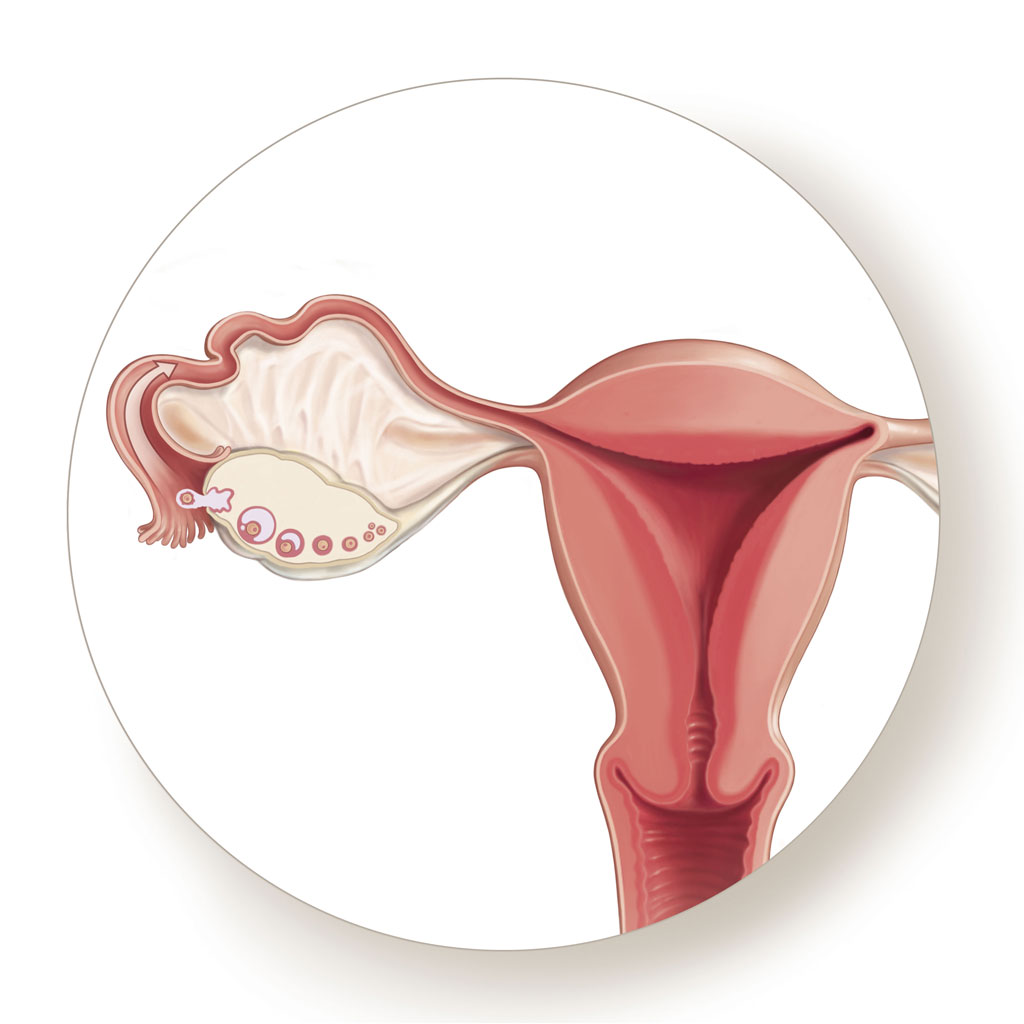
An egg developing in the ovary. The small sac of fluid surrounding the developing egg is called a follicle. (Image Credit: Science Source)
When can a woman conceive?

By one week after the start of the woman’s period, one egg has grown the fastest. Only this egg reaches full maturity. The other eggs start to shrivel.26 Approximately one week later, the woman’s ovary releases the mature egg, now called a secondary oocyte, into the adjacent fallopian tube. If more than one egg gets released at ovulation, then the mother can have non-identical twins if both eggs are fertilized. The woman can usually conceive for about 24 hours after ovulation.27

How are sperm created?

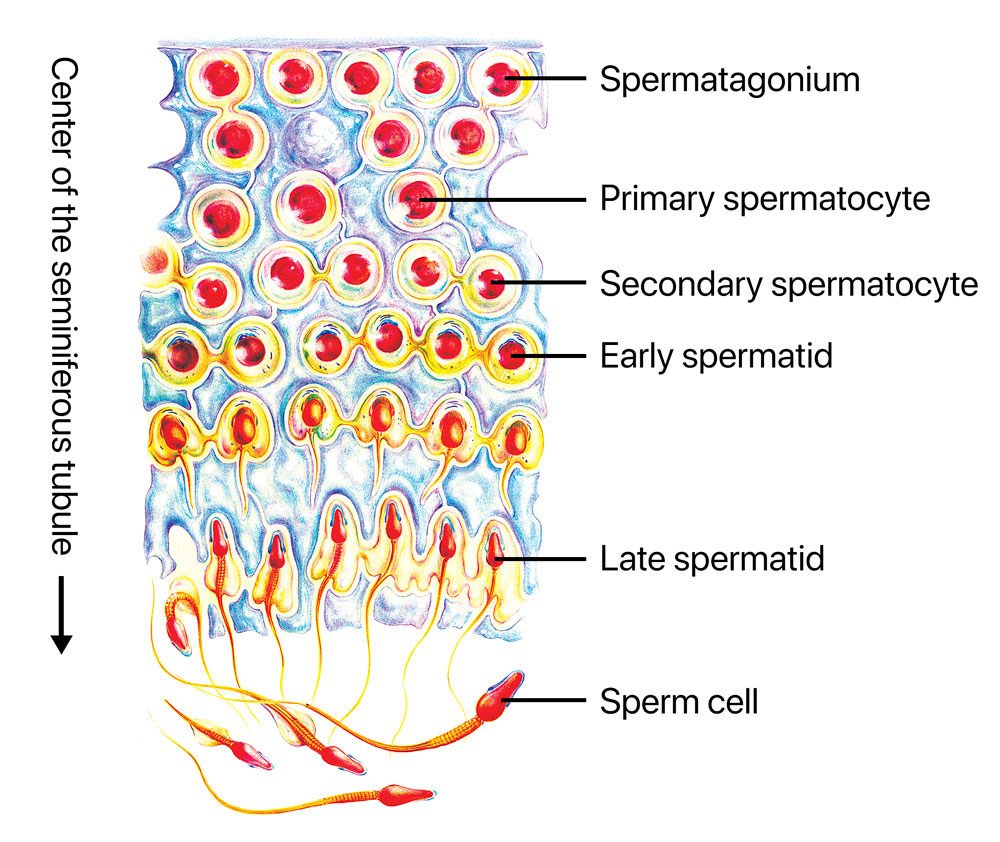
In a man’s body, sperm develop inside the testes from special cells called spermatogonia. Remarkably, these cells first formed when the man himself was an unborn child, around 7 weeks gestation. They remained quiet until puberty, when they began producing sperm continuously. Since then, they have divided regularly, maintaining a lifelong supply of stem cells that generate new sperm.28

As developing sperm move toward the center of tiny tubes in the testes called seminiferous tubules, they mature step by step. Through a process called meiosis, each developing sperm cell divides to produce cells containing half of the father’s genetic information. The DNA tightly packs into a small oval head, which is capped by the acrosome, a structure that helps the sperm enter the egg. A tail then forms, giving the sperm its ability to swim.29

Sperm developing in the seminiferous tubule. As the sperm reaches the center of the tubule, it is more fully mature. (Image Credit: Science Source)

From start to finish, a single sperm takes about 74 days to develop. The testes produce roughly 300 million new sperm every day.30

300
Million
Approximately 200 to 300 million sperm enter the vagina during intercourse, but only 300 to 500 of these sperm reach the fallopian tube where the egg arrives after ovulation, and only one will penetrate the egg, forming the single-cell embryo, called a zygote.31 When this happens, a new human being is created.
Dive Deeper
The probability that two siblings have the same combination of chromosomes is 1 in 7 trillion...
Sometimes children can have a missing or extra chromosome, known as aneuploidy...
Sperm-egg fusion
Unique single-celled human
Sperm-egg fusion
Sperm-egg fusion
Sperm-egg fusion
Sperm-egg fusion
Sperm-egg fusion
Sperm-egg fusion
Sperm-egg fusion
Sperm-egg fusion
Unique single-celled human