



If the unborn baby cannot release urine in the womb, the pressure can damage the developing kidneys and may kill the baby. This condition can be discovered as early as 12 weeks of pregnancy. Early treatment is critical. In fact, the first successful fetal surgery to relieve a blocked bladder was performed at 12 weeks and 5 days. Outcomes are best when this procedure is done before 16 weeks, giving the baby a better chance to survive and grow.23
Become A Defender of Life
Your donation helps us continue to provide world-class research in defense of life.
DONATECharlotte Lozier Institute
Phone: 202-223-8073
Fax: 571-312-0544
2776 S. Arlington Mill Dr.
#803
Arlington, VA 22206
Week 12
Fingerprints and fingernails
- Post-conception week 10
- Days of life 70-76
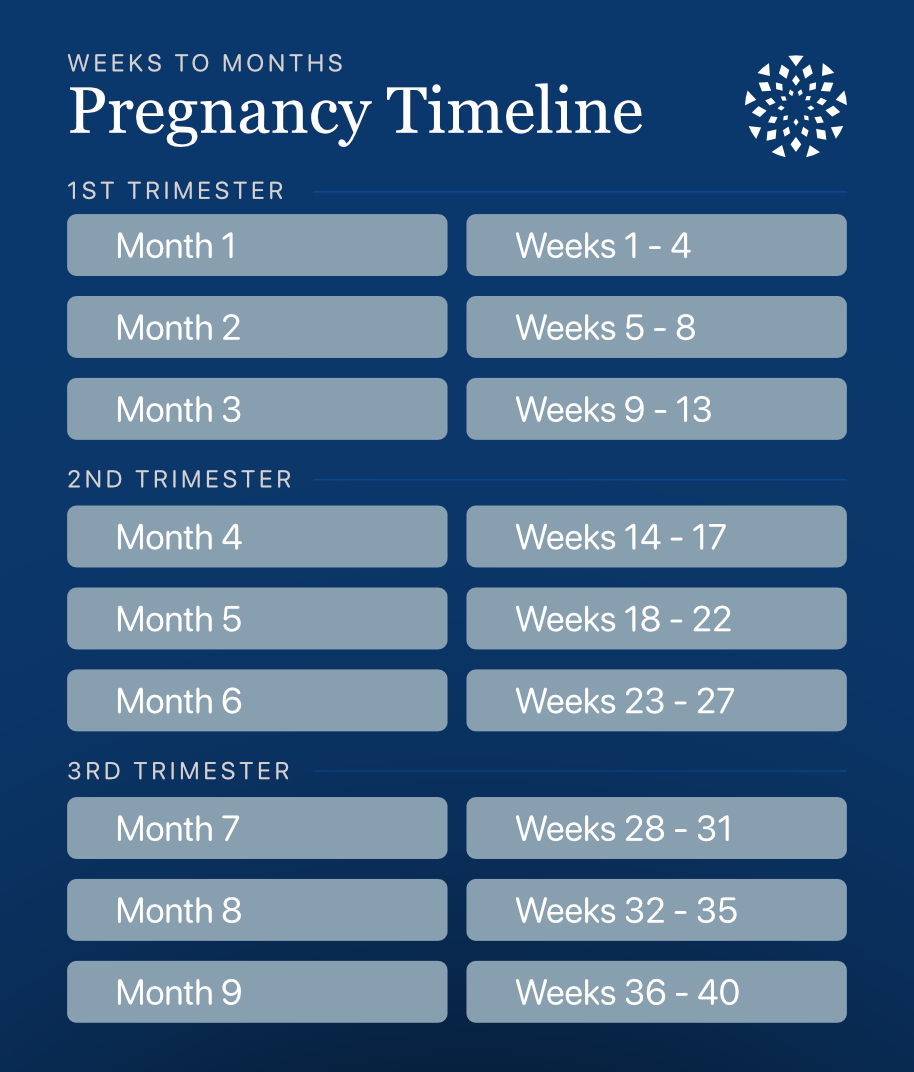
- Gestational Week 12
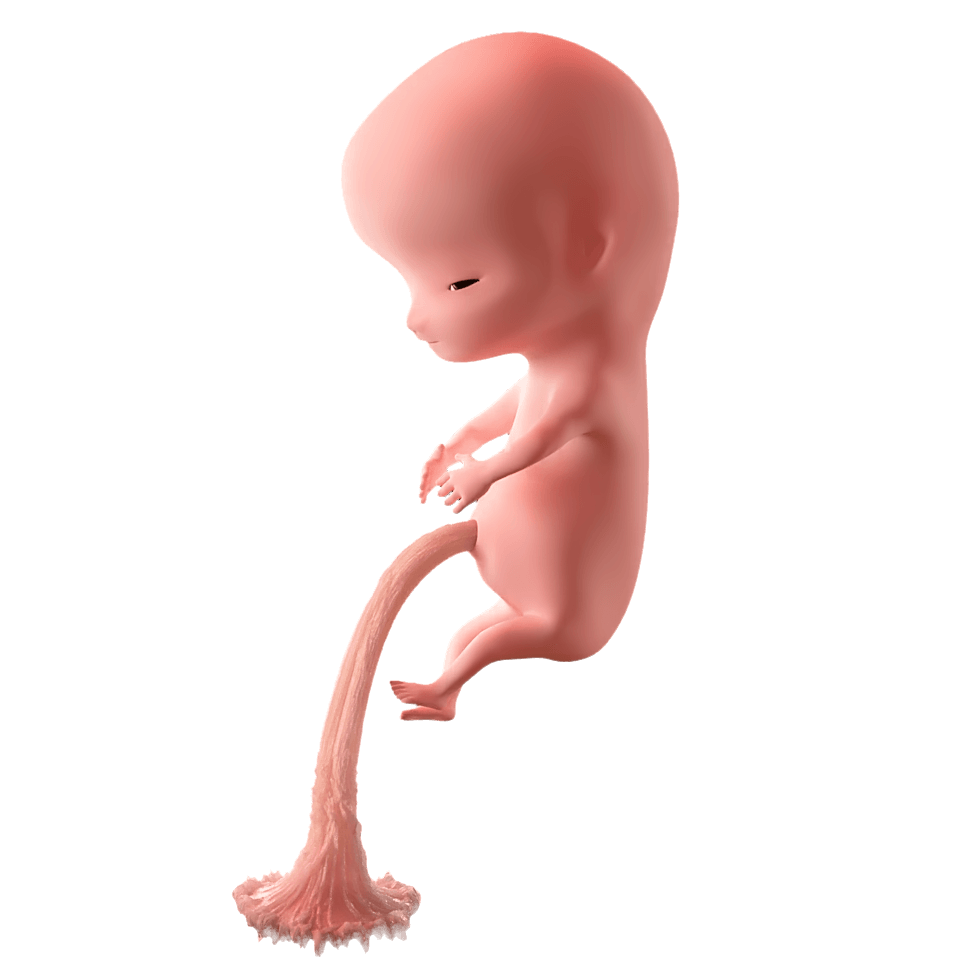
This week, the unborn baby’s fingernails start to grow,1 and fingerprints starts to form.2
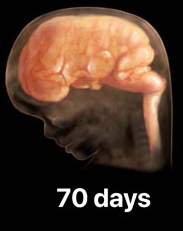
The unborn baby’s brain starts to form connections capable of processing sensations including unreflective pain.3
The earliest successful surgery in the womb was performed at 12 weeks and 5 days gestation.4
By 12 weeks gestation, the unborn baby responds to light touch anywhere on his limbs or face.7 In week 12, the baby’s response to a light touch on the sole of the foot changes. While in previous weeks, the baby may have curled his toes if something touched the bottom of his foot, now he lifts his big toe up and fans his other toes out like newborn babies do.8 When something touches his palm, he curls his fingers toward the object but leaves the thumb out; the thumb does not join the grasp until about 15 weeks.9 This responsiveness can also be seen in twin pregnancies, and the baby will observably react when his twin brother or sister touches him.10
The first recorded eye movements come from week 12. When something touches the upper eyelid, the eyes roll down and the muscles around the eye ‘squint’.11 The unborn baby starts swallowing amniotic fluid around 12 weeks gestation.12 13
More complex behaviors can be observed at 12 weeks, such as bicycle kicking, punching, and clenching his fists.14 Just as more adults are right-handed than left-handed, these preferences can be observed long before birth. About 90% of unborn babies prefer their right arm and will move their head to the right more often than the left, too.15 The baby continues to touch his face, stretch, and yawn.16 17 18 This not only showcases the baby’s evolving capabilities but also indicates healthy brain development.19
As early as 12 weeks, connections form between the thalamus and the rest of the brain that researchers contend are capable of processing sensations including unreflective pain. Unreflective pain is an immediate sensory experience of pain without necessarily knowing one is in pain.20 21 22
Fingerprints start forming around week 12 in a beautiful combination of genetics and environment. Genes provide the basic plan, but small details—like the baby’s movements, the flow of amniotic fluid, and where ridges start forming—shape the final pattern.25 26 Even identical twins, who share nearly the same DNA, develop different fingerprints because no two babies move in exactly the same way.27 By 26 weeks, the familiar patterns of loops, whorls, and arches are permanently set.28 Because each fingerprint is truly one-of-a-kind and remains unchanged for life, it serves as a reliable and enduring marker of personal identity.
Humans have two sets of teeth because a child’s jaw is too small to fit the adult teeth. Plus, the second set of teeth serves as an important back-up should accidents or poor dental hygiene damage the first set of teeth, so the child will have fewer long-term consequences.
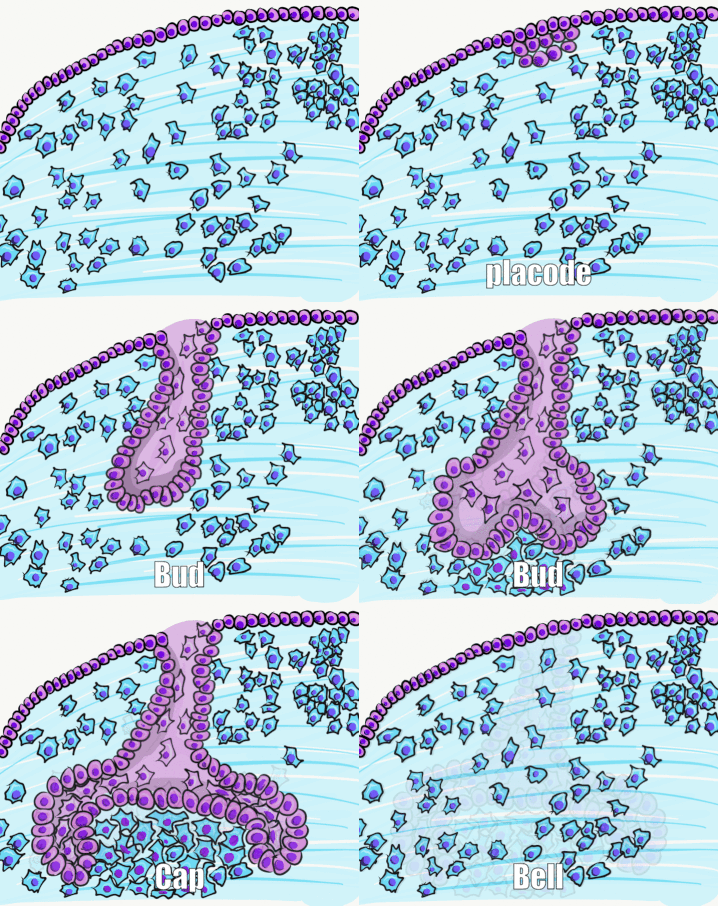
By 8 weeks of pregnancy, the first signs of a tooth appear. A tiny tooth germ begins to grow inside the baby’s jaw. Teeth develop as a carefully ordered part of human development. Cells from the lining of the mouth and nearby neural crest cells, which come from the area next to the developing brain and spinal cord, work together to build a tooth.32
By 10 weeks gestation, the bud stage begins. Small enamel organs form. These are the early structures from which each tooth will develop.33 34
By about 12 weeks, the cap stage is underway. The tooth germ grows and folds inward. This helps shape the future crown, the part of the tooth seen above the gum. Important cells also begin to specialize. Some will later make enamel. Other nearby cells form the dental papilla, which will become the tooth’s pulp. The bud of a second tooth starts to form behind the first tooth. The second tooth will slowly develop into the permanent adult tooth. The first tooth to form becomes the baby tooth.35 36
By 16 weeks, the tooth enters the bell stage. More layers appear, and the tooth becomes even more organized. These layers protect the developing tooth, carry nutrients, and help determine its final form, including the root.37 The jaw bone forms around the baby tooth and permanent tooth, holding them in place.38
Next, hard tissues begin to form. Dentin forms inside the tooth, and enamel forms outside the tooth. Both layers thicken and then harden as minerals embed in the soft early tissue.39
After the crown is complete, the root begins to form. Then a hard calcified covering called cementum develops on the root surface, and the periodontal ligament forms to anchor the tooth to bone.40
Finally, the baby teeth start to poke out of the gum, starting roughly 6 months after birth.41 Most children have their full set of 20 baby teeth by age 2. Permanent teeth form inside the jaw bone throughout early childhood. When children shed their baby teeth, only the crown and the uppermost part of the root fall out. The permanent teeth use the same artery and bone socket that the baby teeth used.42 Adult teeth replace baby teeth throughout childhood.
Most guidelines today recommend an 11 to 14 week dating ultrasound as the best practice for calculating a due date.43 Over the next two weeks, the baby will triple in body weight.44 This rapid growth allows the medical professionals to measure different body parts to make an accurate estimate of the baby’s age.
At 12 weeks gestation, approximately 10% of the total body weight is the liver. Large patches of blood-producing cells lie between the walls of the blood vessels and the liver cells,45 At this time, the liver is the primary source of the fetal red and white blood cells.46 Between weeks 8 and 12, the intestines grow so fast that they extend outside the fetus, spilling into a cavity in the umbilical cord. By week 12, the abdomen has enlarged enough that the intestines can fit in the abdomen again.47 This week, the bone marrow also starts producing blood cells.48 However, it will not become the primary source of red blood cells for the baby until about 7 months gestation.49
The unborn baby’s heart has beat over 10 million times already!50