The
Voyage of Life



Women Have Real Choices: Did you know? There are 15 better women’s service providers for every Planned Parenthood center.

Abortion Drug Facts: Research shows the rate of abortion pill-related emergency room visits has increased.

Pregnancy Center Reports: Read about the work of pregnancy centers nationally and at the state level.

Pro-Life Safety Net Reports: State-run programs in pro-life states that serve families, fathers, pregnant women and unborn children.
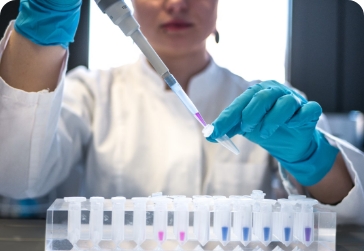
Evaluation Of Human Fetal Tissue Research: Learn about federal funding for research using human fetal tissue.
Stem Cell Research Facts: Learn about the incredible possibilities of stem cell research.

Signs of Life: One of the most striking things about the realm of science fiction is that it is seldom fiction.
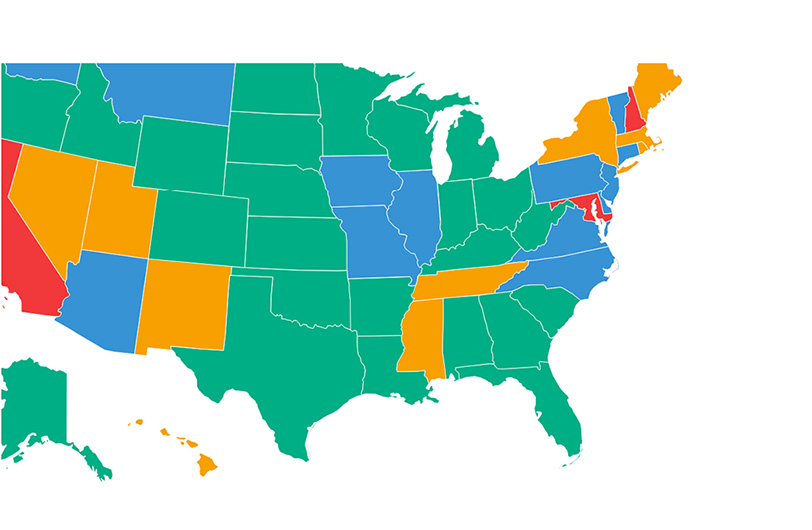
State Abortion Reporting: Learn about state abortion reporting.

Facts not Fear: Will Pro-Life State Laws Hurt Women and Hinder Doctors?

Assault on Science: Refuse to let journals and editors launch meritless attacks without a fight.


Women Have Real Choices: Did you know? There are 15 better women’s service providers for every Planned Parenthood center.
Abortion Drug Facts: Research shows the rate of abortion pill-related emergency room visits has increased.
Pregnancy Center Reports: Read about the work of pregnancy centers nationally and at the state level.
Pro-Life Safety Net Reports: State-run programs in pro-life states that serve families, fathers, pregnant women and unborn children.
Evaluation Of Human Fetal Tissue Research: Learn about federal funding for research using human fetal tissue.
Stem Cell Research Facts: Learn about the incredible possibilities of stem cell research.
Signs of Life: One of the most striking things about the realm of science fiction is that it is seldom fiction.
State Abortion Reporting: Learn about state abortion reporting.
Facts not Fear: Will Pro-Life State Laws Hurt Women and Hinder Doctors?
Assault on Science: Refuse to let journals and editors launch meritless attacks without a fight.
Your donation helps us continue to provide world-class research in defense of life.
DONATEPhone: 202-223-8073
Fax: 571-312-0544
2776 S. Arlington Mill Dr.
#803
Arlington, VA 22206
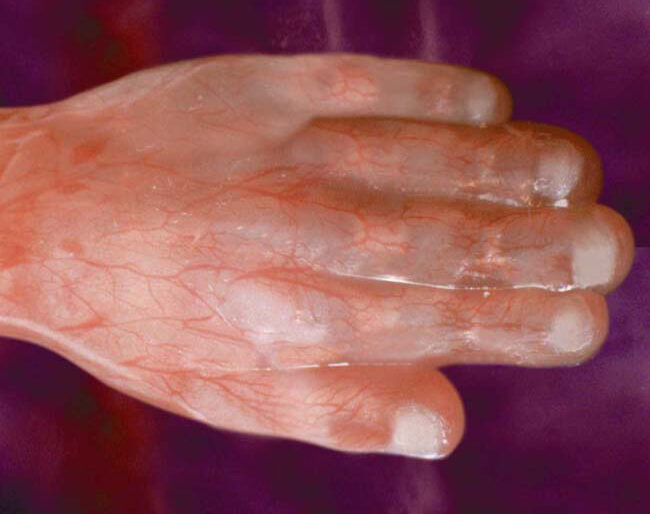
![The nails on the fingers and toes start to grow, as does the baby's individualized fingerprints. The fingerprint patterns established by 26 weeks last for a lifetime.[citation text="Babler, W. J. (1991). Embryologic development of epidermal ridges and their configurations. Birth Defects Orig Artic Ser, 27(2), 95-112. https://www.academia.edu/download/120521856/Babler_1991.pdf" href="https://www.academia.edu/download/120521856/Babler_1991.pdf"] (Image Credit: <a href="https://www.priestsforlife.org/graphic-images/index.aspx?gid=1&sid=1">Priests for Life</a>)](https://lozierinstitute.org/wp-content/uploads/2022/10/twelve-weeks-fetus-hand.jpg)
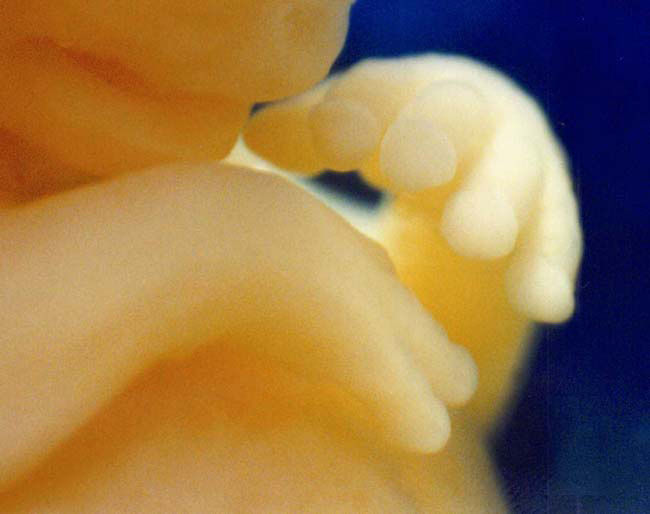
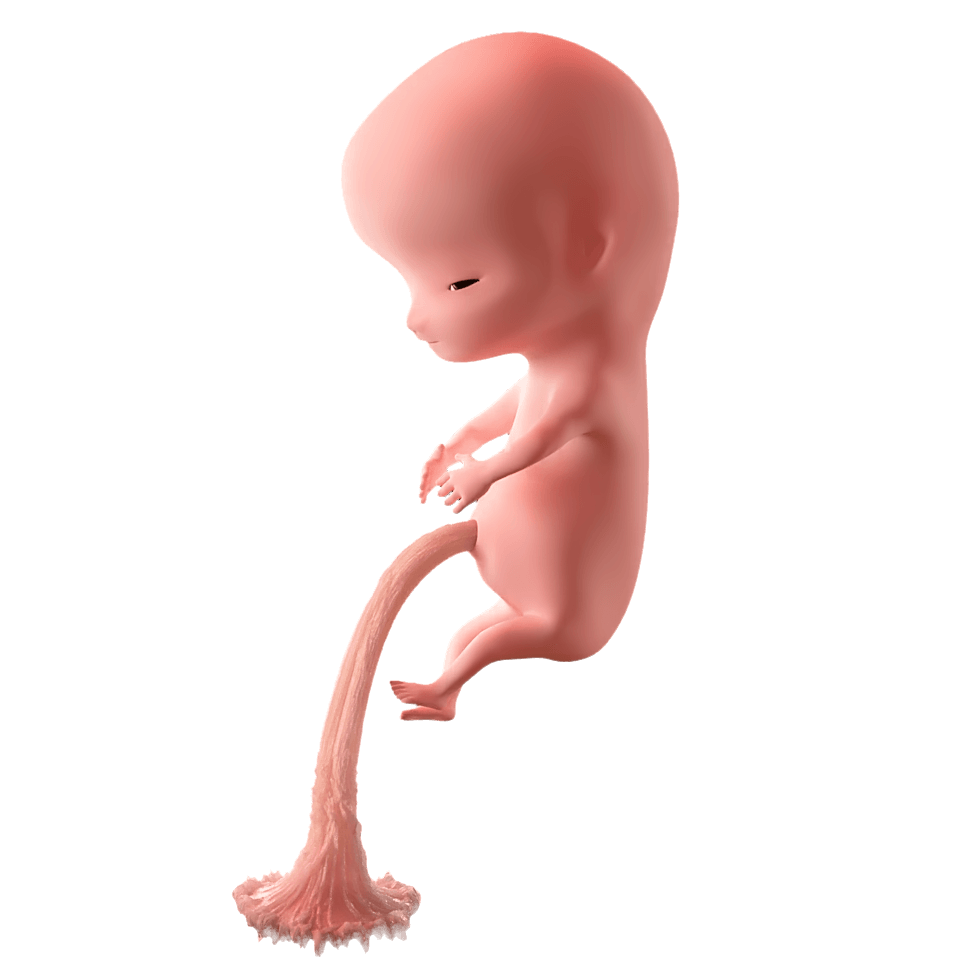
Around week 12, the unborn baby’s tiny finger movements help shape the first skin creases near the joints. These creases guide where fingerprints will form.2 At the same time, cells in the skin’s basal layer begin growing faster than surrounding layers, causing the surface to buckle into ridges.3 By week 13, these ridges start forming at the tips and centers of the fingers, then spread outward. By 15 weeks, each finger already shows its unique pattern of loops, whorls, or arches. Primary ridges are complete by 17 weeks, followed by finer secondary ridges.4 As the skin matures, a protective layer of keratin forms between 22 and 25 weeks, refining these patterns.5 6 Curiously, ridges of the hands and fingers appear about 1 week earlier than those of the feet and toes.7 By 26 weeks, the baby’s fingerprints are fully set—unique and unchanging for life.8
A baby’s fingerprints take shape through a remarkable interaction between genetics and the environment of the womb. As tiny fingers move, they create natural folds in the skin that guide where fingerprint ridges will form. These ridges spread outward like waves, meeting and weaving together into intricate patterns.10 Subtle factors—such as the flow of amniotic fluid, the baby’s position, and even small variations in movement—gently shape these patterns, ensuring that no two are exactly alike.11
The result is something extraordinary: every human being carries a set of fingerprints that is entirely their own. Even identical twins, who share nearly identical DNA, develop distinct fingerprints because no two babies experience the womb in quite the same way.12 Although twins are 55% more likely to share same patterns of whorls and loops than unrelated individuals, their prints differ in fine detail.13 It’s like using the same recipe in different kitchens, producing creations that are similar, yet uniquely individual.