




Search Icon
close-panel

Charlotte Lozier Institute

Phone: 202-223-8073
Fax: 571-312-0544

2776 S. Arlington Mill Dr.
#803
Arlington, VA 22206

Get Notifications

Sign up to receive email updates from Charlotte Lozier Institute.

This field is for validation purposes and should be left unchanged.

close-panel

Become A Defender of Life

Your donation helps us continue to provide world-class research in defense of life.

DONATE

Charlotte Lozier Institute

Phone: 202-223-8073
Fax: 571-312-0544

2776 S. Arlington Mill Dr.
#803
Arlington, VA 22206

The Newborn Senses: Taste & Smell

Dive Deeper
Super-sensitive sniffers: How newborns use smell to connect

Newborns outperform adults on a variety of smell tests. For example, newborns detect odor components in human sweat better than adults do.1 Babies’ super-sensitive noses start working early — in fact, just hours after birth, newborns can already recognize the smell of the amniotic fluid they floated in during pregnancy. They even prefer to nurse from a breast that smells like their own amniotic fluid.2

In another experiment, babies were offered breastmilk from their own mother and from other nursing women. The result? They tried harder to suck and nurse when smelling their own mother’s milk. That recognition was even stronger in babies who had more than 50 minutes of skin-to-skin contact with their mothers right after birth.3

Newborns also respond differently to familiar smells over time. Right after birth, they’re drawn to the smell of amniotic fluid — especially their own — and can recognize it apart from another baby’s.4 But by day two, their preferences begin to shift. Breastfed babies start preferring the smell of breastmilk, while formula-fed babies often continue to prefer the scent of amniotic fluid.5 Even formula-fed infants consistently prefer the scent of human milk to formula, regardless of its source.6

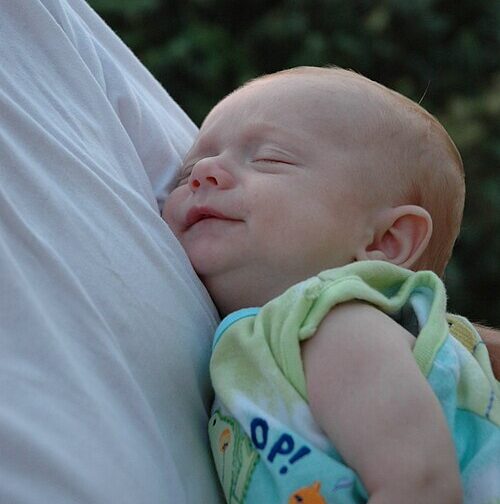
Infants are better at smelling than adults. In fact, after less than an hour of time spent with mom, newborns prefer their mother's breastmilk and amniotic fluid compared to another mother's milk or amniotic fluid.[citation text="Mizuno, K., Mizuno, N., Shinohara, T., & Noda, M. (2004). Mother‐infant skin‐to‐skin contact after delivery results in early recognition of own mother's milk odour. Acta paediatrica, 93(12), 1640-1645. https://pubmed.ncbi.nlm.nih.gov/15841774/" href=" https://pubmed.ncbi.nlm.nih.gov/15841774/"](Image Credit: Science Source)
Infants are better at smelling than adults. In fact, after less than an hour of time spent with mom, newborns prefer their mother's breastmilk and amniotic fluid compared to another mother's milk or amniotic fluid.7(Image Credit: Science Source)
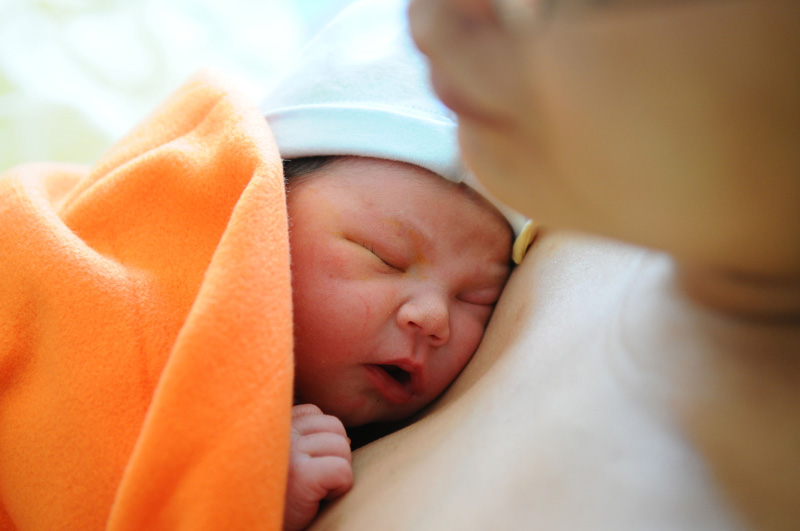
Right after birth, newborns recognize the smell of their own amniotic fluid and prefer it to another baby’s.8

Science points to a powerful fact: babies are wired for remembering smells from before birth. And experiencing these same familiar smells after birth help newborns quickly form preferences outside the womb that help them bond, find food, and feel secure. But newborns are not only attracted to familiar scents.  Scientists have also found that when newborns smell something unfamiliar, the odors activate the same regions of the brain that are active in adults — showing just how ready they are to experience new things and explore the world around them through scent.9

Smells that soothe

A familiar smell can both comfort a baby and help ease pain. For example, the scent of breast milk seems to have a calming, painkilling effect on newborns. However, this only worked if the breast milk came from their own mother.10 This is not just because breast milk is the baby’s primary food source. When newborns have their heels pricked for blood tests, studies have found that those who smell their mother’s breast milk cry less and have less stress hormones than babies who are bottle-fed and exposed to the scent of their usual formula.11 There is something uniquely comforting about maternal smells. Even the gentle scent of vanilla has been shown to calm premature infants — but only if it’s a smell they already know.12 In another study, babies didn’t show a rise in stress hormones when their blood was drawn in the presence of soothing scents like lavender or a synthetic milk odor.13 These findings suggest that smell isn’t just a source of comfort — it is also a simple, natural tool for helping babies cope with pain.

When newborns have their heels pricked for blood tests, those who smell their mother’s breast milk cry less and have less stress hormones than babies who are bottle-fed and exposed to the scent of their usual formula.14
Tiny taste testers: How babies experience flavor

Flavor is more than just taste — it’s a combination of what the tongue senses and what the nose smells. Our tongues detect five basic tastes: sweet, sour, bitter, salty, and a savory, brothy flavor called umami . Newborns respond to all of these — except salt — from the very beginning.15

In fact, babies show strong reactions to different tastes. Give a newborn something sweet or savory, and you might see happy signs like rhythmic tongue movements, lip smacking, or even a little smile. But offer something bitter, and a newborn’s face tells another story — grimacing, wrinkling their nose, or even flailing their arms in protest. Sour flavors get mixed reviews, usually with puckered lips and a few confused expressions.16 17 18

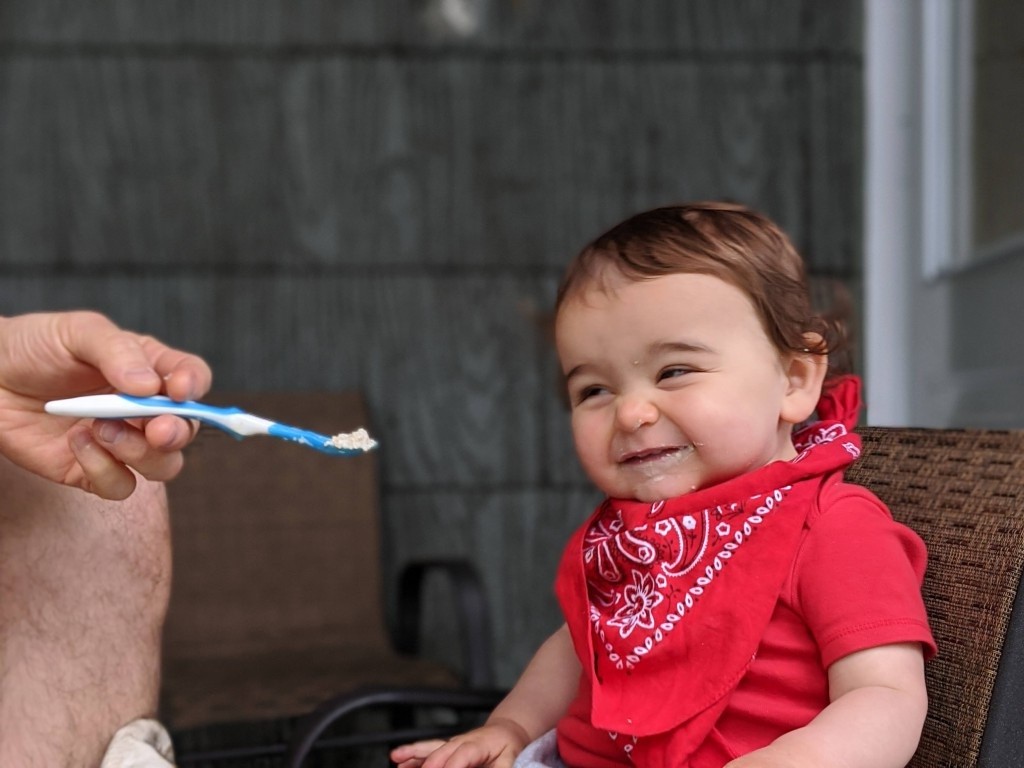
Infants are good at tasting, however, their salt perception pathway takes more time to develop than all the other flavor receptors.[citation text="Liem, D. G. (2017). Infants’ and children’s salt taste perception and liking: a review. Nutrients, 9(9), 1011. https://doi.org/10.3390/nu9091011" href="https://www.mdpi.com/2072-6643/9/9/1011"] (Image Credit: Science Source)
Infants are good at tasting, however, their salt perception pathway takes more time to develop than all the other flavor receptors.19 (Image Credit: Science Source)

Interestingly, young infants don’t seem to care much about salty flavors until they’re about 4 months old. As they grow, their preferences shift: babies older than 4 months start by liking salty water, but by the time they reach preschool age, most prefer plain water again.20 Researchers think these changing tastes reflect how the body and its needs change in early life.

What babies taste early in life will shape what they eat later

Long before the first spoonful of mashed peas, babies are already getting a “preview” of the foods their family eats. Evidence shows that flavors from a mother’s diet pass into the amniotic fluid during pregnancy and later into her breastmilk after birth. These flavors peak in breastmilk about 1½ to 3 hours after mothers eat flavorful foods, giving babies regular exposure to the family’s typical diet.21

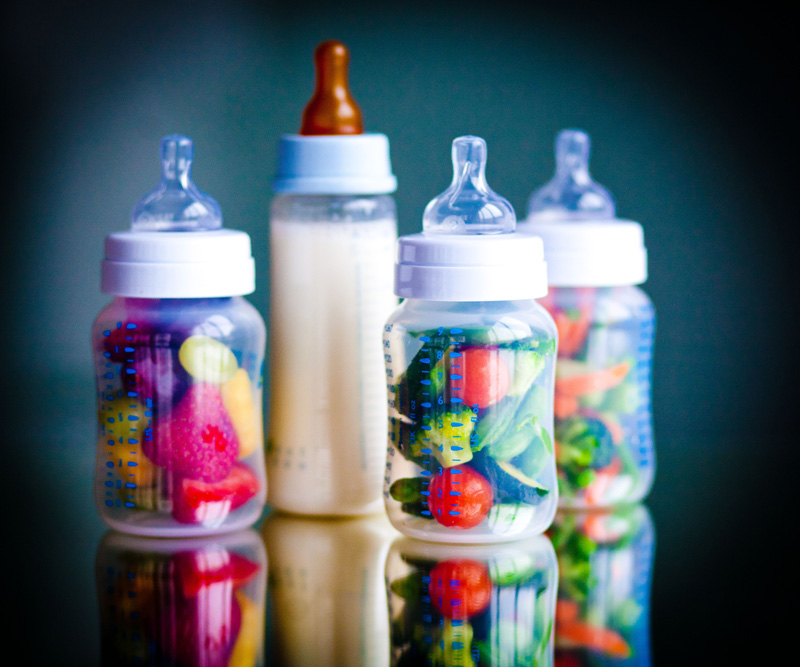
Flavors peak in breastmilk about 1½ to 3 hours after mothers eat flavorful foods, giving babies regular exposure to the family’s typical diet.22

Science shows that early exposure to flavors in the mother’s milk affects the foods they choose later in life. Babies who taste certain flavors in the womb — like garlic, carrot, or vanilla — are more likely to accept those foods when they’re introduced later as solids.23 24 Studies show that breastfed babies respond to the changing flavors in their mother’s milk by adjusting how long and how eagerly they feed.25 Later on, breastfed babies are often more accepting of fruits and vegetables if their mothers regularly ate those foods themselves.26

Scientists have also studied food preferences in babies who drank formula. In the U.S., there are two major kinds: cow’s milk formula and a hypoallergenic formula with a strong bitter and sour taste. Babies who were fed the more bitter hypoallergenic formula were more likely to enjoy sour or bitter foods like sour apple juice, unsweetened cereals, and vegetables like broccoli — even years after their last sip of formula.27 28

The takeaway? What babies taste in the womb, through breastmilk, or in formula helps shape their food preferences for years to come.

Babies who taste certain flavors in the womb — like garlic, carrot, or vanilla — are more likely to accept those foods when they’re introduced later as solids.29