Search Icon
close-panel

Charlotte Lozier Institute

Phone: 202-223-8073
Fax: 571-312-0544

2776 S. Arlington Mill Dr.
#803
Arlington, VA 22206

Get Notifications

Sign up to receive email updates from Charlotte Lozier Institute.

This field is for validation purposes and should be left unchanged.

close-panel

Become A Defender of Life

Your donation helps us continue to provide world-class research in defense of life.

DONATE

Charlotte Lozier Institute

Phone: 202-223-8073
Fax: 571-312-0544

2776 S. Arlington Mill Dr.
#803
Arlington, VA 22206

Skin and hair color

Dive Deeper
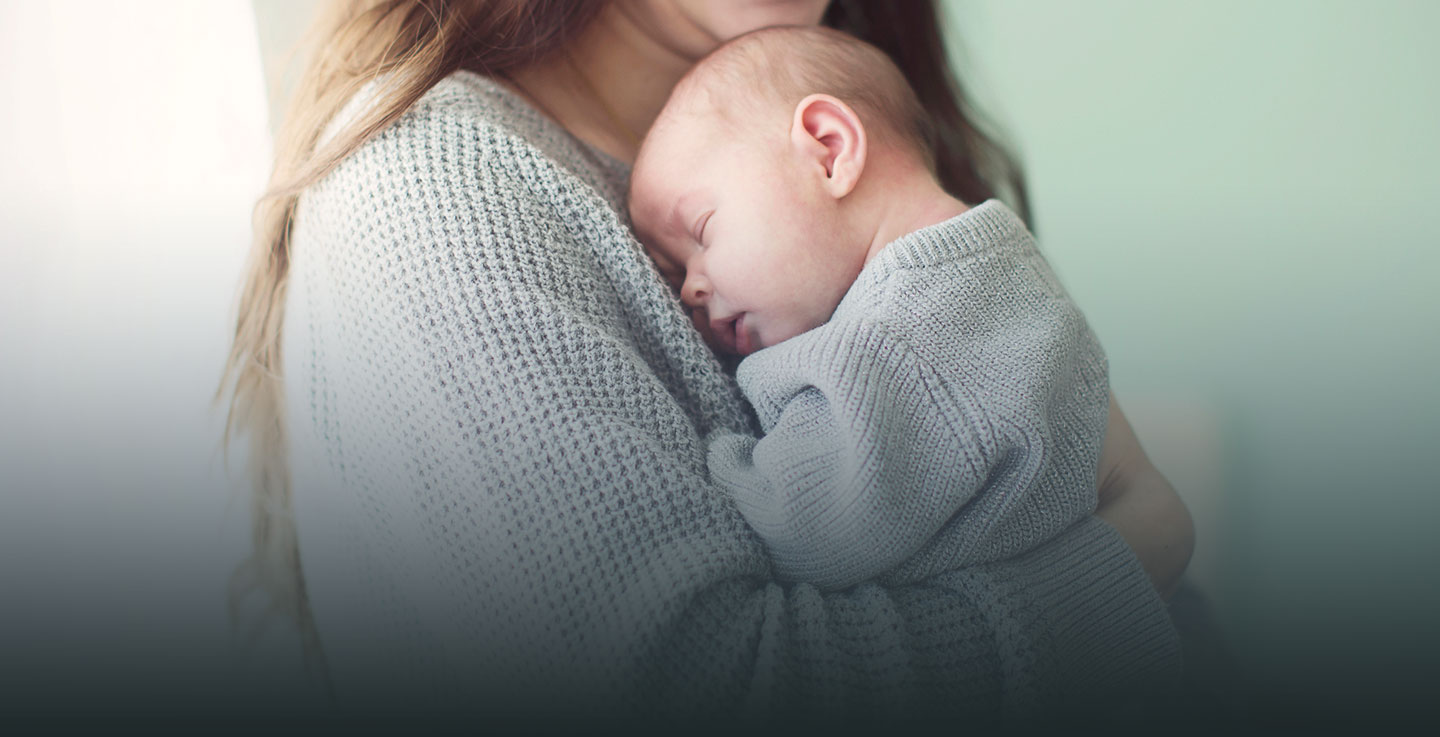
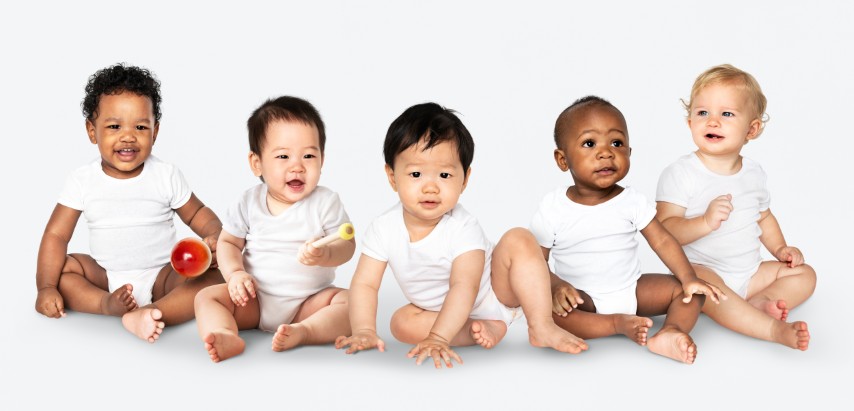
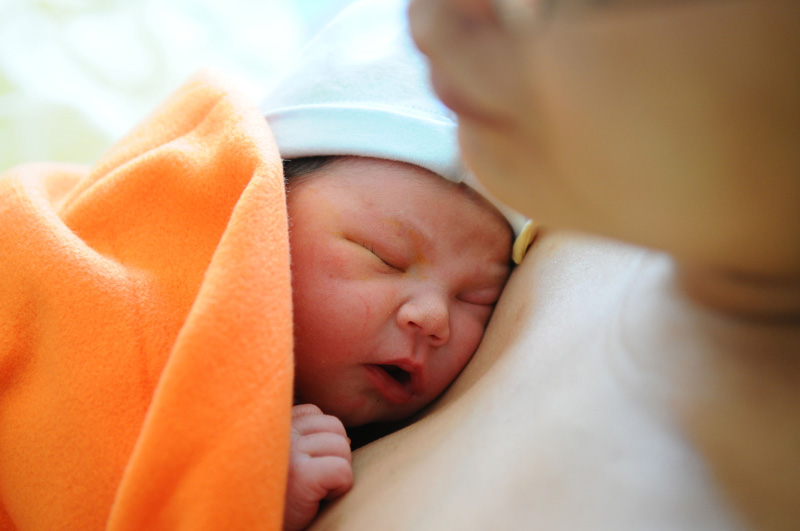
All babies have about the same number of pigment cells—skin color depends on how much melanin they produce and where it is placed. A baby’s skin color is still developing at birth and often deepens in the months that follow. (Image Credit: Adobe Stock Photos)
Skin pigmentation

Melanocytes are pigment-producing cells that begin appearing in the fetal skin around 9 weeks gestation.1 These cells are responsible for creating melanin, the substance that gives skin and hair their color. Melanocytes can be found in hair follicles, where they contribute to hair color, or between skin cells in the outer layer called the epidermis, where they affect skin tone. Interestingly, all babies—regardless of ethnicity—have about the same number of melanocytes.2 For example, when scientists compared the foreskin of light- and dark-skinned newborns, the number of melanocytes was similar.3

So, what is different between individuals of various skin tones?

What differs is the amount of melanin the melanocyte cells produce and how it is distributed in the skin. In lighter-skinned individuals, melanocyte activity tends to be limited to the deeper layers of the epidermis. In babies that are darker-skinned, melanocytes deposit more melanin in the basal layers of the skin, and the melanin gets closer to the skin’s surface.4 5

Melanin production begins between the third and fifth month of pregnancy, depending on the body site and individual’s genetic background.6 In darker-skinned fetuses, melanin can already be seen in the skin before birth, while in lighter-skinned babies, pigment production is minimal until after birth.7

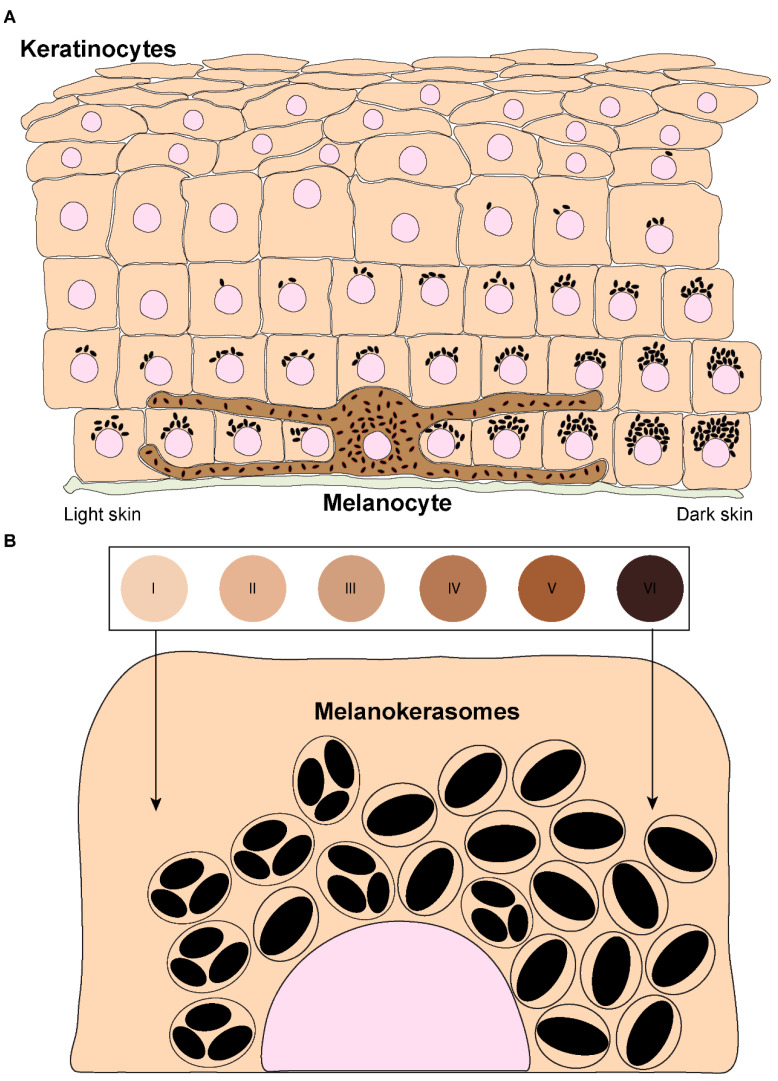
The amount and distribution of melanin, the pigment that gives skin its color, differs between people of different skin color. (A) Melanin is found in the outer layer of the skin, especially in the deeper basal layer. Lighter skin (I) has less melanin, mostly in the deepest layer. Darker skin (VI) has more melanin, and it is spread into upper layers too. (B) Inside skin cells, melanin is also arranged differently. In lighter skin (I), it is grouped in clusters. In darker skin (VI), it is spread out more evenly as single granules. (Image Credit: <a href="https://pmc.ncbi.nlm.nih.gov/articles/PMC10379423/">International Journal of Molecular sciences</a>)
The amount and distribution of melanin, the pigment that gives skin its color, differs between people of different skin color. (A) Melanin is found in the outer layer of the skin, especially in the deeper basal layer. Lighter skin (I) has less melanin, mostly in the deepest layer. Darker skin (VI) has more melanin, and it is spread into upper layers too. (B) Inside skin cells, melanin is also arranged differently. In lighter skin (I), it is grouped in clusters. In darker skin (VI), it is spread out more evenly as single granules. (Image Credit: International Journal of Molecular sciences)
When are we able to see differences in skin color?

Skin color differences are not clearly visible in premature infants until around 32 weeks gestation.8 Although melanocytes are active at birth, pigmentation is not fully developed in newborns, especially those with darker complexions. Their skin tone will deepen gradually over the first several months of life.9 This postnatal darkening is partly due to increased melanin production triggered by exposure to ultraviolet (UV) light after birth.10

Fetal hair

Fetal hair development follows a predictable timeline, beginning early in gestation and continuing through several distinct stages before and after birth. Hair follicles begin forming on the face around 14 weeks of gestation, gradually maturing into fully developed follicles by about 20 weeks.11 Interestingly, hair development on the lower body starts around 19 weeks gestation, more than a month after the face.12

The first hairs that grow around 14 weeks gestation are soft, fine strands called lanugo. Lanugo becomes plentiful by 19 weeks gestation and helps hold the vernix caseosa on the skin.13 These early hairs start in a growing phase. However, around the fifth month of pregnancy, these hairs shift into a resting phase over the course of about a week to 10 days.14 Many of the earliest lanugo hairs are shed between 8 and 9 months of pregnancy and get replaced by vellus hair—short, thin strands like peach fuzz.15 Although a baby is born with a full set of hair follicles on her head, the type of hair she has at birth will change. Eventually, vellus hair on the head is replaced by the longer hair typical of older children and adults called terminal hair.16 At birth, the body has about 5 million hair follicles, and while no new ones form after birth, each strand grows thicker and larger with age.17

5
million
At birth, the body has about 5 million hair follicles, and while no new ones form after birth, each strand grows thicker and larger with age.18
What determines a baby’s hair color?

A baby’s permanent hair color is predetermined by the chromosomes that she received from her mom and dad. Her genetics orchestrate the location and production of a natural pigment called melanin. Hair color is determined by the type and amount of melanin produced by cells called melanocytes. These cells gradually migrate into the hair follicles, into a part called the hair bulb, where they begin producing melanin.19

There are two main types of melanin:

  • Eumelanin, which gives hair black or brown tones. 
  • Pheomelanin, which produces red or yellow tones.

The mix and concentration of these two types of melanin determine the baby’s hair color.20

By the second trimester, melanocytes are active in the hair follicles and begin transferring melanin into the cells that form the hair shaft. However, hair is still developing, so the color may not be fully visible yet. Melanin production increases as the fetus grows, and hair begins to emerge with pigment in the third trimester.21

Importantly, melanin production may continue to change after birth. In a study of white European children, many infants were observed to have darker hair during the first six months of life. Between 9 months and 2½ years of age, their hair lightened noticeably. After age 3, however, their hair gradually darkened again, continuing this trend until around age 5.22 In short: a baby’s hair color starts forming in the womb, but it may change over the first months or even years of life as melanin levels stabilize.

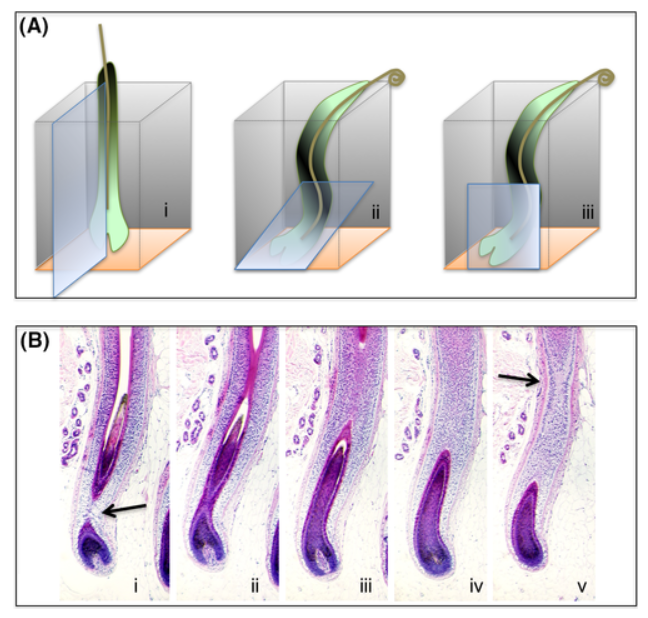
Curly hair grows from a follicle that is shaped differently than straight hair. Image A shows how in straight hair, the follicle is even and symmetrical. In curly hair, the follicle is bent and uneven. The lower part of the follicle curves, which causes the hair to grow in a curl. Image B shows a real hair follicle of a person with very curly hair. Notice how the follicle bends in more than one direction—side to side and front to back. This twisting shape changes how the hair grows, giving it its curly form. (Image Credit: <a href="https://onlinelibrary.wiley.com/doi/10.1111/exd.13347">Experimental Dermatology</a>)
Curly hair grows from a follicle that is shaped differently than straight hair. Image A shows how in straight hair, the follicle is even and symmetrical. In curly hair, the follicle is bent and uneven. The lower part of the follicle curves, which causes the hair to grow in a curl. Image B shows a real hair follicle of a person with very curly hair. Notice how the follicle bends in more than one direction—side to side and front to back. This twisting shape changes how the hair grows, giving it its curly form. (Image Credit: Experimental Dermatology)
Why do some babies have straight hair and others have curly hair?

Hair texture—whether straight, wavy, or curly—is largely determined by genetics, especially genes that influence the shape of the hair follicle and the structure of the hair shaft. Curly hair grows from asymmetrical or oval-shaped follicles, while straight hair comes from round follicles. Differences in proteins such as keratin also affect how tightly hair bends as it grows.23

Most babies are born with some mixture of fine hair called lanugo and coarser vellus hair, though its texture does not necessarily predict the child’s final hair type.24 After birth, many babies experience changes in hair texture as more permanent hairs grow in. Hormonal shifts and continued follicle development can cause hair to become curlier or straighter over time. In fact, hair texture may continue to change through early childhood as follicles mature and produce thicker, more structured hair fibers.25 Growth hormones, which surge during childhood growth spurts, and sex hormones, which surge during puberty change both the speed at which hair grows, and the size and shape of the hairs.26