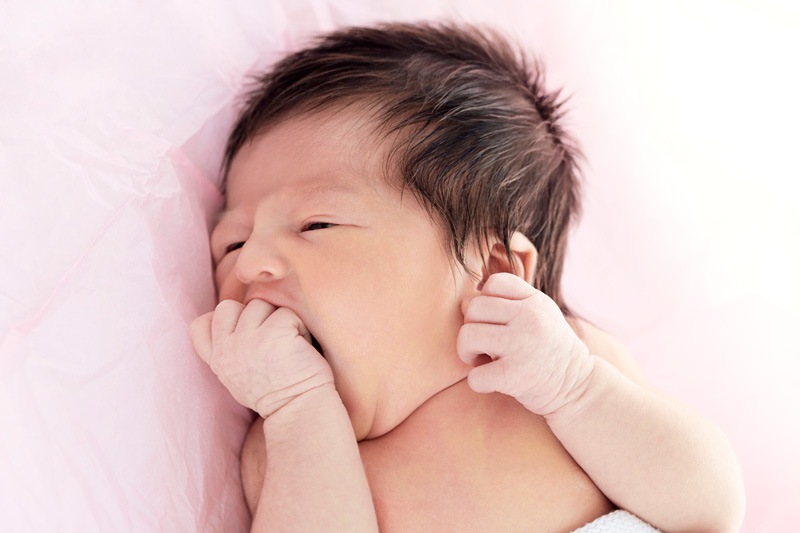




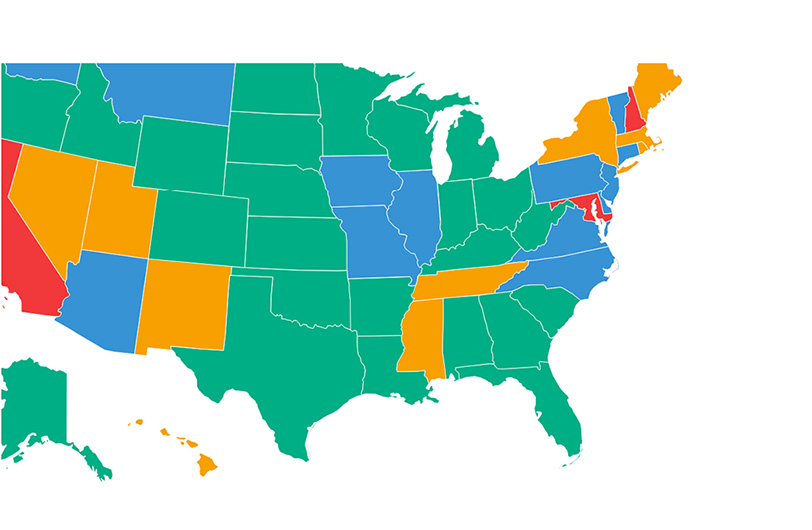

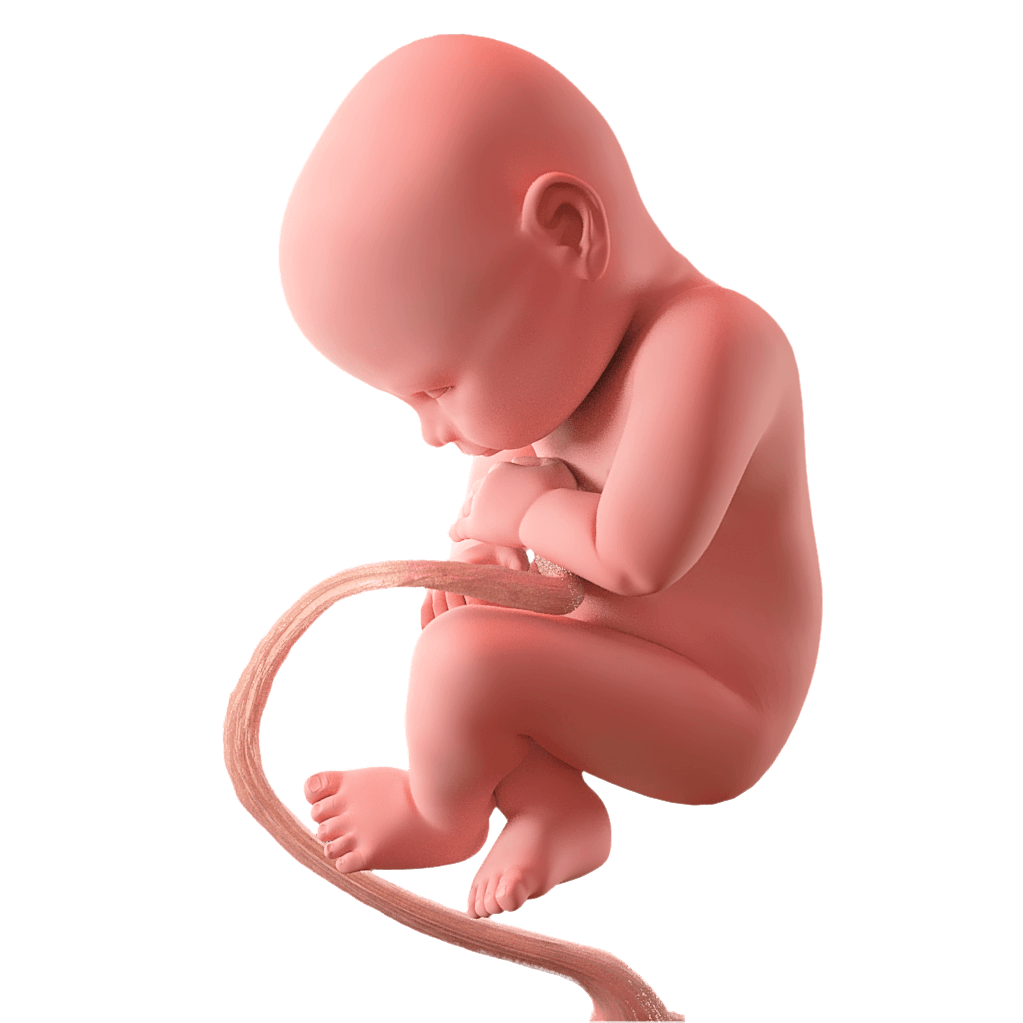
The likelihood of a post-term pregnancy can be traced to genetics—both the baby’s inherited tendency to gestate longer and the mother’s genetic predisposition to carry longer.10 A study of over 475,000 Swedish births found that genetics strongly influences whether a pregnancy continues to 42 weeks. For example, if a woman has had a post-term birth before, her chances of another are more than fourfold with the same partner and more than threefold with a new partner. If the mother’s sister delivered post-term, her own risk nearly doubles.11
Become A Defender of Life
Your donation helps us continue to provide world-class research in defense of life.
DONATECharlotte Lozier Institute
Phone: 202-223-8073
Fax: 571-312-0544
2776 S. Arlington Mill Dr.
#803
Arlington, VA 22206
Birth
Labor, delivery, and new beginnings
- Post-conception week 37+
- 9 Months Pregnant
- Gestational Weeks 39+
Newborns can recognize their mother by smell,1 voice,2 or milk.3 Newborns even recognize stories heard before birth.4
Only about 5% of babies are born on their due date.5 Genetics strongly influences how long a pregnancy lasts.6
Birth timing isn’t random—most babies are born during the day, especially around 8 a.m.7
A baby is considered full term at 37 weeks gestation. The baby’s due date is at 40 weeks gestation, which is 38 weeks after conception. Most doctors will induce labor if it has not started naturally within 2 weeks of a mother’s due date.
Very few babies are born on their actual due date. A little less than 5% of babies are born on their estimated date of birth, but the majority, about 2/3 (66%) of all births occur within one week of the baby’s due date. 8 When researchers studied naturally-conceived pregnancies and measured a mother’s hormones to track the date of conception, the median duration from conception to birth was 268 days. That means that half of women delivered their babies by 40 weeks and 2 days gestation, while the other half delivered after. 9
We often think that time of birth is random. Yet in modern America, the clock tells a different story and will depend on the method of delivery. Weekly birth patterns follow striking rhythms. About 12,000 babies are born on a typical Tuesday, compared with just 8,000 on a Saturday. Furthermore, roughly 450 babies are born every hour in the United States, but that pace rises and falls throughout the day. Nearly 60 percent of babies arrive between 6 a.m. and 6 p.m. Births surge around 8 a.m., largely driven by scheduled cesarean deliveries. On weekdays, a second bump often appears around lunchtime. By contrast, the quietest hour for births is early Sunday morning, between 2 and 3 a.m. In fact, 3.5 times more babies are born at the most common time, 8 a.m., compared to the least common time, 3:09 a.m. Behind every birth story is a waiting family, but behind the national pattern is a schedule shaped not only by biology, but by modern medical practice.12
No one knows exactly how labor begins, but research suggests that the fetus sends hormonal signals to the mother’s uterus to start labor.13 Powerful contractions push the baby out. The soft plates in his skull squeeze together and overlap to allow his large head to move through the birth canal. As far as we know, childbirth may be one of the most stressful events of a child’s life. As labor begins, a baby’s body unleashes a powerful surge of stress hormones, called catecholamines, sending their levels soaring to 10 to 15 times higher than normal. These levels far exceed what is seen in even the most severely stressed adults.14
But this surge in stress hormones is not dangerous. In fact, it is important for the baby’s survival outside the womb! They support the lungs as the baby takes that first breath, help regulate blood sugar, and protect vital organs during the intense physical strain of birth. Even more astonishing, if a baby experiences a drop in oxygen during labor, these stress hormones can spike to levels that would cause a stroke in an adult. Yet instead of harm, they offer protection, helping the baby withstand the challenge of oxygen deprivation and live outside the womb.15
Since the unborn baby practiced breathing in the womb, why aren’t his lungs filled with fluid when he is born? The answer is that at birth, his lungs are about half-filled with fluids, but the fluid quickly leaves the lungs via three different routes:17
- Lung fluid gets squeezed out of the mouth and nose by the pressure on the baby’s chest during a vaginal delivery.18
- A surge in stress hormones at birth helps the lungs pump fluid out of the airspace.19 Some of this fluid moves through the lung tissues into the lymph system. These vessels are comparatively larger at birth than they are in adults.
- Lung fluid moves through the lung tissues into the lung’s blood system.20
Immediately after birth, newborns take between 4 and 11 breaths before the lungs establish adequate gas exchange.21 Healthy newborns take between 8 and 10 minutes after birth to establish normal oxygen saturation levels above 90%, and between 30 and 90 minutes to establish normal breathing patterns.22 A caesarian birth (C-section) without labor may require extra measures to clear lung fluid and reduce the risk of respiratory problems.23
At birth, a baby’s heart and blood flow change quickly. The lungs fill with air, which lowers the resistance for blood to flow through them. Thus, the blood starts going through the lungs to pick up oxygen. Special shortcuts in the baby’s heart close, and the placenta is disconnected. Blood starts moving through the baby’s heart like an adult’s heart.24
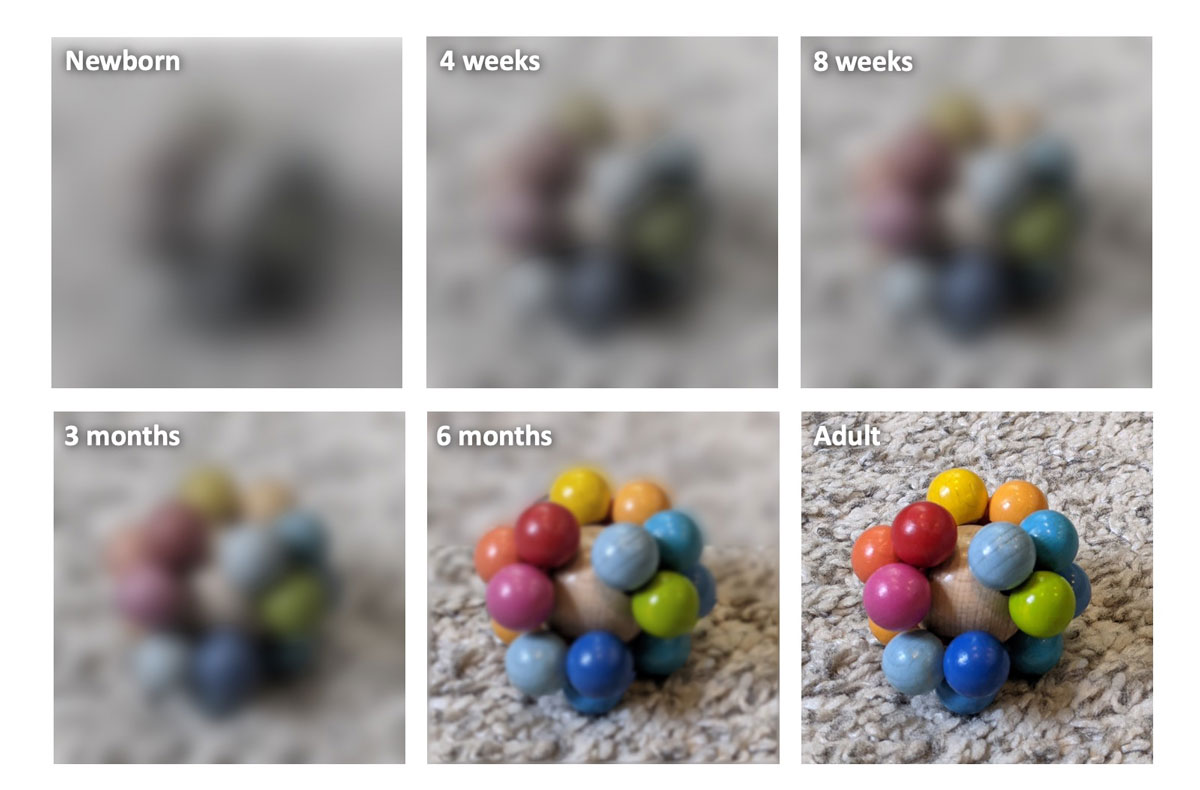
Sensation in the womb directly influences how well he can use that sense as a newborn.25 For example, since very little light penetrates the womb, newborns have poor visual acuity at birth, and can only see things up close at first.26 Their vision will sharpen in the months ahead. In contrast, newborns have been experiencing tastes and smells in the amniotic fluid for months, so they have a keen sense of smell at birth, even better than adults.27
Just a few days after birth, newborns can already:
- Recognize their mother’s voice,28 native language,29 and stories that she read before birth.30
- Recognize music31 and made-up words that they heard in the womb.32
- Recognize the smell of their amniotic fluid33 and their mother’s own breastmilk.34
- Respond to most flavors, except salt.35
- Prefer looking at happy faces over fearful faces.36
- Distinguish a few colors: white from red and orange, but not yellow and green.37
- Visually recognize their mother’s face,38 but only if she has talked to them after birth.39
- Visually recognize an object they have only touched before.40
- Imitate facial movements they’ve seen in a video.41
- Cry with the same intonation as their native language.42
- Cry when another baby cries.43
As science shines light on the hidden life of unborn babies and newborns, researchers are discovering that babies are not just passive beings focused on survival. Even before birth, they show an incredible ability to sense, learn, and respond to the world around them — a reminder of the rich humanity present from the very beginning of life.
A newborn has limited vision. His visual acuity will be about 20/860,44 and he will not be able to sense all the colors until the cones in his retina finish developing.45 Babies have strikingly large eyes. In fact, the eyeball of a newborn baby is ¾ of its adult diameter and 2/3 of its adult weight.46 The baby’s tear ducts are not open until one month after birth.47 That means that infants cry without tears for the first month of their lives.
Babies are born with about 40% more brain cells than they will have as adults.48 This extra supply allows the brain to adapt and learn. In the first years of life, the brain enters a period of explosive connectivity. Neurons form junctions called synapses, linking each cell to thousands of others. By about age three, the brain contains more than 150 trillion synapses.49 These connections do not appear all at once. Different regions of the brain reach their peak density at different times: the visual cortex peaks between two and four months,50 while the frontal cortex, which supports planning and judgment, peaks around two years of age.51
Then the brain begins a careful process of refinement. Synapses that are used frequently grow stronger, while those that are rarely activated gradually disappear in a process known as pruning. Synapses continue to form and fade throughout life,52 but before age 3, this is especially dynamic.53 New connections form and others are lost for a person’s entire life.54
The axons of neurons in helpful circuits get wrapped in a fatty sheath, called myelin, speeding up those signals. Although most myelin grows in the first two years of life, the process continues into adulthood. Most scientists consider the brain mature once myelination is complete and major neural circuits have stabilized—sometime in the mid 20s.55 By then, the brain has been sculpted from its early neural surplus into the finely tuned organ that supports adult thought, memory, and creativity. Together, these processes make the brain an efficient, highly specialized network influenced by both genes and experience.56
The brain is a remarkable feat of biological engineering: at birth, the brain contains about 100 billion neurons, including roughly 20 billion in the cerebral cortex alone. Each cortical neuron forms an average of 7,000 connections, producing about 150 trillion synapses and more than 93,000 miles of nerve fibers.57
The baby is born with approximately 270 bones, which will fuse together to form the 206 bones found in an adult.58 Some of these bones are partially made completely of a softer, more flexible tissue called cartilage. In fact, in many long bones, the center of the bone has hardened, while near the ends of the bone structures called growth plates lengthen the bone by adding cartilage. This allows the child to grow taller. As the child grows, bone replaces the cartilage. This process does not end until around age 25. At that point, the bones are as long as they will ever be, but bones can still heal after breaking.59
Interestingly, many bones remain partly cartilaginous at birth to allow flexibility during delivery and room for growth afterward. For example, the “soft spots” on a baby’s head, called fontanelles, are gaps between developing skull bones that will eventually fuse. This allows the baby’s head to compress as it passes through the birth canal. After birth, some skull joints and soft spots stay open so the skull can keep growing as the brain grows. The back soft spot usually closes by 1 to 2 months, and the front soft spot usually closes by 18 months, while some skull sutures stay open until adulthood.60 Over time, the bones gradually fuse together in a predictable sequence. In fact, the timing of this fusion is so reliable that scientists and forensic experts can use it to estimate a child’s age from skeletal remains.61 Thus, skeletal strength and flexibility are beautifully balanced during pregnancy to allow the best outcomes for the baby’s birth.
At birth, a baby already has about 5 million hair follicles all over the body. No new follicles will form after this point.62
But the hair itself will change over time. Hair texture is guided by genetics. The shape of the hair follicle helps determine whether hair grows straight or curly.63 Most babies are born with soft, fine hair that will later be replaced.64 As the child grows, hormones and ongoing development change the thickness, shape, and pattern of the hair, with refinements extending into adolescence.65
Hair color is also guided by genetics. Special cells called melanocytes produce a pigment called melanin inside the hair follicle.66 Different types of melanin create different colors. More eumelanin leads to brown or black hair, while pheomelanin creates red or yellow tones.67 Hair color begins in the womb, but it often changes after birth as melanin levels adjust.68 Each child’s hair becomes a lasting reflection of both their genetic inheritance and their unique development.
Most people lose about 50 to 150 hairs from their head every day.69
However, many newborns shed all their hair at once before 6 months old. Babies lose their hair for two main reasons:
- The natural hair cycle is synchronized. When a new hair growth phase begins, the old hair falls out. Because most of the hairs are at a similar stage of development, the hair loss tends to happen in a short period of time.70
- Hormones levels that promote hair growth are high in the womb, but drop significantly at birth. This leads to hair loss for both baby and sometimes mom as well.71 72
After birth, babies continue receiving immune protection from their mothers through breastmilk. The most abundant antibody in breastmilk, IgA, coats the baby’s throat and intestines, helping block germs from attaching and causing infection.73 Because newborns cannot yet make much IgA themselves, these maternal antibodies help protect them from dangerous bacteria such as E. coli.74 Breastmilk also contains other protective ingredients—including immune cells from the mother and decoy molecules that trap microbes—helping strengthen the baby’s developing immune system.75
Breast milk is far more than food. It is a living, dynamic system: a personalized blend that continually adapts to a baby’s changing needs. No two mothers produce identical milk, and even one mother’s milk shifts from day to day, over the course of a feeding, and across the months of her baby’s growth.76