



Understanding the timing of a baby’s first heartbeat can be confusing because there are two different ways to report the time of pregnancy. Embryonic ages are measured from conception, the beginning of a new human life. But most medical professionals and mothers use gestational age based on the mother’s last menstrual period. The gestational age of a baby is typically two weeks greater than embryonic age. Therefore, it is scientifically accurate to say that the heart starts beating at 5 weeks and one day gestation or 3 weeks and one day after conception. Both facts are correct; they are just two different ways of saying the same thing. This website uses gestational age for clarity.
Become A Defender of Life
Your donation helps us continue to provide world-class research in defense of life.
DONATECharlotte Lozier Institute
Phone: 202-223-8073
Fax: 571-312-0544
2776 S. Arlington Mill Dr.
#803
Arlington, VA 22206
Week 5
First heartbeat and neural tube development
- Post-conception week 3
- Days of life 21-27
- Gestational Week 5
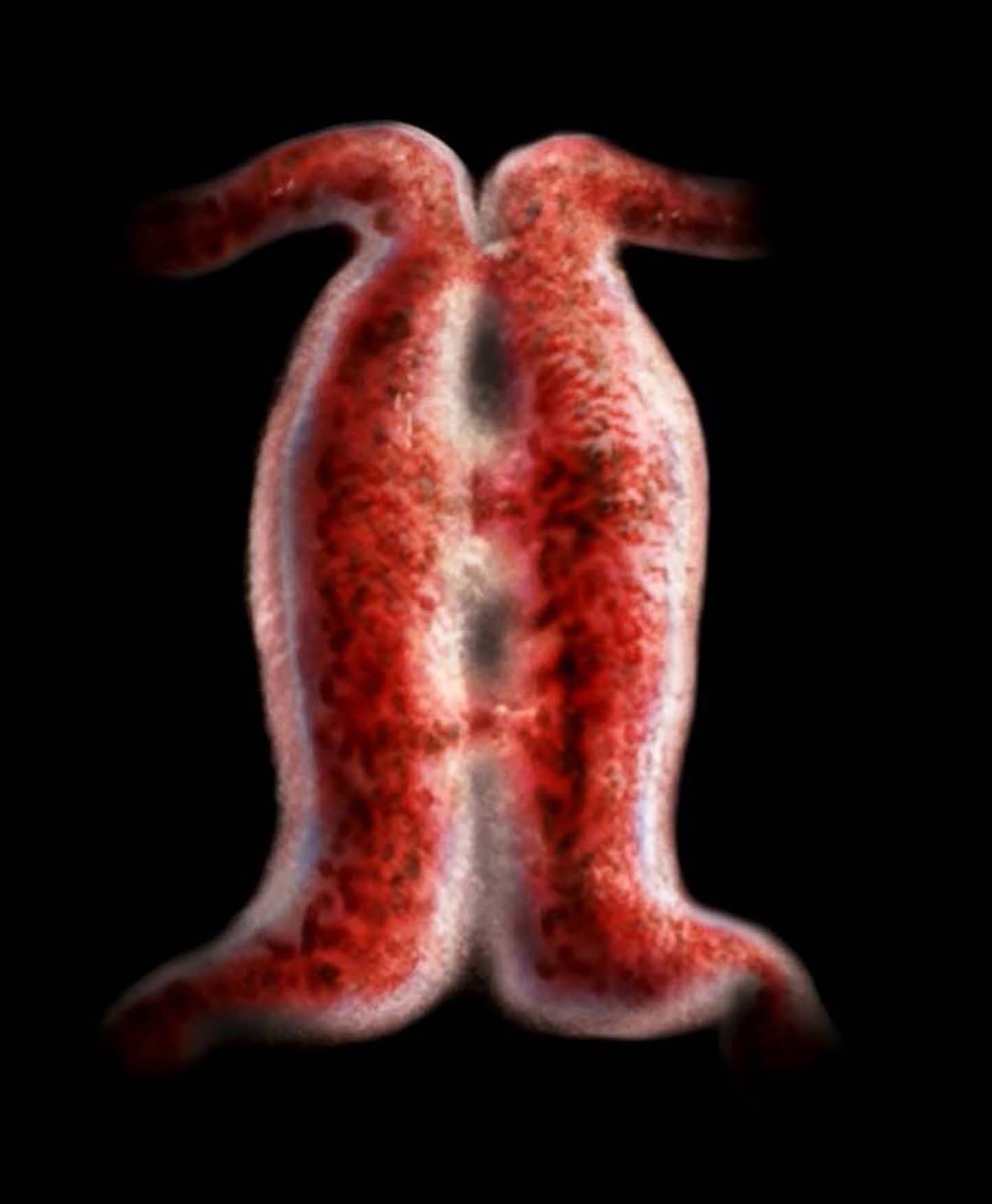
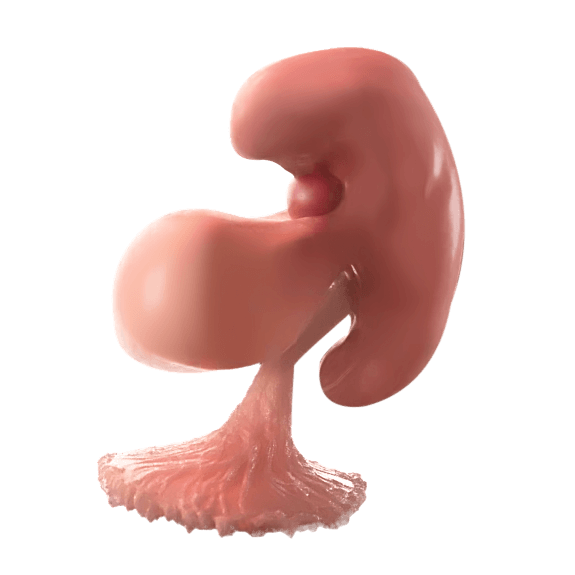
The changes in the unborn baby between the beginning and end of week 5 are dramatic. Like rumpling a flattened blanket, flattened embryonic tissue begins folding, forming a neural tube that will become the brain and spinal cord. More folding creates the chest and abdominal cavities.4
Only 22 days after conception or 5 weeks and 1 day gestation, the unborn baby’s heart starts beating.5 6 This is sometimes called the sixth week of pregnancy because 0 weeks and 1 to 6 days is known as the first week of pregnancy, so 5 weeks and 1 to 6 days is also known as the sixth week of pregnancy.
At 23 days after conception , the heart beats between 947 to 98 times per minute, and subsequently begins to rise.8 By the end of week 5, the heartbeat has increased to an average of 108 beats per minute.9 Once the heart starts beating rhythmically, it does not stop until the person dies. The heart moves oxygen-carrying blood throughout the developing embryo so that he can continue to grow. Without a heartbeat consistently circulating blood, new tissues would not have enough oxygen to survive.10
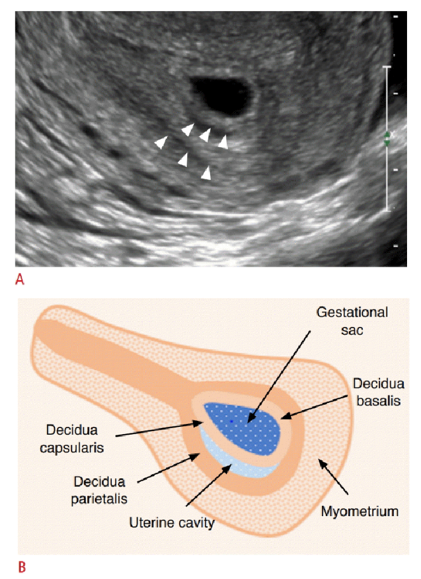
A heartbeat is sometimes visible in week 5, around the same time many women discover they are pregnant.11 Although pregnancy can be confirmed by a trained medical professional using ultrasound to detect the early heartbeat as early as 5 weeks and a few days gestation, it is more consistently detected at 6 weeks.12
Around five weeks, the baby’s heart is just beginning to take shape. It starts as a simple tube, growing quickly. This tiny heart tube forms from special tissue guided by genetic instructions and chemical signals from the surrounding body structures. Muscle contractions cause a pumping motion in the heart tube, that becomes rhythmic by day 22.16 Interestingly, the motion and pressure of blood moving through the heart tube causes parts of the tube to become more like the heart’s final shape, since heart cells change their shape and size in response to mechanical stress.17
Around 5 weeks, the baby’s body starts making blood vessels. Blood vessels form in two main ways throughout development:
- Vasculogenesis – Special cells come together in long lines and hollow out to form new blood vessels. The major blood vessels, like the aorta and major veins, form via vasculogenesis.18
- Angiogenesis – Once the first vessels are in place, new vessels sprout and grow out from them, like branches growing from a tree. Most blood vessels and capillaries in the body form via angiogenesis.19 20
Just 22 days after conception or 5 weeks and 1 day gestation, the neural tube starts to close. Folds of neural tissue fuse together, starting in the neck area, continuing towards the head and rump. The neural tube becomes the brain and spinal cord.21 The brain finishes fusing 25 days after conception, and the bottom of the spinal cord finishes fusing 28 days after conception.22 The brain grows in three sections: the forebrain, midbrain, and hindbrain.23 The forebrain is responsible for sensing, decision making, and forming memories; the midbrain is responsible for localizing sounds, moving, and tracking objects; and the hindbrain is responsible for vital body functions. Later in development, pain processing occurs in all three sections of the brain.24 Even before the top end of the neural tube has fused together, the eyes start forming as little bubbles of neural tissue on either side of the forebrain, 22 days after conception.25
Eventually, the brain will be divided into hemispheres — the left and right halves of the brain. By 5 weeks gestation, the primitive versions of these hemispheres have developed.26 The primitive thalamus is also first identified during week 5.27 The thalamus will serve important roles in pain perception, and sensory and motor integration.
Just weeks after conception, the baby’s body starts preparing for his or her future children! Primordial germ cells are large specialized cells that become sperm or egg-producing cells, depending on whether the baby is a boy or a girl. By about 24 days after conception , they can be found near the base of the umbilical cord. From there, they migrate through the developing body to the testes or ovaries, where they will one day make sperm or eggs, laying the groundwork for the next generation.28
Somites are small, paired blocks of tissue that form along an embryo’s back and lay out the body’s basic structure. They first appear about 20 days after conception and can be counted to estimate the unborn baby’s age. For example, there are about 7 somites at 22 days and around 25 by day 28.29 As somites mature, they give rise to bone, muscle, cartilage, nerves, and the skin of the back.30
The respiratory system begins forming around 22 days after conception.31 The lungs develop from two small lung buds that grow in front of the gut tube.32