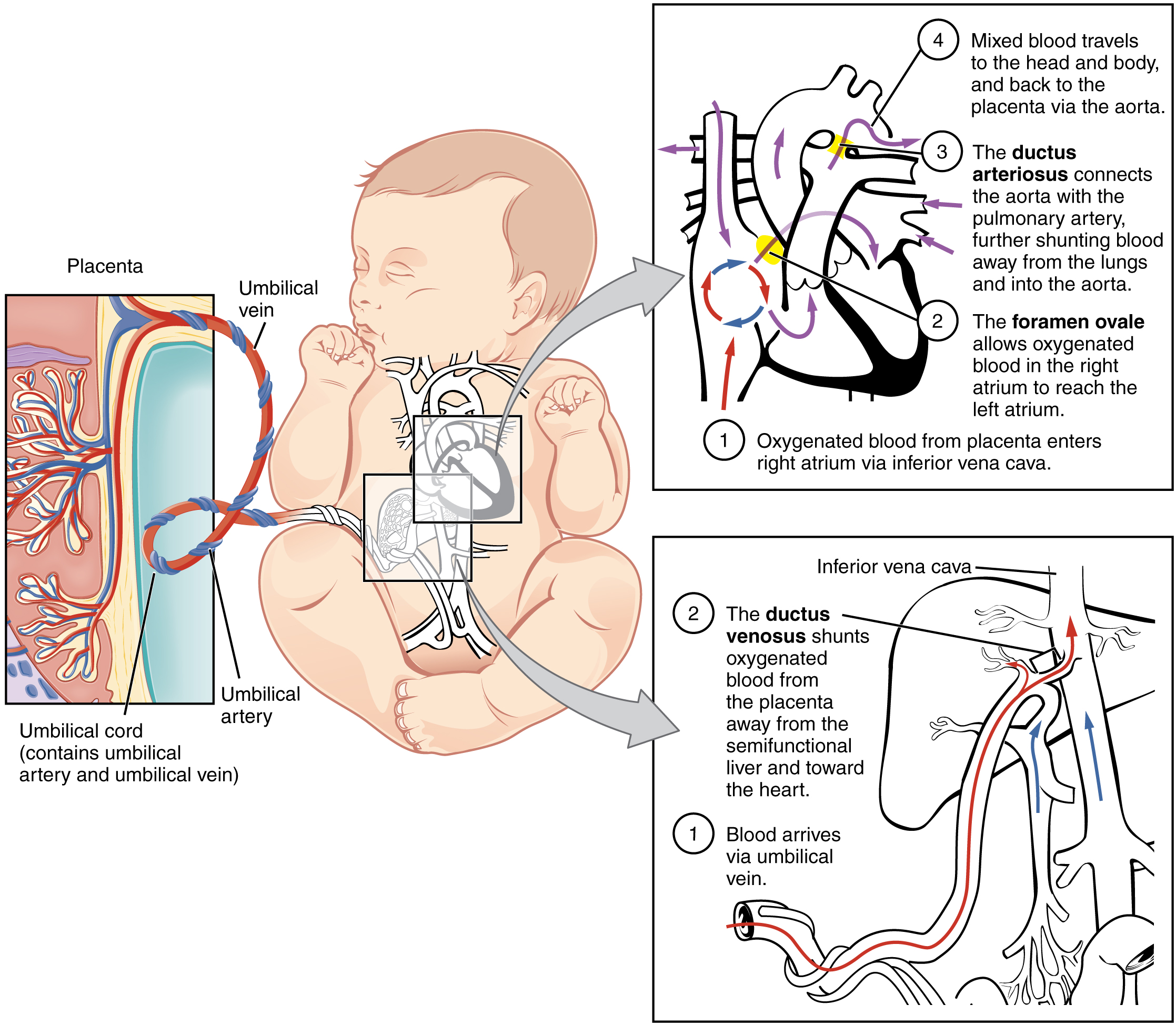
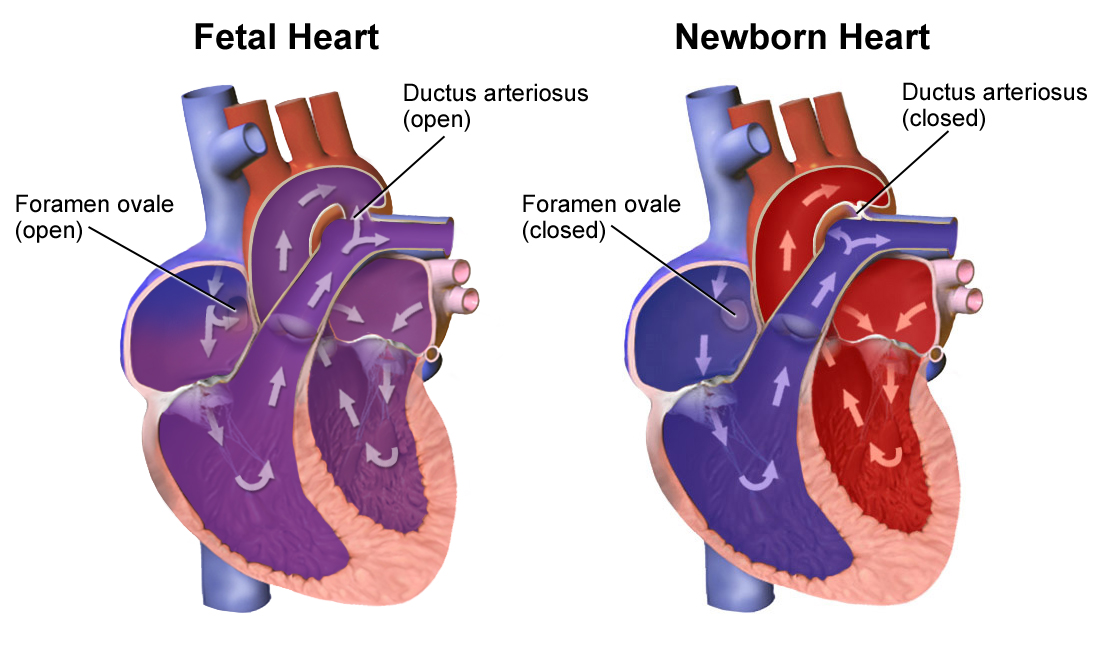
Blood from the placenta travels through the umbilical vein. About half of it skips the liver via the ductus venosus, entering a large vein that leads straight to the heart. The rest goes through the liver to nourish it. Once in the heart, the blood flows into the right atrium, but because the lungs aren’t working yet, most of the blood bypasses them through the foramen ovale, a flap-like opening into the left atrium.3
Another clever shortcut is the ductus arteriosus, which sends most of the blood that would normally go to the lungs straight into the aorta instead. This ensures oxygenated blood reaches the body without needing to pass through the fetal lungs.4
Only a small amount of blood— just 8-10%— travels through the lungs around 20 weeks gestation because the resistance in fetal lung vessels is extremely high. The returning blood, now carrying less oxygen, exits through two umbilical arteries back to the placenta, where it will be refreshed with oxygen and nutrients once again.5