


Breathing outside the womb is an amazing and complex process. This is why the unborn baby consistently practices breathing starting at gestational week 13!17 Fetal breathing movements push amniotic fluid into and out of the developing lungs. At the end of the bronchioles, the moving amniotic fluid helps inflate the tips into future alveoli, where gas exchange will occur. At the same time, these mechanical forces guide lung cells to differentiate into two critical types: type I cells, which exchange gases, and type II cells, which produce surfactant, a slippery substance that prevents alveoli from sticking shut when the baby breathes out.18
Become A Defender of Life
Your donation helps us continue to provide world-class research in defense of life.
DONATECharlotte Lozier Institute
Phone: 202-223-8073
Fax: 571-312-0544
2776 S. Arlington Mill Dr.
#803
Arlington, VA 22206
Weeks 21 & 22
Preparing for life outside the womb
- Post-conception week 19&20
- 5 Months Pregnant
- Gestational Weeks 21&22
The youngest premature baby to survive was born at 21 weeks. Many babies born in week 21 of pregnancy have survived!1
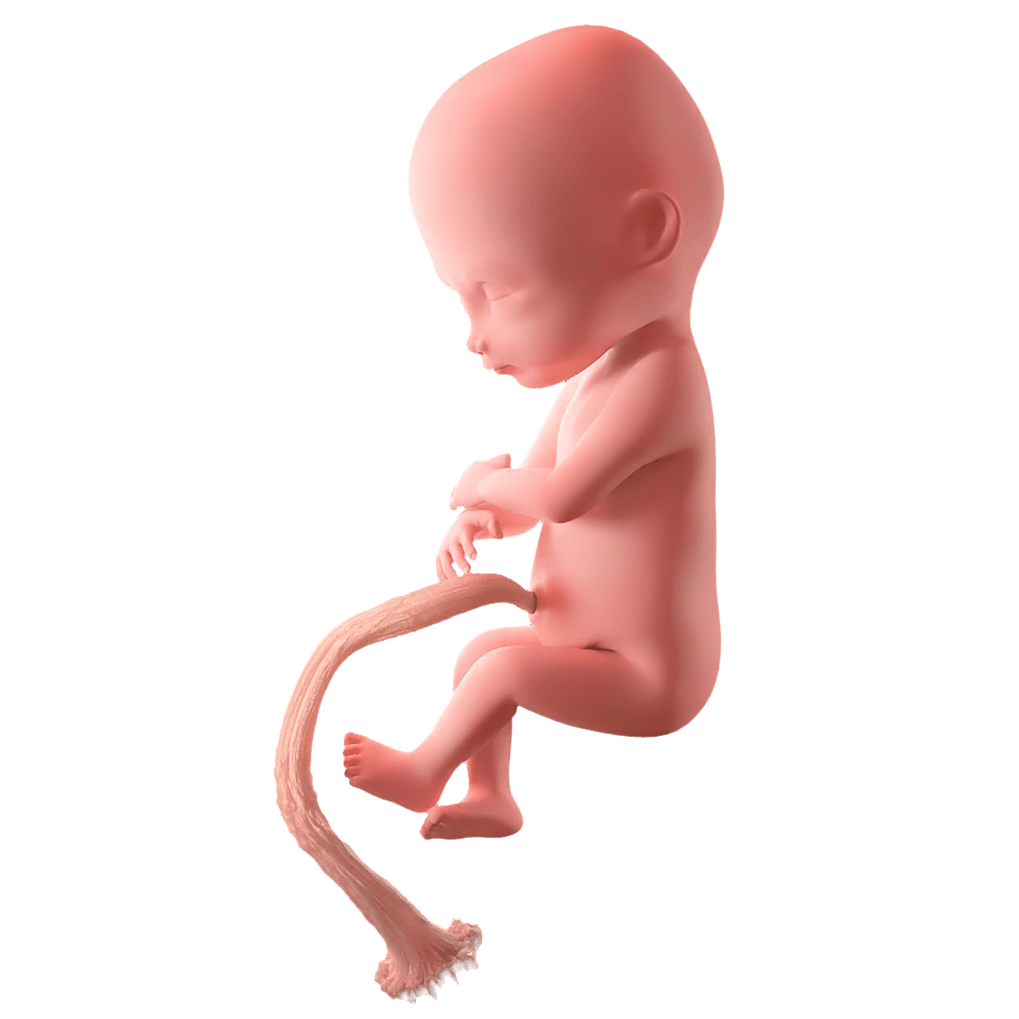
By week 22, eyebrows and hairs on the head are clearly visible.2
By 22 weeks the inner ear has reached adult size,3 enabling the baby to move in response to a loud, low-pitched sound like his father’s voice.4
Doctors are now trying to save babies born as early as 21 and 22 weeks. These tiny babies often weigh less than a pound. Survival is higher in hospitals with special training and equipment. One hospital in Germany reports over 60% survival for babies born at 22 weeks,12 compared to about 25% in the U.S. 13
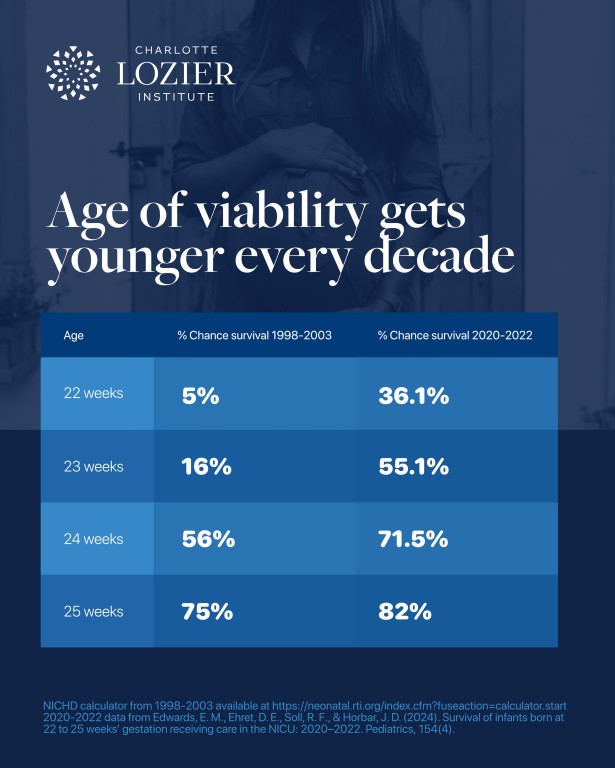
Hospitals are making rapid progress at helping premature babies the size of an adult’s hand survive. Between 1998 and 2003, if a baby was born at 22 weeks gestation, he only had a 5% chance of surviving.14 Now, between 2020 and 2022, a baby born at 22 weeks gestation has a 36% chance of survival with active care.15
Many medical advances have improved survival for very premature babies. Their lungs are not fully developed, and they often do not make enough surfactant. To help, doctors give the mother a steroid injection before early delivery. These steroids stimulate lung maturation and surfactant production. This makes it easier for the baby to breathe after birth. Tiny ventilators may also help the premature infant breathe.16
In month 5 of pregnancy, the unborn child begins to detect and respond to sounds outside the womb. In one study, a fetus at just 19 weeks gestation moved in response to a loud, low-pitched tone, similar to a lawn mower.19 Unborn babies begin responding to sound at different weeks of pregnancy, much like infants reach milestones such as crawling at different ages. By 21 to 22 weeks, about half of babies had a heart rate acceleration when exposed to a high-pitched sound like the beep of a microwave, showing their hearing is starting to work.20
Starting at 5 months gestation, the fetus’s movements and breathing follow a daily cycle, called a circadian rhythm.21 Interestingly, fetal activity, especially breathing movements, increases about two hours after the mother eats, and then starts to decrease.22 The baby’s heart rate follows a daily pattern as well.23
The unborn baby’s movements appear more intentional at this point in development. For example, at 22 weeks, an unborn child appears to recognize that his eyes are more delicate than his mouth and adjusts his movements accordingly.25
Fetal movements, such as tiny kicks and stretches, play a pivotal role in helping the unborn baby’s joints form correctly. When the baby kicks, it puts gentle pressure on its hips and knees—about as much as lifting a small apple with each movement! These natural forces help shape the baby’s joints.26 If the unborn baby cannot move properly due to rare conditions, the lack of movement can lead to abnormal joint development.27 But when the baby moves regularly, it not only helps joints develop properly—it can also help the fetus turn and get into the best position for birth.28
By 21 weeks, the unborn baby also responds to his mother. For example, when a mother touches her own abdomen, the baby moves his arms and head more. Similarly, when a mother speaks to her unborn baby, he opens his mouth more frequently.29
Fewer than 1% of babies are born extremely premature—before 28 weeks—when the brain is still developing rapidly, with neurons migrating, white-matter pathways forming, and circuits for movement, learning, and vision taking shape. When a baby is born very early, this development continues outside the womb under far more stressful conditions, making the immature brain vulnerable to injury and disrupted growth. As a result, extremely preterm infants have higher risks of long-term challenges affecting cognition, motor skills, vision, and learning. Advances in neonatal care—including improved respiratory support, protective brain monitoring, and therapies that promote healthy brain growth—are helping more of these tiny patients survive and develop with better outcomes than ever before.30
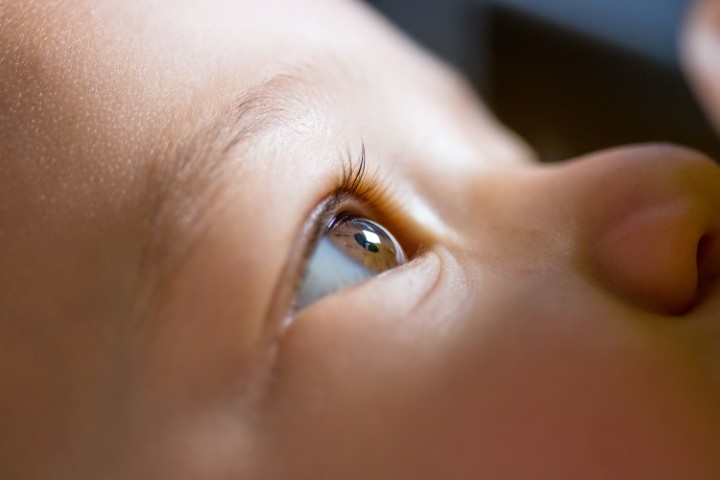
Researchers debate exactly when the eyelids open. Just as some babies learn to walk at 10 months old and others wait until they are 18 months old, not every baby opens his eyes at the same time. Careful examination of eyelid tissue from deceased children shows that eyelid separation starts at 22 weeks gestation. The eyelids will be fully separated again by 26 weeks gestation.31 Between 23 and 26 weeks, most premature infants start blinking.32
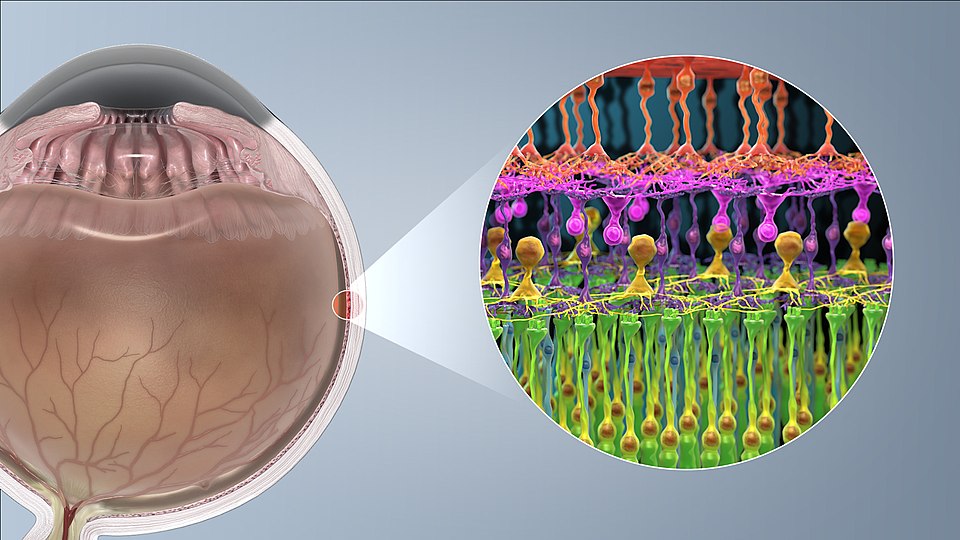
By 5 months, the unborn baby’s eyes have developed light-sensitive cells called rods and cones. These cells work together to make vision possible.33 Rods are incredibly sensitive and help us see in dim light, while cones allow us to see color and fine detail. Adults have 100 million rods and 6 million cones in each eye.34
The retina grows with precise organization. Cones cluster in the fovea, the central region responsible for sharp vision, while rods spread out to the edges. While rods and cones are formed all over the retina, cones move towards the fovea and rods move out of the fovea throughout pregnancy and for many months after birth.35 Many key processes—such as cells division, maturation, and synapse formation—begin in the future fovea and spread outward across the retina.36 For example, cells stop dividing in the center early but continue growing in the outer regions until later in pregnancy.37 By about 20 weeks, the center of the retina is quite developed, while the edges are still catching up.38 Even after birth, vision keeps improving. Cones continue to develop until at least four years old.39
In females, the number of future eggs in the ovary peaks at 7 million around 5 months. After this, the ovary essentially stops creating future egg cells, and most of these cells die before birth. In fact, only between 600,000 and 800,000 future egg cells remain by birth. Only 40,000 of these cells will remain by the start of puberty, and less than 500 of these cells will be released in ovulation.40
In the fifth month, at 21 weeks gestation, every area of the skin has either immature or developed hair follicles.41 By week 22, eyebrows and hairs on the head are clearly visible.42 The fetus’s body is completely covered by soft, fine hairs known as lanugo. This hair is shed shortly before or after birth and replaced by coarser hair.43
Until about 22 weeks, the baby’s skin is still very thin, so water and salts can pass through it to help regulate the body. Then, between 22 and 25 weeks, the skin begins making keratin, a protein that strengthens the skin, creates a protective barrier,44 and helps form the smaller ridges in fingerprints.45 As the outer layers shed, they mix with natural oils to form a creamy coating called the vernix caseosa.46 By about 23 weeks, this coating starts to cover the baby’s skin. It remains until birth and protects against infection, keeps the skin waterproof, and helps the baby stay warm. Because of these benefits, many doctors recommend waiting before washing it off after birth.47
By 21 weeks, the left and right sides of the brain show differences, with extra growth occurring in the areas which will later process language.48