Search Icon
Search Icon
close-panel

Charlotte Lozier Institute

Phone: 202-223-8073
Fax: 571-312-0544

2776 S. Arlington Mill Dr.
#803
Arlington, VA 22206

Get Notifications

Sign up to receive email updates from Charlotte Lozier Institute.

This field is for validation purposes and should be left unchanged.

Become A Defender of Life

Your donation helps us continue to provide world-class research in defense of life.

DONATE

Charlotte Lozier Institute

Phone: 202-223-8073
Fax: 571-312-0544

2776 S. Arlington Mill Dr.
#803
Arlington, VA 22206

Teeth

Dive Deeper
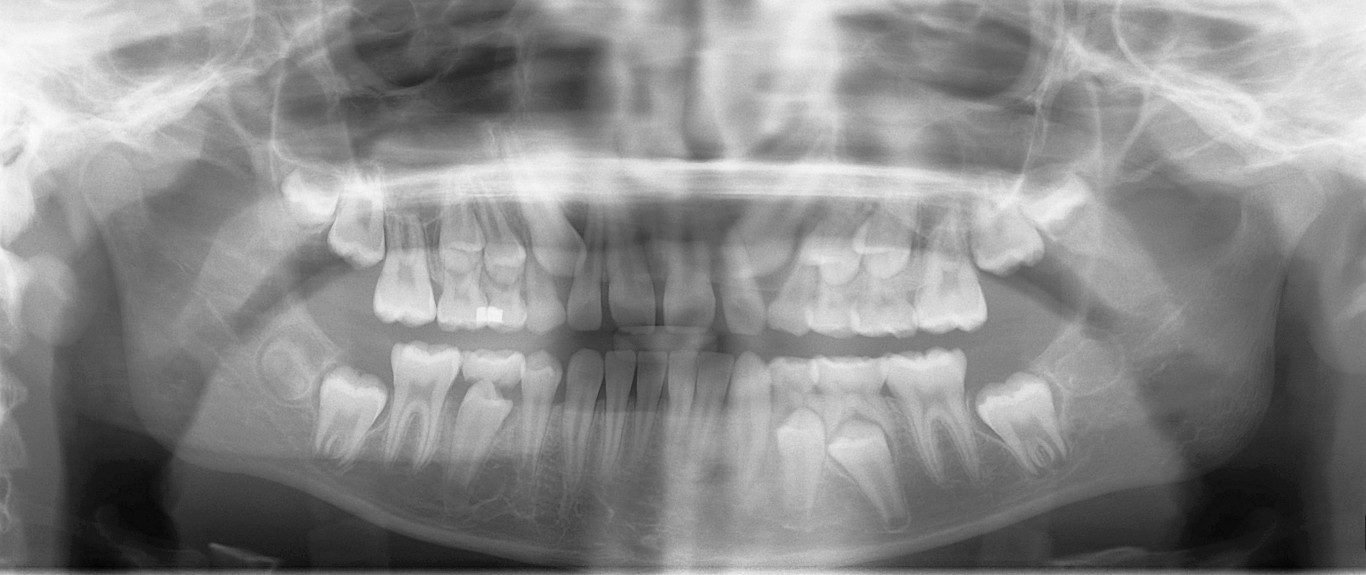
This X-ray from the mouth of a 9-year-old shows how the adult teeth grow below the baby teeth, embedded in the jawbone. (Image Credit: <a href="https://commons.wikimedia.org/wiki/File:Mixed_dentition_pan.jpg">Coronation Dental Specialty Group</a>)
This X-ray from the mouth of a 9-year-old shows how the adult teeth grow below the baby teeth, embedded in the jawbone. (Image Credit: Coronation Dental Specialty Group)
Why do people get two sets of teeth?

Long before a baby’s first tooth appears, every baby tooth—and every adult tooth—is already developing deep inside the jaw. Why would people grow two complete sets of teeth?

Firstly, a child’s jaw is too small to fit all 32 adult teeth. Also, the second set of teeth serves as an important back-up should accidents or poor dental hygiene damage the first set of teeth, so the child will have fewer long-term consequences. 

How do teeth form?

By 8 weeks of pregnancy, the first signs of a tooth appear. A tiny tooth germ begins to grow inside the baby’s jaw. Cells from the lining of the mouth and nearby neural crest cells, which come from the area next to the developing brain and spinal cord, work together to build a tooth.1

By 10 weeks gestation, the bud stage begins. Small enamel organs form. These are the early structures from which each tooth will develop.2 3

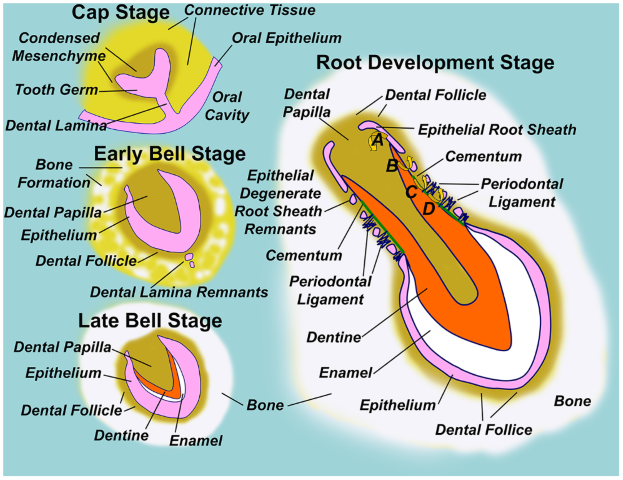
By about 12 weeks, the cap stage is underway. The tooth germ grows and folds inward. This helps shape the future crown, the part of the tooth seen above the gum. Important cells also begin to specialize. Some will later make enamel. Other nearby cells form the dental papilla, which will become the tooth’s pulp. The bud of a second tooth starts to form behind the first tooth. The second tooth will slowly develop into the permanent adult tooth. The first tooth becomes the baby tooth.4 5

By 16 weeks, the tooth enters the bell stage. More layers appear, and the tooth becomes even more organized. These layers protect the developing tooth, carry nutrients, and help determine its final form, including the root.6 The jaw bone forms around the baby tooth and permanent tooth, holding them in place.7

Human teeth begin as tiny buds within the embryonic jaw. As they pass through the cap and bell stages, they gradually form enamel, dentine, roots, and supporting tissues. By the end of development, each tooth is firmly anchored to the jaw by bone and the periodontal ligament. (Image Credit: PLOS One)

Next, hard tissues begin to form. Dentine forms inside the tooth, and enamel forms outside the tooth. Both layers thicken and then harden as minerals embed in the soft early tissue.8

After the crown is complete, the root begins to form. Then a hard calcified covering called cementum develops on the root surface, and the periodontal ligament forms to anchor the tooth to bone.9

The central incisors are usually the first baby teeth to emerge. Hidden deep within this baby’s jaw, the permanent teeth are already developing and will emerge in early childhood, causing this child to lose her baby teeth. (Image Credit: Wikimedia Commons)
When do teeth appear?

Baby teeth start to poke out of the gum, starting roughly 6 months after birth.10

Most children have their full set of 20 baby teeth by age 2. Permanent teeth form inside the jaw bone, under the baby teeth throughout early childhood. When children shed their baby teeth, only the crown and the uppermost part of the root fall out. The permanent teeth use the same artery and bone socket that the baby teeth used.11 Adult teeth replace baby teeth throughout childhood.

What causes teeth to emerge?

Researchers still do not know exactly what causes baby teeth to erupt through the gums. The two leading theories suggest that the periodontal ligament—the tissue anchoring each tooth to the jaw—may shorten and pull the tooth upward, or that growth and remodeling of the surrounding jawbone and tissues gradually push the tooth into place. Gentle pressure from the tongue, lips, and cheeks helps guide each tooth into its proper position.12

Does breastfeeding or bottle-feeding cause tooth decay?

Breastfeeding appears to protect against tooth decay during the first year of life, while its effects after age one remain unclear because diet and dental hygiene become increasingly important.13 There is no need to stop nursing when a baby’s first teeth come in. In contrast, regularly putting a baby to bed with a bottle may increase the risk of cavities because milk can pool around the upper front teeth for long periods.14 Surprisingly, the biggest cause of early childhood cavities is often not milk at all, but cavity-causing bacteria passed from caregivers through shared spoons, cups, or pacifiers.15

This baby’s biggest risk of developing childhood cavities comes from bacteria passed from his caregivers’ mouths—not milk. (Image credit: Anonymous)

You Might Also Be Interested In

Week 12

By week 12, the fetus’s heart has beat over 10 million times! The fingernails start growing and fingerprints start forming....

The Newborn Senses: Taste & Smell

Newborns outperform adults at a variety of smell tests...

Fetal Taste and Maternal Diet

By 28 weeks, the fetus can distinguish between different smells in the amniotic fluid...