









This is Issue 114 of the On Point Series.
Introduction
As the use of abortion-inducing drugs has become the dominant abortion method in the United States, these drugs are increasingly obtained online with minimal medical supervision.[1] In early 2025, abortion by way of mail-order abortion drugs made up an estimated 27% of all abortions performed nationwide.[2] Many of these drugs were shipped into pro-life states in violation of state law under the cover of shield laws in states that protect abortion providers from prosecution and extradition.[3] Pro-life Americans and policymakers have raised alarms regarding the risks of easily available abortion-inducing drugs, including the possibility that these drugs will be obtained by bad actors and used to coerce women into abortion via threats or manipulation, or even to force abortions through assault or by drugging a woman without her knowledge.[4],[5] Some states have enacted laws strengthening protections[6] and have challenged existing Food and Drug Administration (FDA) regulations in court.[7]
However, abortion advocates have countered that laws regulating abortion drugs are counterproductive and that abortion coercion is not a serious concern compared to the frequency with which women are coerced to get pregnant or carry a pregnancy to term.[8] Advocates caution that without unrestricted access to abortion, women will be unable to leave abusive partners, and restricting abortion will do nothing to solve widespread issues of reproductive coercion and intimate partner violence (IPV).[9]
Reproductive coercion usually refers to attempts to control or coerce a person’s fertility by pressuring or forcing them to get or stay pregnant, avoid or end pregnancy, or both, with the U.S. Centers for Disease Control and Prevention (CDC) defining it as “when a person exerts power and control over reproduction through interference with contraception use and pregnancy pressure.”[10] Intimate partner violence is a broader concept that refers to abuse within a romantic relationship and which can include physical, sexual, or psychological aggression or violence and stalking.[11] Although reproductive coercion and intimate partner violence affect both men and women, this paper will focus on women’s experiences of coercion and violence in the context of pregnancy, abortion, and miscarriage. While the issues are complex, the evidence shows that abortion access does not address women’s underlying circumstances. Instead, research indicates that abortion is associated with patterns of abuse and violence and can itself be a tool of coercion and abuse.
How Often Are Women Coerced into Getting or Staying Pregnant vs. Having an Abortion?
The rates of abortion and pregnancy coercion vary between studies. The prevalence can depend on the women surveyed and the time period studied, with different rates reflected in studies of the general population versus those focused on women at risk for intimate partner violence and whether lifetime prevalence or some other point in time is measured. The comprehensiveness of the methodology also plays a role, as many reproductive coercion screeners and studies have excluded abortion coercion.[12],[13] Rates also depend on the level of severity of the coercion measured and whether the perpetrator’s intentions are taken into account. For example, some studies include partner manipulation of contraception as a form of reproductive coercion, even if there was no intention for pregnancy to result, while others include only contraceptive tampering that is intended to get a partner pregnant.[14],[15]
What the research does show is that both pregnancy and abortion coercion are not uncommon. In a 2025 national sample of 6,323 Australian women, 1.1% had ever been “pressured, threatened, or forced” to become pregnant, 2.6% had been “pressured, threatened, or forced” to have an abortion, and 0.4% had been “pressured, threatened, or forced” to not have an abortion.[16] A non-peer-reviewed BBC poll of a nationally representative sample of 1,060 women in the United Kingdom found higher numbers, with 15% having experienced pressure to have an abortion when they did not want to and 8% having experienced pressure to continue a pregnancy when they did not want to.[17] In the BBC poll, 5% of respondents had suffered violence that was intended to end a pregnancy, and 3% were given pills to force an abortion without their knowledge/consent. A 2010 survey of young men recruited at Boston-area community centers found that 8.0% percent reported ever having attempted to stop a partner from getting an abortion, and 4.1% had ever tried to compel a partner to have an abortion.[18] Men who confessed to intimate partner violence were more likely to have been involved with an abortion, and abusive men were more likely to have been involved in three or more abortions.
Studies of women at family planning clinics or focused on those who were already victims of reproductive coercion have also found both abortion and pregnancy coercion to be prevalent. A study analyzing the experiences of over a thousand Swedish women who attended family planning clinics for either abortion or contraception counseling found that 4% of the women undergoing abortions reported that they had been pressured or forced to get the abortion.[19] Additionally, 4% said they were getting an abortion due to fear of future violence. A 2024 survey of Australian victims of reproductive coercion found that 28.1% had ever been forced or pressured to become pregnant, and 20.8% had been made to have an abortion.[20]
Although pregnancy-promoting and abortion coercion are often conceptualized as mutually exclusive, these two forms of reproductive coercion can coincide. A 2022 study of Australian pregnancy counseling clients found that 6% experienced reproductive coercion and abuse towards getting pregnant, 7.5% towards pregnancy prevention or abortion, and 1.9% towards both pregnancy and abortion concurrently.[21] A fifth of the women who suffered pregnancy preventing or abortion coercion and nearly a quarter of those who experienced pregnancy-promoting coercion said that they had experienced both types. The authors of a 2014 meta-analysis studying the relationship between abortion and intimate partner violence concluded that, although it was difficult to establish the degree to which IPV played a role in the decision to have an abortion rather than continue a pregnancy, “the findings support the concept that violence can sometimes lead to an initial pregnancy (via coercion, rape, sexual assault, or contraceptive sabotage) and to a subsequent [abortion] (via coercion).”[22] Some “pregnancy promoting” behaviors, such as refusing to use a condom, may not actually be intended to result in pregnancy at all.[23] If a pregnancy does occur, the abusive partner may attempt to pressure or coerce the woman into having an abortion, despite the fact that his initial condom refusal may be considered “pregnancy promoting” by some researchers.
Pregnant Women are at Risk of Violence from Partners Who Do Not Want the Pregnancy
These findings that women encounter abortion coercion with some frequency are underscored by the fact that experiencing a pregnancy against the desires of an abusive partner can put women at risk of violence. A 2010 analysis of data from the Pregnancy Risk Assessment Monitoring System found that one of the three strongest predictors for experiencing IPV during pregnancy was the fact that the partner did not want the pregnancy.[24] In some cases, the violence may turn deadly, with a 2019 analysis of data from the National Violent Death Reporting System finding that of 150 intimate partner homicides suffered by adolescents, 6.7% were pregnancy related.[25] The study provided two examples: a young woman whose boyfriend stated his intention to kill their unborn baby and attacked her with a baseball bat, and a girl whose partner was concerned that he would be arrested for having sex with a minor and who stabbed her to death and dumped her body after attempting to pressure her into an abortion.
Women suffering intimate partner violence have an increased likelihood of both abortion and miscarriage.[26] This association may be a result of violence from partners; the increased risk of unintended pregnancy among women suffering IPV; and interpersonal and circumstantial pressure (or a combination of these and other factors).[27] Women may suffer abuse that is intended to cause a miscarriage or that ends up resulting in a miscarriage, even if that was not the abuser’s intention. In a 2018 survey of over 1,000 IPV survivors in Oklahoma who had been referred to researchers by police, nearly 8% had suffered a miscarriage caused by violence.[28] Similarly, a 2022 qualitative analysis of violence experienced by immigrant and refugee women in Australia found that violence during pregnancy was the most common form of reproductive coercion, with many women reporting that their partner engaged in physical violence with the intent of ending the pregnancy.[29] Other women experienced forced pregnancy and forced abortion. As one woman described, “He said, ‘You will lose this baby. I will make you lose this baby.’ He pushed me on the bed so hard and I felt it in my tummy. … The next morning I started bleeding.”
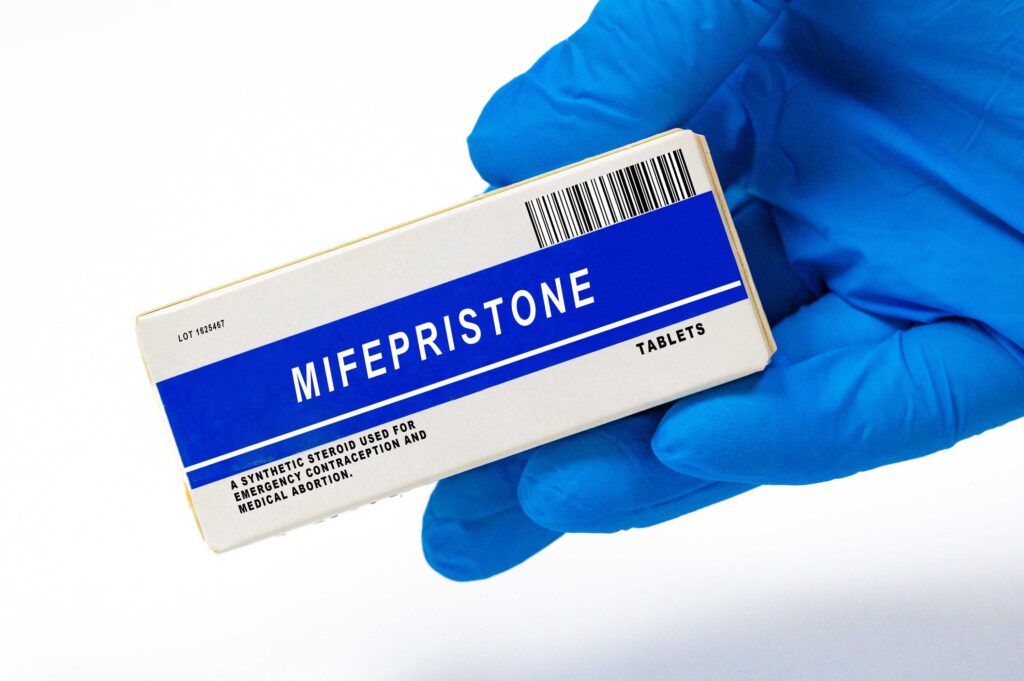
The widespread online availability of abortion-inducing drugs has become another tool of abusive and coercive partners. In 2021, the U.S. Food and Drug Administration (FDA) eliminated a long-standing requirement that the abortion drug mifepristone be dispensed in person, enabling online prescription and dispensing via the mail; this change was incorporated into the mifepristone Risk Evaluation and Mitigation Strategy (REMS) in 2023.[30] Although online providers ostensibly screen patients before dispensing abortion drugs, the minimal oversight available online has allowed bad actors to obtain the drugs and use them in forced and coerced abortions. One coerced abortion victim sued the FDA to restore the in-person dispensing requirement after her partner ordered mifepristone and misoprostol from a doctor in California and had the drugs shipped to Louisiana, despite the fact that he was not a woman, not pregnant, and not the patient.[31] The partner threatened and coerced the victim into taking the drugs, resulting in the death of their unborn baby. In another recent case, an Ohio doctor’s medical license was suspended after the medical board found that he used his estranged wife’s information to order mifepristone and misoprostol from an abortion provider in another state. To compel an abortion, he forcibly held down his pregnant girlfriend and forced the drugs into her mouth.[32]
Abortion is Not the Answer to Intimate Partner Violence and Reproductive Coercion
Some researchers have argued that abortion can reduce women’s risk of intimate partner violence. One analysis of data from the Turnaway Study reported that IPV declined for women who had abortions while remaining mostly flat for women who gave birth.[33] However, due to its reliance on Turnaway Study data, this analysis is subject to all the limitations and weaknesses associated with the overall Turnaway Study, including lack of generalizability and a high drop-out rate.[34],[35] Moreover, the study examined only IPV from the partner involved in the pregnancy. Other research has found that, of women getting abortions who reported IPV, just 27% reported that the violence came from a current partner, while 74% experienced violence from a former partner.[36] This limitation constrains readers’ ability to draw conclusions from the Turnaway research regarding women’s overall exposure to intimate partner violence. Additionally, while other research has found that among women giving birth, having had a previous abortion was significantly associated with current IPV,[37] the study using Turnaway data did not stratify results by history of prior abortions.
Researchers have also argued that there is an association between the introduction of pro-life laws and increases in intimate partner violence. One study found that after the Dobbs decision, rates of IPV increased in pro-life states compared to states that did not enact laws protecting life.[38] The study is subject to several limitations, including the fact that researchers were able to look only at cases of IPV among all women of reproductive age rather than focusing the analysis on pregnant women, the group most affected by pro-life laws. Further, the study did not consider the impact of mail-order abortions performed under shield laws, which surged in pro-life states after Dobbs, and several large states were not included due to lack of data. However, insofar as the findings are accurate that restricting abortion access may be associated with increases in IPV, they suggest that some women are undergoing abortions to escape or avoid violence, or that they will be vulnerable to IPV if they do not have an abortion. This implication corresponds to the research conducted in Swedish family planning clinics which found that 4% of women undergoing abortions reported that fear of future violence had shaped their decisions.[39]
Similarly, research by CLI scholars has shown that many women feel pressured to undergo abortions they do not want and experience negative mental and emotional outcomes as a result, even if they feel that abortion was the best choice they could make given their situation at the time.[40],[41] One of the aforementioned surveys of women who had abortions found that two-thirds felt that their abortion decisions were inconsistent with or counter to their own values and preferences, including at least 10% who felt coerced.[42] Over a quarter felt substantial or high levels of pressure from their partners, and 60% indicated that they would have preferred to carry to term if they had received more emotional support or financial security. Together, this body of research implies that some women may be selecting abortion because the alternative is violence, abuse, or abandonment, not because it truly reflects their preferences. Consequently, states interested in reducing the rate of intimate partner violence would do better to invest in policy solutions that empower women to escape abusive situations with their children rather than leaving them no other option than to obtain an abortion they may not really want.
IPV is associated with multiple abortions, further calling into question the effectiveness of abortion access as a means to end violence or abuse. In the same survey of women in Sweden discussed earlier, 28% of women with one abortion had ever experienced IPV compared to 51% of those with multiple abortions.[43] A survey of American women undergoing abortions similarly found a positive association between physical violence and the number of abortions,[44] and the aforementioned 2014 meta-analysis of studies focused on abortion and IPV concluded that the association between repeat abortion and violence reinforces the idea of “a repetitive cycle of abuse and pregnancy.”[45] These findings hold for abusive partners as well: the survey of men at community centers in American cities found that abusive men were more likely to have been involved with three or more abortions.[46] For the women whose experiences were reflected in these studies, having an initial abortion did not end their exposure to violence.
Mail-order abortion robs victims of a key opportunity for intervention to break this cycle of abuse. IPV screening and intervention at abortion visits is associated with improved outcomes for women’s safety,[47] and the authors of the survey of Swedish women noted that abortion appointments represent “a major opportunity to identify exposed women and offer them help, in an effort to prevent some of the devastating consequences of IPV.”[48] When abortion drugs are obtained online, this screening cannot reliably occur, and an abortion drug prescriber will be unable to verify that a patient is alone and not being influenced by an abusive partner. By bypassing a private, face-to-face visit with a doctor, mail-order abortion risks leaving women trapped in a pattern of abuse or even pressured or coerced into an abortion they do not want.
Conclusion: Preventing Abuse, Protecting Life
The prevention of reproductive coercion and intimate partner violence is a complex and multi-faceted issue, and the most effective answer depends on each woman and her unique situation. Policy solutions can play an important role, including laws enabling women who have become pregnant through rape to deny custody to their abusers[49] or allowing survivors of violence to end a lease early to escape an abusive partner.[50] Clinicians can screen patients for abuse and coercion and intervene when necessary; since abortion coercion has frequently been neglected in research, clinician education on this form of coercion is particularly important. The pro-life safety net has the opportunity to provide the resources that pregnant and parenting moms need to choose life and escape abusive situations, including transportation, childcare, and housing, the last of which is a particularly acute need for women fleeing intimate partner violence.[51] The Her PLAN directory has cataloged over 360 maternity homes across 29 states, including nearly 200 that accept moms with children.[52]
However, gaps remain. One particular area for growth is case management or care coordination, which ensures that rather than simply receiving a list of resources, each woman is accompanied with holistic, comprehensive help that is targeted to her specific situation. A successful pilot project launched by the Guidance Grace Family Support Network demonstrates how care coordination can make a difference for vulnerable mothers and their children.[53] Launched in June 2024, the program coordinates to meet women’s short-term needs, including assistance leaving an abusive situation, transportation, and stable housing, while providing in-depth, long-term support for five years or more.[54] Support is individualized, comprehensive, and relationship based. Through support groups, financial literacy, employment preparation, and parenting help, the program helps women build lasting stability and success.
When a woman feels trapped in an abusive or coercive relationship, abortion may seem like the easiest path forward. However, having an abortion inconsistent with or in opposition to a woman’s values and preferences is associated with negative effects that can linger for years to come. In fact, abortion can place women on a path of more lifetime pregnancies and abortions while failing to resolve the circumstances that led to the abortion in the first place.[55] Women and their children, born and unborn, deserve real help that will put a stop to cycles of abortion and abuse and empower them to live free of coercion and violence.
Tessa Cox is Senior Research Associate at Charlotte Lozier Institute.
[1] Gaitan E, Cox T. Primer: Risks and Complications of Drug-Induced Abortion. Charlotte Lozier Institute. April 6, 2026. Accessed April 17, 2026. https://lozierinstitute.org/primer-risks-and-complications-of-drug-induced-abortion/.
[2] Norris A, Upadhyay U, Koenig L, O’Donnell J, Yuan C. #We Count report, April 2022 to June 2025. December 9, 2025. Accessed April 24, 2026. https://societyfp.org/research/wecount/wecount-june-2025-data/.
[3] Harned M. Abortion “Shield Laws”: Pro-Abortion States Seek to Force Abortion on Life-Affirming States. Charlotte Lozier Institute. August 24, 2023. Accessed April 24, 2026. https://lozierinstitute.org/abortion-shield-laws-pro-abortion-states-seek-to-force-abortion-on-life-affirming-states/.
[4] Etzel GM. Acting attorney general pressured to undo abortion pill liberalization. Washington Examiner. April 13, 2026. Accessed April 24, 2026. https://www.washingtonexaminer.com/policy/healthcare/4526373/todd-blanche-pressured-undo-abortion-pill-liberalization/.
[5] Chairman Cassidy, colleagues launch investigation into abortion drug manufacturers, urge FDA to crack down on illegal online sellers. U.S. Senate Committee on Health, Education, Labor & Pensions. March 25, 2026. Accessed April 24, 2026. https://www.help.senate.gov/rep/newsroom/press/chairman-cassidy-colleagues-launch-investigation-into-abortion-drug-manufacturers-urge-fda-to-crack-down-on-illegal-online-sellers.
[6] Abortion Drug Facts: State Action. Charlotte Lozier Institute. April 24, 2026. https://lozierinstitute.org/abortion-drug-facts/#state-action.
[7] See, e.g., State of Louisiana et al. v. Food and Drug Administration et al., https://adflegal.org/case/the-state-of-louisiana-v-u-s-food-and-drug-administration/.
[8] Bernstein A. New attacks on medication abortion distort the reality of reproductive coercion. Guttmacher Institute. March 9, 2026. Accessed April 24, 2026. https://www.guttmacher.org/2026/03/new-attacks-medication-abortion-distort-reality-reproductive-coercion.
[9] Tobin-Tyler E, White K, Wallace M, Dickman S. Restricting access to medication abortion will not help survivors of intimate partner violence. Health Affairs. February 26, 2026. Accessed April 24, 2026. https://www.healthaffairs.org/content/forefront/restricting-access-medication-abortion-not-help-survivors-intimate-partner-violence.
[10] Intimate Partner Violence Prevention: Violence and Pregnancy. U.S. Centers for Disease Control and Prevention. December 5, 2024. Accessed April 17, 2026. https://www.cdc.gov/intimate-partner-violence/about/violence-and-pregnancy.html.
[11] Intimate Partner Violence Prevention: About Intimate Partner Violence. U.S. Centers for Disease Control and Prevention. February 11, 2026. Accessed April 17, 2026. https://www.cdc.gov/intimate-partner-violence/about/index.html.
[12] Pike GK. Coerced Abortion – The Neglected Face of Reproductive Coercion. New Bioeth. 2023;29(2):85-107. doi:10.1080/20502877.2022.2136026, https://pubmed.ncbi.nlm.nih.gov/36260375/.
[13] Tarzia L, Egan N, Harris ML, Loxton D. Prevalence and Predictors of Reproductive Coercion and Abuse by a Partner Among a National Population Sample in Australia. J Interpers Violence. 2025; 8:8862605251372576. doi:10.1177/08862605251372576, https://pubmed.ncbi.nlm.nih.gov/41058259/.
[14] Pike GK. Coerced Abortion – The Neglected Face of Reproductive Coercion.
[15] Tarzia L, et al. Prevalence and Predictors of Reproductive Coercion and Abuse by a Partner Among a National Population Sample in Australia.
[16] Tarzia L, et al. Prevalence and Predictors of Reproductive Coercion and Abuse by a Partner Among a National Population Sample in Australia.
[17] Reproductive Coercion Poll – BBC Radio 4 – 8 March 2022. Savanta. August 3, 2022. Accessed April 17, 2026. https://savanta.com/knowledge-centre/poll/reproductive-coercion-poll-bbc-radio-4-8-march-2022/.
[18] Silverman JG, Decker MR, McCauley HL, et al. Male perpetration of intimate partner violence and involvement in abortions and abortion-related conflict. Am J Public Health. 2010;100(8):1415-1417. doi:10.2105/AJPH.2009.173393, https://pmc.ncbi.nlm.nih.gov/articles/PMC2901296/.
[19] Öberg M, Stenson K, Skalkidou A, Heimer G. Prevalence of intimate partner violence among women seeking termination of pregnancy compared to women seeking contraceptive counseling. Acta Obstet Gynecol Scand. 2014;93(1):45-51. doi:10.1111/aogs.12279, https://pubmed.ncbi.nlm.nih.gov/24117134/.
[20] Humphreys T, Sheeran N. “I Didn’t Have a Choice”: Experiences, Responses and Perceived Motivations for Reproductive Coercion and Abuse in Australian Women. Violence Against Women. 2025;31(15-16):3795-3818. doi:10.1177/10778012241292265, https://pubmed.ncbi.nlm.nih.gov/39474738/.
[21] Sheeran N, Vallury K, Sharman LS, et al. Reproductive coercion and abuse among pregnancy counselling clients in Australia: trends and directions. Reprod Health. 2022;19(1):170. doi:10.1186/s12978-022-01479-7, https://pubmed.ncbi.nlm.nih.gov/35907880/.
[22] Hall M, Chappell LC, Parnell BL, Seed PT, Bewley S. Associations between intimate partner violence and termination of pregnancy: a systematic review and meta-analysis. PLoS Med. 2014;11(1):e1001581. doi:10.1371/journal.pmed.1001581, https://journals.plos.org/plosmedicine/article?id=10.1371/journal.pmed.1001581.
[23] Tarzia L, et al. Prevalence and Predictors of Reproductive Coercion and Abuse by a Partner Among a National Population Sample in Australia.
[24] Chu SY, Goodwin MM, D’Angelo DV. Physical violence against U.S. women around the time of pregnancy, 2004-2007. Am J Prev Med. 2010;38(3):317-322. doi:10.1016/j.amepre.2009.11.013, https://pubmed.ncbi.nlm.nih.gov/20171534/.
[25] Adhia A, Kernic MA, Hemenway D, Vavilala MS, Rivara FP. Intimate Partner Homicide of Adolescents. JAMA Pediatr. 2019;173(6):571-577. doi:10.1001/jamapediatrics.2019.0621, https://pubmed.ncbi.nlm.nih.gov/30985886/.
[26] East L, Terry D, Viljoen B, Hutchinson M. Intimate partner violence and sexual and reproductive health outcomes of women: An Australian population cohort study. Sex Reprod Healthc. 2025;44:101100. doi:10.1016/j.srhc.2025.101100, https://pubmed.ncbi.nlm.nih.gov/40239321/.
[27] Barez MA, Goudarzi F, Sharifi N, et al. Investigating the relationship between intimate partner violence, reproductive health and pregnancy outcome: a systematic review. Reprod Health. 2025;22(1):255. Published 2025 Dec 24. doi:10.1186/s12978-025-02208-6, https://pmc.ncbi.nlm.nih.gov/articles/PMC12729150/.
[28] Messing JT, Patch M, Wilson JS, Kelen GD, Campbell J. Differentiating among Attempted, Completed, and Multiple Nonfatal Strangulation in Women Experiencing Intimate Partner Violence. Womens Health Issues. 2018;28(1):104-111. doi:10.1016/j.whi.2017.10.002, https://pubmed.ncbi.nlm.nih.gov/29153725/.
[29] Suha M, Murray L, Warr D, et al. Reproductive coercion as a form of family violence against immigrant and refugee women in Australia. PLoS One. 2022;17(11):e0275809. doi:10.1371/journal.pone.0275809, https://journals.plos.org/plosone/article?id=10.1371/journal.pone.0275809.
[30] Gaitan E, Cox T. Primer: Risks and Complications of Drug-Induced Abortion.
[31] Rosalie Markezich’s Story. Alliance Defending Freedom. November 5, 2025. Accessed April 17, 2026. https://adflegal.org/article/rosalie-markezich-story/.
[32] Andrews M. Ohio suspends UTMC doctor’s license amid allegations he secretly gave abortion drugs to patient. WTOL 11. November 10, 2025. Accessed April 17, 2026. https://www.wtol.com/article/news/investigations/11-investigates/utmc-doctor-license-suspended-abortion-drug-allegations/512-2ec091b0-552a-4f67-bc25-3c44a063798e.
[33] Roberts SC, Biggs MA, Chibber KS, Gould H, Rocca CH, Foster DG. Risk of violence from the man involved in the pregnancy after receiving or being denied an abortion. BMC Med. 2014;12:144. doi:10.1186/s12916-014-0144-z, https://pubmed.ncbi.nlm.nih.gov/25262880/.
[34] Fact Sheet: Problems and Limits of the Turnaway Study. Charlotte Lozier Institute. November 25, 2025. Accessed April 17, 2026. https://lozierinstitute.org/fact-sheet-problems-and-limits-of-the-turnaway-study/.
[35] Pike GK. Coerced Abortion – The Neglected Face of Reproductive Coercion.
[36] Saftlas AF, Wallis AB, Shochet T, Harland KK, Dickey P, Peek-Asa C. Prevalence of intimate partner violence among an abortion clinic population. Am J Public Health. 2010;100(8):1412-1415. doi:10.2105/AJPH.2009.178947, https://pubmed.ncbi.nlm.nih.gov/20558796/.
[37] Escribà-Agüir V, Romito P, Scrimin F, Molzan Turan J. Are there differences in the impact of partner violence on reproductive health between postpartum women and women who had an elective abortion? J Urban Health. 2012;89(5):861-871. doi:10.1007/s11524-012-9714-6, https://pmc.ncbi.nlm.nih.gov/articles/PMC3462832/.
[38] Dave D, Durrance CP, Erten B, Wang Y, Wolfe B. Abortion restrictions and intimate partner violence in the Dobbs Era. J Health Econ. 2025;104:103074. doi:10.1016/j.jhealeco.2025.103074, https://pubmed.ncbi.nlm.nih.gov/41197224/.
[39] Öberg M, et al. Prevalence of intimate partner violence among women seeking termination of pregnancy compared to women seeking contraceptive counseling.
[40] Reardon DC, Longbons T. Effects of Pressure to Abort on Women’s Emotional Responses and Mental Health. Cureus. 2023;15(1):e34456. doi:10.7759/cureus.34456, https://www.cureus.com/articles/124269-effects-of-pressure-to-abort-on-womens-emotional-responses-and-mental-health#!/.
[41] Reardon DC, Rafferty KA, Longbons T. The Effects of Abortion Decision Rightness and Decision Type on Women’s Satisfaction and Mental Health. Cureus. 2023;15(5):e38882. doi:10.7759/cureus.38882, https://pmc.ncbi.nlm.nih.gov/articles/PMC10257365/.
[42] Ibid.
[43] Öberg M, et al. Prevalence of intimate partner violence among women seeking termination of pregnancy compared to women seeking contraceptive counseling.
[44] Ely GE, Murshid NS. The Relationship Between Partner Violence and Number of Abortions in a National Sample of Abortion Patients. Violence Vict. 2018;33(4):585-603. doi:10.1891/0886-6708.VV-D-16-00215, https://pubmed.ncbi.nlm.nih.gov/30567763/.
[45] Hall M, et al. Associations between intimate partner violence and termination of pregnancy: a systematic review and meta-analysis.
[46] Silverman JG, et al. Male perpetration of intimate partner violence and involvement in abortions and abortion-related conflict.
[47] Sabloak T, Ryan I, Nahi S, Eucalitto P, Simon MA, Premkumar A. Intimate Partner Violence Detected during Abortion-Related Visits: A Systematic Review of Screenings and Interventions. Am J Perinatol. 2024;41(12):1697-1705. doi:10.1055/s-0044-1779746, https://www.thieme-connect.com/products/ejournals/pdf/10.1055/s-0044-1779746.pdf.
[48] Öberg M, et al. Prevalence of intimate partner violence among women seeking termination of pregnancy compared to women seeking contraceptive counseling.
[49] Harrison J. The Necessity of Better Rape-Related Protections for Victims of Rape-Related Pregnancy. Liberty University Law Review. 2025;19(3):753-810. https://digitalcommons.liberty.edu/lu_law_review/vol19/iss3/5/.
[50] Housing rights of domestic violence and sexual assault survivors: a state and local law compendium. National Housing Law Project. February 2024. Accessed April 17, 2026. https://www.nhlp.org/wp-content/uploads/2024-NHLP-Compendium-of-Housing-Rights-for-DVS.pdf.
[51] Yakubovich AR, Bartsch A, Metheny N, Gesink D, O’Campo P. Housing interventions for women experiencing intimate partner violence: a systematic review. Lancet Public Health. 2022;7(1):e23-e35. doi:10.1016/S2468-2667(21)00234-6, https://pubmed.ncbi.nlm.nih.gov/34838218/.
[52] Her PLAN Directory. Accessed April 17, 2026. https://directory.herplan.org/.
[53] Guiding Grace Family Support Network. Accessed April 24, 2026. https://www.guidinggracenetwork.org/.
[54] Personal communication from Gina Tomes, Guidance Grace Family Support Network founder.
[55] Studnicki J, Longbons T, Reardon DC, et al. The Enduring Association of a First Pregnancy Abortion with Subsequent Pregnancy Outcomes: A Longitudinal Cohort Study. Health Serv Res Manag Epidemiol. 2022;9:23333928221130942. doi:10.1177/23333928221130942, https://pubmed.ncbi.nlm.nih.gov/36246345/.