











Primer: Risks and Complications of Drug-Induced Abortion


This is Issue 113 of the On Point Series.
Originally posted as a fact sheet on July 19, 2022, this paper underwent substantial revision with the addition of new material in April, 2026.
Introduction
Drug-induced abortions account for the majority of abortions in the United States, amounting to 65% of the total in 2023.[1] The terms “abortion drugs” or “drug-induced abortion” refer to an abortion performed using a two-drug regimen involving mifepristone and misoprostol. Mifepristone is ingested first, blocking progesterone (a hormone necessary for continuing a pregnancy), thereby causing the unborn baby’s death. Misoprostol is then taken 24 to 48 hours later to induce contractions, which expel the baby’s body and additional pregnancy tissue.[2] Drug-induced abortion has a complication rate four times that of surgical abortion.[3] Despite this, the U.S. Food and Drug Administration (FDA) has weakened important regulatory safeguards, resulting in the dispensing of abortion-by-mail in 2021. As women increasingly choose drug-induced over surgical abortion, and with abortion drugs becoming easier to access, it is important that women understand the potential costs of drug-induced abortion.
Physical and Emotional Risks
Women ought to be fully informed of the risks that abortion drugs can carry. Mifepristone carries a boxed warning, the highest level of safety warning imposed by the Food and Drug Administration (FDA),[4] alerting users and prescribers of the possibility of “serious and sometimes fatal infections or bleeding.”[5] The FDA requires women who are prescribed mifepristone for abortion to complete a Patient Agreement Form, which asks them to acknowledge that their healthcare provider has talked to them about risks of heavy bleeding, infection, and incomplete abortion.[6] The form also requires women to agree they will contact their provider right away if experiencing symptoms that could require emergency care (e.g. fever that lasts over four hours at 100.4℉ or higher) and asks women to acknowledge their healthcare provider has informed them of these potential symptoms.[7]
The National Abortion Federation, a professional association for abortion centers, also publishes its own informed consent guidelines for drug-induced and surgical abortions. Standard 2.2 notes that, at a minimum, providers must address risks of hemorrhage, infection, continuing pregnancy, and death.[8]
The published rates of specific complications vary depending on the study type, data sources, and details of the abortion drug regimen. What is clear is that there can be significant risks for some women associated with abortion drugs. Some studies that looked at a wide variety of complications and outcomes have found the complication rate for drug-induced abortion to be two to four times that of surgical abortion.[9]
Hemorrhage and Heavy Bleeding
Drug-induced abortion is associated with heavy bleeding.[10] Often this bleeding is an indication that the abortion is working, but sometimes bleeding can be dangerously severe. In some cases, transfusion may be required, although the reported frequency with which this complication occurs depends on the study. Some research has found that rates of hemorrhage requiring transfusion are low. For example, a 2015 systematic review found transfusion rates ranging from 0.03–0.6%.[11] Similarly, a 2013 analysis of all available Planned Parenthood data found that just 0.05% of drug-induced abortions were followed by a transfusion, although the authors acknowledged that not all women communicated with Planned Parenthood after their abortions, and they were unable to track outcomes for patients who were lost to follow-up.[12] In contrast, a 2023 analysis of Ontario abortions funded by universal healthcare found that 0.2% of drug-induced abortions resulted in a transfusion.[13] Because Ontario paid for the abortions and subsequent healthcare, researchers were able to comprehensively track complications, which may partially account for the higher transfusion rate compared to other studies. Additionally, a 2021 investigation of abortion by mail found a slightly higher rate of transfusion (0.4%).[14] In this study, 13% of the women were lost to follow-up, so the actual transfusion rate may have been higher.
While transfusion is an important measurement of bleeding severity, relatively larger percentages of women experience heavy bleeding that does not result in transfusion but still requires follow-up evaluation and/or treatment. Current guidelines recommend transfusion for adult patients whose hemoglobin falls below 7 g/dL,[15] meaning a woman could lose a considerable amount of blood before transfusion would be indicated. Studies may also vary in their definitions of hemorrhage. A 2009 study examined all abortions performed in Finland between 2000-2006 and found that 15.6% of women who had drug-induced abortions sought follow-up care for hemorrhage, although the authors acknowledge that this high rate may be due to the generally heavy bleeding associated with abortion drugs and suggest that surgical evacuation for hemorrhage may be a more reliable measurement of bleeding severity.[16] In this study, 2.9% of drug-induced abortions resulted in surgical evacuation for bleeding. Similar to Ontario, Finland pays for all healthcare, ensuring that the majority of complications and follow-up visits after abortions would be reflected in the data. The 2023 Ontario study found that 1.2% of drug-induced abortions resulted in hemorrhage.[17] Furthermore, an analysis of abortions performed by Planned Parenthood in Los Angeles from 2010-2013 found that 1.8% of drug-induced abortions at nine weeks of gestation or less required aspiration for persistent pain or bleeding.[18] This follow-up surgical aspiration was significantly more likely for abortion drugs than for surgical abortion, and increasing gestational age was associated with unanticipated aspiration.
Many women are unprepared for the amount of bleeding and pain they experience, and some women bleed more than they expect. An analysis of women’s experiences with abortion in the first trimester found that, of women who underwent drug-induced abortions, 35% suffered more pain than they expected, and 37% experienced more bleeding than they anticipated.[19] Another study found that nearly half of women undergoing drug-induced abortions experienced more pain than expected, with over 41% reporting severe pain.[20] While it is unclear whether this heavy bleeding or severe pain would be considered a complication or simply a normal part of the abortion drug process, the misalignment between women’s expectations and their experiences suggests that many women are not fully informed regarding what the drug-induced abortion process will entail. As more women order abortion drugs online without ever seeing a provider face-to-face, more research is needed on whether women are always adequately informed about the risks and side effects of abortion.
Infection
Reported rates of infection depend on the criteria used. Some studies include all infections, while others count only those that are severe or life-threatening. Studies with more restrictive definitions or where all outcomes could not be accounted for have identified lower infection rates. The 2015 systematic review found a range of 0.01-0.5%;[21] the study with the 0.01% rate included only “infection requiring hospitalization.”[22] The 2013 investigation of Planned Parenthood abortions included infections requiring treatment with intravenous antibiotics or admission to the hospital and found a rate of 0.016%.[23] Similarly, a 2011 review of Planned Parenthood data found that in the absence of infection control measures, serious infections occurred in 0.09% of cases, with much lower rates when antibiotics were prescribed as a preventive measure.[24] This study was limited to severe infections ranging from those requiring IV antibiotics in the emergency department to those resulting in death.
Comprehensive international studies in which records are linked so that most patients are not lost to follow-up have identified higher rates. The 2023 study using Ontario data found an infection rate of 0.2%.[25] However, this study limited its definition of infection to three ICD-10 codes.[26] The 2009 study from Finland used a broader definition and found an infection rate of 1.7%.[27]
Incomplete Abortion
Incomplete abortion is one of the most common complications associated with drug-induced abortion, though reported rates vary by study.[28] Some studies exclude incomplete abortion from their definitions of “complication,” focusing on more severe adverse events,[29] but rarely, sepsis, shock, and hemorrhage may result if left untreated.[30] The Patient Agreement Form required by the FDA states that abortion drugs do not work in 2% to 7% of cases and may result in the need for a surgical procedure.[31] Studies often report both the percentage of incomplete abortions and the percentage of those which require a subsequent surgical procedure. The 2023 Ontario study found that 1.1% of drug-induced abortions resulted in retained products of conception (RPOC) and 4.9% resulted in a surgical procedure, which the authors note is “an indication of an ongoing pregnancy.”[32] A 2013 systematic review found that 4.8% of drug-induced abortions failed, with 1.1% resulting in ongoing pregnancy.[33] Some record-linkage studies have found higher rates, including a 2019 Danish study which reported that 6.2% of women had a surgical procedure to complete the drug-induced abortion within eight weeks of the abortion,[34] and the 2009 Finnish study which found that 6.7% of drug-induced abortions were incomplete and 5.9% required a subsequent surgical procedure.[35]
The risk of incomplete abortion increases with gestational age. One 2015 systematic review which reported that 3.4% of drug-induced abortions were incomplete noted that the rate jumped to 6.9% when looking at a small group of women who had abortions between 64 and 70 days of pregnancy.[36] Other studies have found similar results. One randomized controlled trial reported an overall incomplete abortion rate of 3.8% but a rate of 5.2% for drug-induced abortions performed between 57 and 63 days of pregnancy.[37] Another trial found an incompletion rate of 6.5% in drug-induced abortions performed between 57 and 63 days of pregnancy and a rate of 7.2% when performed between 64 and 70 days.[38]
Death
Capturing data on abortion-related deaths can be challenging. Most studies are not large enough to reflect many, if any, fatalities. Mifepristone prescribers are required to report all deaths to the manufacturers, who are in turn required to report them to the FDA, [39] but prescribers may not be aware of all fatalities, particularly if they occur well after the abortion has taken place or if the prescriber is located in a different state. CLI researchers have found that emergency department visits following drug-induced abortion are frequently miscoded.[40] Although this research did not specifically examine fatalities, if clinicians are unaware that a patient’s complications are associated with abortion drugs, they may not know to inform the original prescriber and/or drug sponsor in the case of a death. From the FDA’s approval of mifepristone in 2000 to December 2024, the FDA documented 36 total deaths associated with mifepristone, although the nature of the FDA’s data collection means that they cannot necessarily be causally attributed to abortion drugs. The most common association, seen in 13 of the 36 deaths, was sepsis.[41] In the early 2000s, a series of sepsis deaths led to a change in the route of administration of misoprostol. These four deaths, which occurred from 2003 to 2005, were due to Clostridium sordellii, a bacteria that can result in severe or fatal sepsis in rare cases.[42] In recent years, abortion drugs have been implicated in deaths in Georgia[43] and Nevada.[44] The mifepristone boxed warning cautions users and prescribers that although no causal relationship has been proven, mifepristone is associated with fatal infections, and users should know whom to contact in an emergency and to seek care in the emergency department if necessary.[45]
Emergency Department Visits and Other Follow-Up
Not all researchers define an emergency department visit as a complication. However, ER visits are an important metric because they reflect the real experiences of women and their need for follow-up care, as well as the burden on the healthcare system. Women ought to know how common it is to seek follow-up care after drug-induced abortion. According to the 2021 study that focused on abortion by mail, 6% of women went to the ER or urgent care for abortion-related reasons and 7.8% pursued another form of follow-up.[46] The 2023 Ontario study found that 10.3% of drug-induced abortions were followed up by an emergency department visit, though the reasons for the visits were unspecified.[47] A 2024 study by CLI researchers looked at surgical and drug-induced abortions and found that emergency department visits following drug-induced abortion were significantly more likely to be rated severe or critical than were ER visits following surgical abortion.[48] While these studies did not detail what each emergency room visit involved, they suggest that many women faced experiences that were either unexpected or unmanageable for them, resulting in their seeking follow-up care.
Mental and Emotional Impact
While research on the mental health effects of abortion is relatively limited, one randomized trial found that two weeks after undergoing an abortion in the second trimester, women who had drug-induced abortions scored higher on an emotional distress subscale than women who had surgical abortions.[49] Another study which surveyed 70 women in France a few hours and then six weeks after an abortion found that, compared to women who had surgical abortions, women who underwent drug-induced abortions experienced significantly higher levels of negative emotions, grief, and trauma.[50]
Some qualitative studies indicate that women experience mixed or contradictory emotions about their experiences with abortion drugs. In a study that involved interviews with 22 Norwegian women, researchers noted that women described taking abortion drugs as “the logical and sensible choice” while also experiencing hidden ambivalence, doubt, and emotional difficulty over their decisions. While women appreciated the privacy of undergoing the abortion process at home, they also felt that at-home abortions were isolating and scary and carried a burden of secrecy and shame. Women tended to distance themselves emotionally from their pregnancies, with many avoiding ultrasound images or not wanting to look at the aborted baby in the toilet. Even after women tried to move on after the abortion process, many continued to reflect and dwell on the experience.[51] A study by authors affiliated with CLI described similar tensions in women’s descriptions of their abortion drug experiences. Some women described feeling unprepared for drug-induced abortion and feeling abortion was the only option. They also reported feelings of silence and isolation and a tension between relief and regret during and following drug-induced abortion.[52]
FDA REMS Rollback and Data Issues
The FDA first approved use of the abortion drug Mifeprex (the brand name version of mifepristone) in 2000 under the Clinton presidency.[53] At the time, the drug was only approved to be taken up to 49 days of pregnancy, and the approval was accompanied by safety restrictions including in-person administration and follow-up visits.[54] These restrictions were later converted into a Risk Evaluation and Mitigation Strategy (REMS) with Elements to Ensure Safe Use (ETASU), a program that the FDA can impose on drugs with serious safety concerns.[55] Following approval in 2000, FDA regulations regarding Mifeprex developed as follows:
- 2011 REMS:[56] The FDA issued a Risk Evaluation and Mitigation Strategy (REMS) which incorporated safety restrictions in effect at the time. Only physicians were permitted to dispense mifepristone; the drug was approved for use through 49 days; three medical visits were established as standard (one for mifepristone, another for misoprostol, and a third to follow up after the abortion); and prescribers were required to report all serious adverse events to the drug manufacturer, Danco. A medication guide providing patients with detailed information on mifepristone was included as part of the REMS.
- 2016 REMS:[57] The FDA began weakening the REMS, extending use from 49 to 70 days of pregnancy and requiring that only deaths be reported (as opposed to other serious adverse events as had been required previously). The standard number of visits was reduced from three to one, and non-physicians were permitted to prescribe mifepristone. The medication guide was removed from the REMS.
- 2019 REMS:[58] A generic version of mifepristone was approved by the FDA for drug company GenBioPro. The Mifeprex REMS was converted to a “single shared system” REMS that applied the same requirements to both companies’ products.
- April 2021 decision:[59] The FDA temporarily suspended its requirement that mifepristone be dispensed in person due to the COVID-19 pandemic, enabling mifepristone to be distributed online and through the mail.
- December 2021 decision:[60] The FDA completed conducting its review of safety data and studies and announced its decision to make the suspension of in-person dispensing of mifepristone permanent.
- 2021 REMS:[61] The FDA made minor wording changes and included an updated patient agreement form.
- 2023 REMS:[62] The removal of the in-person dispensing requirement was formally updated in the mifepristone REMS. The update also allowed pharmacies to become abortion drug dispensers.
- 2025 REMS:[63] A new generic company, Evita Solutions, was added to the single shared system REMS.
Many of the studies the FDA relied upon to justify these decisions do not demonstrate safety under real-world conditions.[64] In particular, the FDA relied upon studies that included at least some women who received pre-abortion testing. This does not accurately represent the reality of online abortion provision (as approved by the FDA), which often doesn’t involve pre-abortion testing at all.[65] Additionally, some studies either had small sample sizes or were incomplete, lacking in follow-up data. For a large number of women lost to follow-up in these studies, abortion outcomes were unknown.[66]
Furthermore, the FDA’s complication data reflects only serious adverse events and does not include all complications which may be associated with abortion drugs. During the years when reporting of serious adverse events was mandated, abortion providers did not always consider reportable some common adverse events, such as retained products of conception or hemorrhage that doesn’t require transfusion.[67] Even for those complication categories which were reported, the problem of underreporting is pronounced. For example, even when the FDA required all serious adverse events to be reported, a study revealed that Planned Parenthood reported twice as many significant adverse events as the FDA from 2009 to 2010, despite Planned Parenthood accounting for fewer than half of U.S. abortions during that period.[68] Some states have their own, much broader, reporting requirements. CLI found that between 2020 and 2022, after serious adverse event reporting was no longer required by the FDA, six states that report abortion complications data reported 1,004 complications while the FDA Adverse Event Reporting System (FAERS) only reported 17.[69]
Underreporting is also partially attributable to the miscoding of drug-induced abortions as miscarriages, with some abortion advocates advising women that in the case of complications, they do not need to inform emergency personnel about the abortion and can say that they are having a miscarriage instead.[70] One study by CLI-affiliated scholars found that between 2016 and 2021, 83.5% of emergency room visits related to drug-induced abortion were miscoded as miscarriages.[71]
Mail-Order Abortion
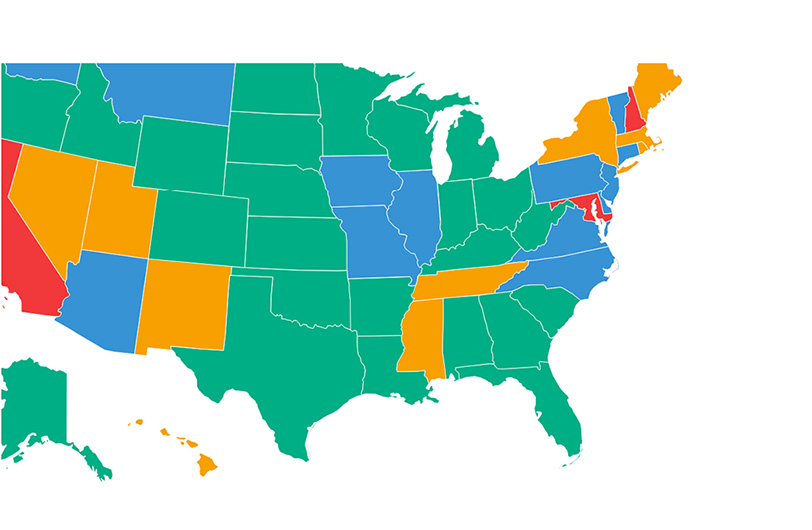
The FDA removal of the in-person dispensing requirement enabled the distribution of abortion drugs online and through the mail with little to no medical oversight. While some pro-life states have enacted laws to restore safeguards and limit mail-order abortion, many pro-abortion states have adopted “shield laws” to keep abortionists from facing civil, criminal, or professional consequences when they violate other state’s laws by mailing abortion drugs.[72] Currently, 22 states plus the District of Columbia have shield laws or executive orders that protect abortionists who provide in-state abortions to out-of-state women within the shielding state.[73] Of these 22 states, eight contain an additional protection in their shield laws for abortionists who mail abortion drugs to pro-life states which prohibit or restrict telehealth or brick-and-mortar abortions.[74]
To receive abortion drugs in the mail, women order the drugs online. Screening questions, cost, and delivery times vary depending on the source of the drugs.[75] Typically a few basic questions about the woman’s pregnancy and health history are asked, and once approved, address and payment information are collected. Some abortion drug websites allow customers to order abortion drugs ahead of time, before they are even pregnant, a practice known as “advance provision.” “Advance provision” drugs may increase health risks as there is no guarantee that a woman without health risks in the present will remain healthy in the future, and there is no way for the prescriber to know when a woman will ultimately take the drugs. Abortion drug websites may offer some form of cost assistance for women who are currently pregnant, though this assistance may not necessarily extend to women ordering the drugs in advance.[76]
Easy access to abortion drugs and a lack of medical oversight comes with increased risks. Not every woman is a viable candidate for mifepristone abortion due to contraindications, which are medical conditions that make a particular medication or procedure unsafe for a patient. Despite the American College of Obstetricians and Gynecologists’ advocacy for mail-order abortion, its 2020 practice bulletin on drug-induced abortion (which was reaffirmed in 2023) acknowledges:
Medication abortion is not recommended for patients with any of the following: confirmed or suspected ectopic pregnancy, intrauterine device (IUD) in place (the IUD can be removed before medication abortion), current long-term systemic corticosteroid therapy, chronic adrenal failure, known coagulopathy or anticoagulant therapy, inherited porphyria, or intolerance or allergy to mifepristone or misoprostol.[77]
Furthermore, ACOG notes that patients may not be good candidates for drug-induced abortion “if they are unable or unwilling to adhere to care instructions, desire quick completion of the abortion process, are not available for follow-up contact or evaluation, or cannot understand the instructions because of comprehension barriers.”[78]
While most websites require basic screening questions to be completed before processing an order, the accuracy of the answers is impossible to verify. A woman may withhold information on health conditions or may not even be aware she has these contraindications. For example, without an ultrasound appointment, some ectopic pregnancies remain undiagnosed, which means the ectopic could be more advanced by the time it’s discovered, resulting in a possible need for surgery and an increased risk of hemorrhage or even death.[79]
Aside from the physical risks, there is the problem of informed consent. Online abortion drug providers are unable to verify that the person ordering the drugs is the same person who will be taking the drugs. An investigative reporter who was not pregnant was able to easily obtain the drugs from five providers.[80] This lack of informed consent raises concerns of coercion. Some recent cases involving alleged coercion include:
- A surgery resident who allegedly force-fed his romantic partner abortion drugs he had allegedly ordered using his estranged wife’s information.[81]
- An abortion drug provider who allegedly prescribed the drugs to a mother who then allegedly coerced her teenage daughter into taking them.[82]
- An estranged husband who allegedly coerced a woman to end her pregnancy.[83]
- A boyfriend who allegedly ordered abortion drugs online and slipped them into his girlfriend’s drink, resulting in the baby’s death.[84]
- An attorney who pleaded guilty to slipping abortion drugs into his pregnant wife’s drink.[85]
Conclusion
Abortion drugs come with some potentially serious risks, not only to unborn babies but also to women. Some pro-life states have enacted safeguards to limit the risks of the drugs, but without federal enforcement, these safeguards are undermined by “shield laws.” The FDA should re-examine the evidence and restore important regulatory standards such as the in-person medical visit to fulfill the agency’s responsibility to protect public health—in this case, particularly the health of women. The FDA should also restore its serious adverse events reporting requirement so it can more accurately track complications and better analyze the safety of abortion drugs.
Elyse Gaitan is Research Associate at Charlotte Lozier Institute.
Tessa Cox is Senior Research Associate at Charlotte Lozier Institute.
[1] Isaac Maddow-Zimet, Rachel K. Jones, Emma Stoskopf-Ehrlich, “Fact Sheet: Abortion in the United States,” Guttmacher Institute, March 2026, accessed April 1, 2026, https://www.guttmacher.org/fact-sheet/induced-abortion-united-states.
[2] “Abortion Drug Facts – How it Works,” Lozier Institute, accessed January 28, 2026, https://lozierinstitute.org/abortion-drug-facts/.
[3] Maarit Niinimäki, Anneli Pouta, Aini Bloigu, et al., “Immediate complications after medical compared with surgical termination of pregnancy,” Obstet Gynecol 114, no. 4 (2009): 795-804, doi:10.1097/AOG.0b013e3181b5ccf9; Ushma D Upadhyay, Sheila Desai, Vera Zlidar, et al., “Incidence of emergency department visits and complications after abortion,” Obstet Gynecol 125, no. 1 (2015): 175-183, doi:10.1097/AOG.0000000000000603.
[4] Claire Delong, Charles V. Preuss, “Box Warning,” StatPearls, updated June 17, 2023, accessed April 1, 2026, https://www.ncbi.nlm.nih.gov/books/NBK538521/.
[5] “Label: MIFEPREX- mifepristone tablet,” DailyMed, National Library of Medicine, updated January 7, 2026, accessed April 1, 2026, https://dailymed.nlm.nih.gov/dailymed/drugInfo.cfm?setid=61626f72-7469-6f6e-4953-6d7572646572.
[6] “Patient Agreement Form,” Danco Laboratories, January 2023, accessed February 3, 2026, https://www.earlyoptionpill.com/wp-content/uploads/2023/02/DANCO_PatientAgreement_ENG_Web.pdf.
[7] Danco Laboratories, “Patient Agreement Form.”
[8] “2024 Clinical Policy Guidelines for Abortion Care,” National Abortion Federation, accessed February 3, 2026, https://prochoice.org/wp-content/uploads/2024-CPGs-FINAL-1.pdf.
[9] Maarit Niinimäki, Anneli Pouta, Aini Bloigu, et al., “Immediate complications after medical compared with surgical termination of pregnancy,” Obstet Gynecol 114, no. 4 (2009): 795-804, doi:10.1097/AOG.0b013e3181b5ccf9; Ushma D Upadhyay, Sheila Desai, Vera Zlidar, et al., “Incidence of emergency department visits and complications after abortion,” Obstet Gynecol 125, no. 1 (2015): 175-183, doi:10.1097/AOG.0000000000000603; Ning Liu and Joel G. Ray, “Short-Term Adverse Outcomes after Mifepristone-Misoprostol versus Procedural Induced Abortion: A Population-Based Propensity-Weighted Study,” Ann Intern Med 176, no. 2 (2023): 145-153, doi: 10.7326/M22-2568.
[10] “Patient Agreement Form,” January 2023, accessed March 3, 2026, https://www.accessdata.fda.gov/drugsatfda_docs/rems/Mifepristone_2025_09_30_REMS_Full.pdf.
[11] Melissa J. Chen and Mitchell D. Creinin, “Mifepristone With Buccal Misoprostol for Medical Abortion: A Systematic Review,” Obstet Gynecol 126, no. 1 (2015): 12-21, doi: 10.1097/AOG.0000000000000897.
[12] Kelly Cleland, Mitchell D. Creinin, Deborah Nucatola, et al., “Significant Adverse Events and Outcomes After Medical Abortion,” Obstet Gynecol 121, no. 1 (2013): 166-171, doi:10.1097/aog.0b013e3182755763
[13] Ning Liu and Joel G. Ray, “Short-Term Adverse Outcomes after Mifepristone-Misoprostol versus Procedural Induced Abortion: A Population-Based Propensity-Weighted Study,” Ann Intern Med 176, no. 2 (2023): 145-153, doi: 10.7326/M22-2568.
[14] Erica Chong, Tara Shochet, Elizabeth Raymond, et al., “Expansion of a Direct-to-Patient Telemedicine Abortion Service in the United States and Experience during the Covid-19 Pandemic,” Contraception 104, no. 1 (2021): 43-48, doi: 10.1016/j.contraception.2021.03.019.
[15] Jeffrey L. Carson, Simon J. Stanworth, Gordon Guyatt, et al., “Red Blood Cell Transfusion: 2023 AABB International Guidelines,” JAMA, 330, no. 19 (2023): 1892-1902, doi:10.1001/jama.2023.12914.
[16] Maarit Niinimäki, Anneli Pouta, Aini Bloigu, et al., “Immediate Complications after Medical Compared with Surgical Termination of Pregnancy,” Obstet Gynecol, 114, no. 4 (2009): 795-804, doi:10.1097/AOG.0b013e3181b5ccf9.
[17] Ning Liu and Joel G. Ray, “Short-Term Adverse Outcomes after Mifepristone-Misoprostol versus Procedural Induced Abortion: A Population-Based Propensity-Weighted Study,” Ann Intern Med 176, no. 2 (2023): 145-153, doi: 10.7326/M22-2568. Percentages are based on rates that were adjusted to more reasonably approximate a real-world population.
[18] Luu Doan Ireland, Mary Gatter, Angela Y Chen, “Medical Compared with Surgical Abortion for Effective Pregnancy Termination in the First Trimester,” Obstet Gynecol, 126, no. 1 (2015): 22-28, doi:10.1097/AOG.0000000000000910.
[19] Katherine M. Mahoney, Rachel McKean, Arden McAllister, et al., “Patients’ experiences with pain and bleeding in first-trimester abortion care,” AJOG 233, no. 2 (2025): 114.e1-114.e12, doi.org/10.1016/j.ajog.2025.02.030.
[20] Hannah McCulloch, Danielle Perro, Neda Taghinejadi, et al., “Expectations and experiences of pain during medical abortion at home: a secondary, mixed-methods analysis of a patient survey in England and Wales,” BMJ Sex Reprod Health 51, no. 2 (2025): 137-143, doi:10.1136/bmjsrh-2024-202533.
[21] Melissa J. Chen and Mitchell D. Creinin, “Mifepristone With Buccal Misoprostol for Medical Abortion: A Systematic Review,” Obstet Gynecol 126, no. 1 (2015): 12-21, doi: 10.1097/AOG.0000000000000897.
[22] Mary Gatter, Kelly Cleland, Deborah L Nucatola, “Efficacy and Safety of Medical Abortion Using Mifepristone and Buccal Misoprostol through 63 days,” Contraception, 91, no. 4 (2015): 269-273, doi:10.1016/j.contraception.2015.01.005.
[23] Kelly Cleland, Mitchell D. Creinin, Deborah Nucatola, et al., “Significant Adverse Events and Outcomes After Medical Abortion,” Obstet Gynecol 121, no. 1 (2013): 166-171, doi:10.1097/aog.0b013e3182755763.
[24] Mary Fjerstad, James Trussell, E Steve Lichtenberg, et al., “Severity of Infection Following the Introduction of New Infection Control Measures for Medical Abortion,” Contraception 83, no. 4 (2011): 330-335, doi:10.1016/j.contraception.2010.08.022.
[25] Ning Liu and Joel G. Ray, “Short-Term Adverse Outcomes after Mifepristone-Misoprostol versus Procedural Induced Abortion: A Population-Based Propensity-Weighted Study,” Ann Intern Med 176, no. 2 (2023): 145-153, doi: 10.7326/M22-2568.
[26] Two codes were specific to pelvic or genital tract infections following induced abortion. The third code was likely a mistype of a code for genital tract or pelvic infection following ectopic or molar pregnancy.
[27] Maarit Niinimäki, Anneli Pouta, Aini Bloigu, et al., “Immediate Complications after Medical Compared with Surgical Termination of Pregnancy.” This study included pelvic inflammatory disease, endometritis, cervicitis, wound infections, pyrexia of unknown origin, urinary tract infections, and septicemia
[28] Usually, “incomplete abortion” and “retained products of conception” indicate cases in which tissue from the unborn baby or other pregnancy tissue remain inside the uterus, while “failed abortion” or “ongoing pregnancy” refer to cases in which the abortion procedure did not work and the pregnancy is continuing, although sometimes terms are conflated.
[29] See, e.g., Kelly Cleland, Mitchell D. Creinin, Deborah Nucatola, et al., “Significant Adverse Events and Outcomes After Medical Abortion,” Obstet Gynecol 121, no. 1 (2013): 166-171, doi:10.1097/aog.0b013e3182755763. Incomplete abortion treated at the abortion center was not considered a reportable adverse event.
[30] Evelien Van Poucke, Kobe Dewilde, Thierry Van den Bosch, “Medical versus expectant management for retained products of conception after initial treatment for early pregnancy loss or induced abortion, a systematic review,” Journal of Endometriosis and Uterine Disorders, 12 (2025), doi:10.1016/j.jeud.2025.100134.
[31] Danco Laboratories, “Patient Agreement Form.”
[32] Ning Liu and Joel G. Ray, “Short-Term Adverse Outcomes after Mifepristone-Misoprostol versus Procedural Induced Abortion: A Population-Based Propensity-Weighted Study,” Ann Intern Med 176, no. 2 (2023): 145-153, doi: 10.7326/M22-2568. The definition of RPOC was based on a single ICD code upon transfer or readmission while a “subsequent surgical procedure” encompassed more ICD codes, which may explain the different percentages.
[33] Elizabeth G. Raymond, Caitlin Shannon, Mark A. Weaver, et al., “First-Trimester Medical Abortion with Mifepristone 200mg and Misoprostol: A Systematic Review,” Contraception 87, no. 1 (2013): 26-37, doi: 10.1016/j.contraception.2012.06.011.
[34] Amani Meaidi, Sarah Friedrich, Thomas Alexander Gerds, et al., “Risk Factors for Surgical Intervention of Early Medical Abortion,” Am J Obstet Gynecol 220, no. 5 (2019): 478.e1-478.e15, doi: 10.1016/j.ajog.2019.02.014.
[35] Niinimäki et al., “Immediate complications after medical compared with surgical termination of pregnancy.”
[36] Melissa J. Chen and Mitchell D. Creinin, “Mifepristone With Buccal Misoprostol for Medical Abortion: A Systematic Review,” Obstet Gynecol 126, no. 1 (2015): 12-21, doi: 10.1097/AOG.0000000000000897.
[37] Beverly Winikoff, Ilana G. Dzuba, Mitchell D. Creinin, et al., “Two Distinct Oral Routes of Misoprostol in Mifepristone Medical Abortion: A Randomized Controlled Trial,” Obstet Gynecol 112, no. 6 (2008): 1303-1310, doi: 10.1097/AOG.0b013e31818d8eb4.
[38] Beverly Winikoff, Ilana G. Dzuba, Erica Chong, et al., “Extending Outpatient Medical Abortion Services Through 70 Days of Gestational Age,” Obstet Gynecol 120, no. 5 (2012): 1070-1076, doi: 10.1097/aog.0b013e31826c315f.
[39] “MIFEPREX Risk Evaluation and Mitigation Strategy (REMS),” Danco Laboratories, September 2025, accessed March 27, 2026, https://www.accessdata.fda.gov/drugsatfda_docs/rems/Mifepristone_2025_09_30_REMS_Full.pdf.
[40] James Studnicki, John W. Fisher, Tessa Longbons Cox, et al., “Determining the Period Prevalence and Acuity of Emergency Department Visits Following Induced Abortion Mistakenly Identified as Spontaneous Abortion: An Analytic Observational Prospective Cohort Study,” J Family Med Prim Care Open Acc 9, no. 1 (2025), doi: 10.29011/2688-7460.100282.
[41] “Mifepristone U.S. Post-Marketing Adverse Events Summary,” Food and Drug Administration, December 31, 2024, accessed February 3, 2026, https://www.fda.gov/media/185245/download.
[42] Mary Fjerstad, James Trussell, Irving Sivin, et al., “Rates of Serious Infection after Changes in Regimens of Medical Abortion,” N Engl J Med 361, no. 2 (2013): 145-151, doi: 10.1056/NEJMoa0809146; Marc Fischer, Julu Bhatnagar, Jeannette Guarner, et al., “Fatal Toxic Shock Syndrome Associated with Clostridium Sordelli after Medical Abortion,” N Engl J Med 353, no. 22 (2005): 2352-2360, doi: 10.1056/NEJMoa051620.
[43] Ingrid Skop, “What Caused the Tragic Deaths of Two Georgia Women?,” RealClear Health, September 23, 2023, https://www.realclearhealth.com/blog/2024/09/23/what_caused_the_tragic_deaths_of_two_georgia_women_1060237.html.
[44] Greg Haas, “Las Vegas Hospital Sued after Woman Dies from ‘septic Abortion’ in 2022,” 8newsnow, September 22, 2023, https://www.8newsnow.com/news/local-news/las-vegas-hospital-sued-after-woman-dies-from-septic-abortion-in-2022/.
[45] “Label: MIFEPREX- mifepristone tablet,” DailyMed, National Library of Medicine, updated January 7, 2026, accessed April 1, 2026, https://dailymed.nlm.nih.gov/dailymed/drugInfo.cfm?setid=61626f72-7469-6f6e-4953-6d7572646572.
[46] Erica Chong, Tara Shochet, Elizabeth Raymond, et al., “Expansion of a Direct-to-Patient Telemedicine Abortion Service in the United States and Experience during the Covid-19 Pandemic,” Contraception 104, no. 1 (2021): 43-48, doi: 10.1016/j.contraception.2021.03.019.
[47] Liu and Ray, “Short-Term Adverse Outcomes after Mifepristone-Misoprostol versus Procedural Induced Abortion: A Population-Based Propensity-Weighted Study.”
[48] James Studnicki, John W. Fisher, Tessa Longbons Cox, et al., “Comparative Acuity of Emergency Department Visits Following Pregnancy Outcomes Among Medicaid Eligible Women, 2004-2015,” Int J Epidemiol Public Health Res 5, no. 2 (2024), doi: 10.61148/2836-2810/IJEPHR/075.
[49] T. Kelly, J. Suddes, D. Howel, et al., “Comparing medical versus surgical termination of pregnancy at 13-20 weeks of gestation: A randomised controlled trial,” BJOG 117, no. 12 (2010): 1512–1520, doi: 10.1111/j.1471-0528.2010.02712.x.
[50] C. Rousset, C. Brulfert, N. Séjourné, et al., “Posttraumatic Stress Disorder and psychological distress following medical and surgical abortion,” J Reprod Infant Psychol 29, no. 5 (2011): 506–517, doi: 10.1080/02646838.2012.654489.
[51] Idun Røseth, Eva Sommerseth, Anne Lyberg, et al. “No one needs to know! Medical abortion: Secrecy, shame, and emotional distancing.” Health care for women international vol. 45,1 (2024): 67-85. doi:10.1080/07399332.2022.2090565.
[52] Katherine A. Rafferty and Tessa Longbons Cox, “#AbortionChangesYou: A Case Study to Understand the Communicative Tensions in Women’s Medication Abortion Narratives,” Health Commun 36, no. 12 (2021): 1485-1494, doi: 10.1080/10410236.2020.
[53] “The Clinton RU-486 Files: The Clinton Administration’s Radical Drive to Force an Abortion Drug on America,” Judicial Watch, April 26, 2006, accessed January 28, 2026, https://www.judicialwatch.org/archive/2006/jw-ru486-report.pdf.
[54] “MIFEPREX Prescribing Information,” Danco Laboratories, 2000, accessed January 28, 2026, https://www.accessdata.fda.gov/drugsatfda_docs/label/2000/20687lbl.htm.
[55] “Risk Evaluation and Mitigation Strategies | REMS,” U.S. Food and Drug Administration, May 20, 2025, Accessed April 1, 2026.
[56] “MIFEPREX Risk Evaluation and Mitigation Strategy (REMS),” Danco Laboratories, June 2011, accessed January 28, 2026, https://www.fda.gov/media/164648/download?attachment.
[57] “MIFEPREX Risk Evaluation and Mitigation Strategy (REMS),” Danco Laboratories, March 2016, accessed January 28, 2026, https://www.fda.gov/media/164649/download?attachment.
[58] “MIFEPREX Risk Evaluation and Mitigation Strategy (REMS),” Danco Laboratories, April 2019, accessed January 28, 2026, https://www.fda.gov/media/164650/download?attachment.
[59] Janet Woodcock, M.D. (FDA Acting Commissioner) to Maureen G. Phipps, M.D., M.P.H., F.A.C.O.G. (ACOG CEO) and William Grobman, M.D., M.B.A. (President of Society for Maternal-Fetal Medicine), April 12, 2021, accessed January 28, 2026, https://www.aclu.org/sites/default/files/field_document/fda_acting_commissioner_letter_to_acog_april_12_2021.pdf.
[60] “Questions and Answers on Mifepristone for Medical Termination of Pregnancy Through Ten Weeks Gestation,” FDA, February 11, 2025, accessed January 28, 2026, https://www.fda.gov/drugs/postmarket-drug-safety-information-patients-and-providers/questions-and-answers-mifepristone-medical-termination-pregnancy-through-ten-weeks-gestation.
[61] “MIFEPREX Risk Evaluation and Mitigation Strategy (REMS),” Danco Laboratories, May 2021, accessed January 28, 2026, https://www.fda.gov/media/164651/download?attachment.
[62] “MIFEPREX Risk Evaluation and Mitigation Strategy (REMS),” Danco Laboratories, March 2023, accessed January 28, 2026, https://web.archive.org/web/20241225114924/https:/www.accessdata.fda.gov/drugsatfda_docs/rems/Mifepristone_2023_03_23_REMS_Full.pdf.
[63] “MIFEPREX Risk Evaluation and Mitigation Strategy (REMS),” Danco Laboratories, September 2025, accessed January 28, 2026, https://www.accessdata.fda.gov/drugsatfda_docs/rems/Mifepristone_2025_09_30_REMS_Full.pdf.
[64] Ingrid Skop, Calum Miller, and Kevin Duffy, “United Kingdom Data Deficiencies Influencing U.S. FDA Decisions,” Issues Law Med 39, no. 1 (2024): 32-49, https://issuesinlawandmedicine.com/articles/united-kingdom-data-deficiencies-influencing-u-s-fda-decisions/.
[65] Ibid.
[66] Ibid.
[67] Christina A. Cirucci, Kathi A. Aultman, Donna J. Harrison, “Mifepristone Adverse Events Identified by Planned Parenthood in 2009 and 2010 Compared to Those in the FDA Adverse Event Reporting System and Those Obtained Through the Freedom of Information Act,” Health Serv Res Manag Epidemiol 8 (2021): 23333928211068919, doi:10.1177/23333928211068919.
[68] Ibid.
[69] At the time of this comparison (March 2024), Missouri had not yet released its 2022 complications data. Indiana’s reporting law went into effect on October 28, 2021, so the comparison includes Indiana complications data from 10/28/2021 to 12/31/2021 and all of 2022. Note that state definitions and reporting requirements may vary from the FDA definition of serious adverse event. States also differ from each other in that some report the number of complications reports while others report the number of individual complications. See Tessa Longbons Cox and Mia Steupert, “Fact Sheet: Three Problems with the FDA’s Abortion Drugs Complications Data,” Lozier Institute, March 22, 2024, accessed January 28, 2026, https://lozierinstitute.org/fact-sheet-three-problems-with-the-fdas-abortion-drugs-complications-data/#_ftn2.
[70] See for ex.: Zawn Villines, “A Guide to Surviving in a Post-Roe World: Advice from Doctors, Midwives, & Experts on Abortion,” Daily Kos, May 19, 2022, https://www.dailykos.com/stories/2022/5/19/2098906/-A-Guide-to-Surviving-in-a-Post-Roe-World-Advice-from-Doctors-Midwives-Experts-on-Abortion; “Will Medical Staff be Able to Notice That I am Having an Abortion?,” Safe2Choose, accessed January 28, 2026, https://safe2choose.org/faq/medical-abortion-faq/during-abortion-with-pills/will-medical-staff-be-able-to-notice-that-i-am-having-an-abortion; “How People Get Abortion Pills in Every State: Is this legal? Can someone get in trouble for using abortion pills?” Plan C, accessed March 6, 2026, https://www.plancpills.org/guide-how-to-get-abortion-pills.
[71] James Studnicki, John W. Fisher, Tessa Longbons Cox, et al., “Determining the Period Prevalence and Acuity of Emergency Department Visits Following Induced Abortion Mistakenly Identified as Spontaneous Abortion: An Analytic Observational Prospective Cohort Study,” J Family Med Prim Care Open Acc 9, no. 1 (2025), doi: 10.29011/2688-7460.100282.
[72] Shield laws have faced challenges. For example, in 2025, Texas challenged New York state’s abortion shield law after a New York doctor allegedly sent abortion drugs to a woman in Texas. In this case, the lawsuit was dismissed by New York. See Alicia Bannon, “New York’s Abortion Shield Law Survives First Challenge by Texas,” State Court Report, November 6, 2025, https://statecourtreport.org/our-work/analysis-opinion/new-yorks-abortion-shield-law-survives-first-challenge-texas; Mary E. Harned, “Abortion ‘Shield Laws’: Pro-Abortion States Seek to Force Abortion on Life-Affirming States,” Lozier Institute, August 24, 2023, accessed January 28, 2026, https://lozierinstitute.org/abortion-shield-laws-pro-abortion-states-seek-to-force-abortion-on-life-affirming-states/.
[73] “Life-Saving Laws in Action,” SBA Pro-Life America, accessed January 28, 2026, https://sbaprolife.org/lifesavinglaws#shield-laws.
[74] Mia Steupert, “How Many Abortions Are Occurring in America Post-Dobbs?” Lozier Institute, May 22, 2025, accessed January 28, 2026, https://lozierinstitute.org/how-many-abortions-are-occurring-in-america-post-dobbs/.
[75] Katelynn Richardson, “We Found Out How Easy it is to Order an Abortion Pill. The Results are Shocking,” Daily Caller, June 19, 2025, https://dailycaller.com/2025/06/19/chemical-abortion-pill-order-online/.
[76] Ibid.
[77] “Medication Abortion Up to 70 Days of Gestation: ACOG Practice Bulletin, Number 225,” Obstet Gynecol 136, no. 4 (2020): e31-e47, doi:10.1097/AOG.0000000000004082. See reaffirmed in 2023 https://www.acog.org/clinical/clinical-guidance/practice-bulletin/articles/2020/10/medication-abortion-up-to-70-days-of-gestation.
[78] Ibid.
[79] Study documented multiple ruptured ectopic pregnancies, including a death. Kathi Aultman, Christina A. Cirucci, Donna J. Harrison, et al., “Deaths and Severe Adverse Events after the use of Mifepristone as an Abortifacient from September 2000 to February 2019,” Issues Law Med 36, no.1 (2021):3-26, https://issuesinlawandmedicine.com/articles/deaths-and-severe-adverse-events-after-the-use-of-mifepristone-as-an-abortifacient-from-september-2000-to-february-2019/.
[80] Richardson, “We Found Out How Easy it is to Order an Abortion Pill.”
[81] Melissa Andrews, “Ohio suspends UTMC doctor’s license amid allegations he secretly gave abortion drugs to patient,” WTOL11, November 10, 2025, https://www.wtol.com/article/news/investigations/11-investigates/utmc-doctor-license-suspended-abortion-drug-allegations/512-2ec091b0-552a-4f67-bc25-3c44a063798e.
[82] Katherine Donlevy, “Louisiana DA warns there’s trove of evidence against NY doctor who allegedly mailed abortion pills to teen — who was planning gender reveal party: report,” New York Post, February 15, 2025, https://nypost.com/2025/02/15/us-news/la-da-warns-theres-trove-of-evidence-against-ny-doctor-who-allegedly-mailed-abortion-pills-to-teen/.
[83] Rodriguez v. Coeytaux, No. 3:25-cv-225 (S.D. Tex., filed July 20, 2025).
[84] Amber Kite, Dionne Anglin, and Peyton Yager, “North Texas man charged with capital murder in girlfriend’s forced abortion case,” Fox 4 News, June 9, 2025, https://www.fox4news.com/news/north-texas-man-charged-capital-murder-girlfriends-forced-abortion-case.
[85] Minyvonne Burke, “Texas attorney who poisoned pregnant wife with abortion medication sentenced to 180 days in jail,” NBC News, February 9, 2025, https://www.nbcnews.com/news/us-news/texas-attorney-poisoned-pregnant-wife-abortion-medication-sentenced-18-rcna138065.