



Use our account feature to register for a free CLI account. Your new account will allow you to bookmark and organize articles and research for easy reference later - making it simple to keep track of the research that's important to you!
Register / Sign in
Search Icon
Search Icon
Use our account feature to register for a free CLI account. Your new account will allow you to bookmark and organize articles and research for easy reference later - making it simple to keep track of the research that's important to you!
Register / Sign in
close-panel

Charlotte Lozier Institute

Phone: 202-223-8073
Fax: 571-312-0544

2776 S. Arlington Mill Dr.
#803
Arlington, VA 22206

Get Notifications

Sign up to receive email updates from Charlotte Lozier Institute.

This field is for validation purposes and should be left unchanged.

Become A Defender of Life

Your donation helps us continue to provide world-class research in defense of life.

DONATE

Charlotte Lozier Institute

Phone: 202-223-8073
Fax: 571-312-0544

2776 S. Arlington Mill Dr.
#803
Arlington, VA 22206

Maternal & Public HealthAbortion

Planned Parenthood and Federally Qualified Health Centers

While Planned Parenthood is the nation’s largest abortion provider, having performed 327,653 abortions in 2013,[1] federally qualified health centers (FQHCs),[2] which operate in service sites in both rural and urban locations, offer low-income populations health services similar to those provided by Planned Parenthood, but do not perform abortions.

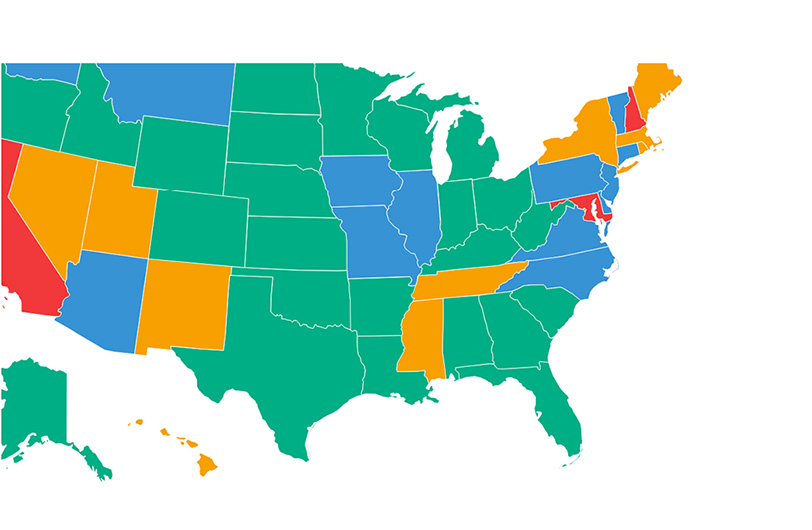
National comparison PP v FQHC
Number of Centers/Individuals Served per Year


  • There are over 13 times more FQHC Service Sites (9,170) nationwide than there are Planned Parenthood centers (about 700).[3]
  • FQHCs serve 21.1 million individuals per year, nearly eight times more individuals than are served by Planned Parenthood centers (2.8 million).[4]


See the comparison by state:

Alabama

Alaska

Arizona

Arkansas

California

Colorado

Connecticut

Delaware

District of Columbia

Florida

Georgia

Hawaii

Idaho

Illinois

Indiana

Iowa

Kansas

Kentucky

Louisiana

Maine

Maryland

Massachusetts

Michigan

Minnesota

Mississippi

Missouri

Montana

Nebraska

Nevada

New Hampshire

New Jersey

New Mexico

New York

North Carolina

North Dakota

Ohio

Oklahoma

Oregon

Pennsylvania

Rhode Island

South Carolina

South Dakota

Tennessee

Texas

Utah

Vermont

Virginia

Washington

West Virginia

Wisconsin

Wyoming


*To view the national summary as PDF, please see National_Comparison of Planned Parenthood to Federally Qualified Health Centers_CLI


*For a map depicting the locations of these FQHC service sites plus rural health clinics, please see: https://lozierinstitute.org/health-clinics-nationwide-compared-to-planned-parenthood-centers/


[1] See http://www.sba-list.org/sites/default/files/content/shared/12.31.14fact_sheet_pp_2013_2014_annual_report.pdf

[2] For definitions of FQHCs and service sites, see http://www.hrsa.gov/grants/apply/assistance/Buckets/definitions.pdf.

[3] “Key Health Center Data by State, 2013: Federally-Funded Health Centers Only,” National Association of Community Health Centers (NACHC). http://www.nachc.com/client/2013%20Key%20facts%20by%20state%20data.pdf (accessed July 30, 2015).

[4] GAO “Federal Obligations to and Expenditures by Selected Entities Involved in Health-Related Activities 2010-2012” (Mar 2015). http://www.gao.gov/products/GAO-15-270R (accessed July 30, 2015).



Latest Posts

June 10, 2026 A red vehicle passes in front of a brick building with a Planned Parenthood sign above the entrance. EXCLUSIVE: Many Women Blindsided By Abortion Pill Complications, New Study Shows June 10, 2026 A doctor in a white coat uses a digital tablet to show information to a patient across a desk. The patient's hands are clasped. New Study Finds Informed Consent Gaps for Abortion Drugs as Women Report Unexpected Pain, Bleeding June 9, 2026 A pregnant woman stands indoors by a window with white curtains, gently holding her belly and looking outside. Natural light fills the room, reflecting hope for improving interventions for substance use disorder in pregnant women. Substance Use Disorder in Pregnant Women: State of the Problem, Treatment, and Recommendations for Improving Interventions

You Might Also Be Interested In

A red vehicle passes in front of a brick building with a Planned Parenthood sign above the entrance.

EXCLUSIVE: Many Women Blindsided By Abortion Pill Complications, New Study Shows

charlotte-lozier-institute Charlotte Lozier Institute
June 10, 2026
Please login to bookmark Close
A doctor in a white coat uses a digital tablet to show information to a patient across a desk. The patient's hands are clasped.

New Study Finds Informed Consent Gaps for Abortion Drugs as Women Report Unexpected Pain, Bleeding

charlotte-lozier-institute Charlotte Lozier Institute
June 10, 2026
Please login to bookmark Close
A pregnant woman stands indoors by a window with white curtains, gently holding her belly and looking outside. Natural light fills the room, reflecting hope for improving interventions for substance use disorder in pregnant women.

Substance Use Disorder in Pregnant Women: State of the Problem, Treatment, and Recommendations for Improving Interventions

June 9, 2026
Please login to bookmark Close

Become A Defender of Life

Your donation helps us continue to provide
world-class research in defense of life.

BECOME A PARTNER
cta-image