












Fact Sheet: Fetal Development Education in the United States

Co-authored with Yoshua Rizk
While Americans are often opinionated on abortion, many Americans are also woefully ignorant of the prenatal development of an infant and when human life begins. An Ipsos poll found that over one in five Americans (21%) claim they have never learned about fetal development and pregnancy stages. Less than a third (28%) of those who claimed to have had prior formal education on the topic were able to correctly answer at least three out of five questions on a true-or-false fetal development quiz.[1] When considering when human life begins, Americans are divided on the topic. While most Americans (80%) agree biologists are the most qualified to determine when life begins, the contrast between biologists’ and the average American’s views on the beginning of life is stark.[2] In a study of 5,577 biologists from 1,058 academic institutions around the world, 96% affirmed that human life begins at fertilization, yet less than a third of American adults agree with that stance.[3] A YouGov poll found that only 29% of American adults think life begins at conception. Thirty-seven percent think life begins at various stages between implantation and birth, 18% think life begins at birth, and 11% are unsure.[4]
To address these gaps in public knowledge of fetal development, states have been proposing legislation since 2023 that would mandate that education on fetal development be incorporated into public education curriculums. Because Americans’ views on fetal development inform their views on abortion, it is important that Americans are taught scientifically accurate information.
LEGISLATION
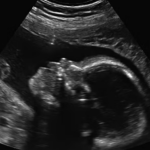
In 2023, North Dakota pioneered fetal development education legislation by passing House Bill 1265. This bill requires a public school’s curriculum to include the presentation of an ultrasound video of at least three minutes in length and a high-quality computer rendering or animation that describes fetal development in health and human sexuality classes. [5] Senator Jane Myrdal showed Live Action’s “Meet Baby Olivia” video on the Senate floor as an example of an animation that would meet this standard.[6]
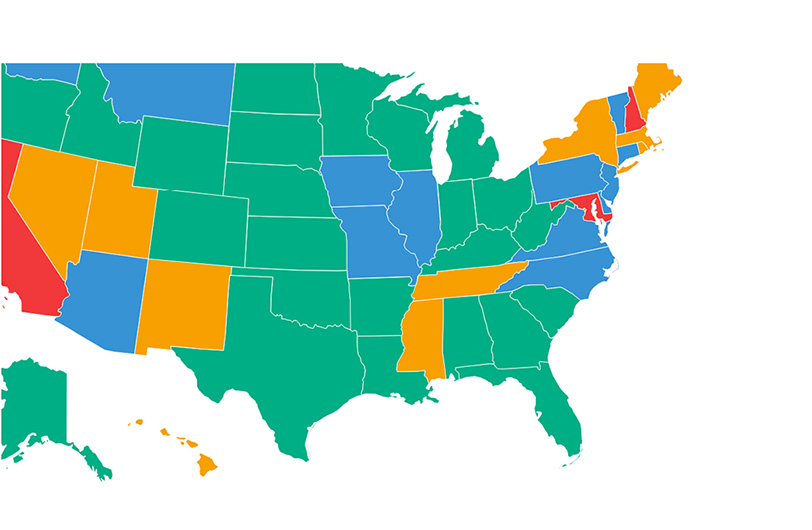
Since then, 26 other states have introduced similar legislation, sometimes labelling the bill the “Baby Olivia Act” after the Live Action video. The table below shows which states introduced fetal development education legislation between 2023 and 2026, and the status of that legislation in each state[7]:
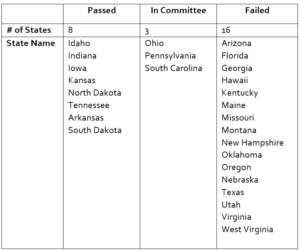
All these state bills share similar language and require the same basic content: a high-definition ultrasound video, which most bills specify should be at least three minutes in length, and a high-quality computer-generated rendering or animation displaying each stage of fetal development. States note these requirements should be integrated into either human growth and development classes or human sexuality classes. The state bills take various approaches to the age at which children should receive the instruction, with a few recommending as early as third grade, others fifth grade, and some simply noting instruction should be “age-appropriate.”
PASSED
Since 2023, eight states, including North Dakota, have passed bills requiring fetal development instruction.[8]
In addition to an ultrasound video and high-quality animation, Iowa’s Senate File 175 requires “instruction related to human development inside the womb” and along with South Dakota’s HB 1313, notes that none of the educational materials will include any resource that promotes abortion or refers to or affiliates with an abortion-providing entity.[9]
IN COMMITTEE
Introduced in early 2025, South Carolina’s H 3256 follows the previous states’ legislation in requiring a high-definition ultrasound video and high-quality animation. H 3256 notes the latter must be “comparable in quality to the ‘Meet Baby Olivia’ video developed by Live Action.”[10] The bill is currently “in committee.” Ohio’s HB 485, also introduced in 2025, contains the same requirements and similarly highlights the “Meet Baby Olivia” video as an example of a high-quality animation. HB 485 has already passed the House, was introduced to the Senate in November 2025, and is currently in the Senate Education Committee.[11]
Also in 2025, Pennsylvania introduced two companion bills, HB 606 and SB 973.[12] The bills vary slightly from most other states’ legislation in that they require at least five minutes for the ultrasound video, rather than three. The companion bills also contain slight variances in language from each other. SB 973 limits the instruction to high school grades while HB 606 simply states the instruction is for students in biology classes, which could refer to the same age-group depending on when students in Pennsylvania are required to take biology courses. Unlike HB 606, SB 973 requires additional age-appropriate instruction on the harms of illegal drugs, narcotics, alcohol, and tobacco on fetal development during pregnancy. Both bills are currently “in committee.”
FAILED
While several states have passed fetal development education bills, sixteen states’ bills have failed. In most cases, the bills stalled and died in committee. Exceptions include Georgia’s bill which died in chamber, Montana’s which died in the drafting process, and Utah’s H.B. 315 which died when the Senate struck the enacting clause. Arizona’s HB 2830 passed both the House and Senate, but Governor Katie Hobbs vetoed the bill.[13] The same occurred in New Hampshire as Governor Kelly Ayott vetoed H.B. 667-FN, and a motion to override the veto was defeated. [14]
VOYAGE OF LIFE
As states continue efforts to pass legislation promoting fetal development instruction to students, it is important that states have more scientifically accurate options to include in their curriculum. The Voyage of Life is a website that highlights a human being’s journey from fertilization to birth using scientifically accurate animated images, real-life photos, and fetal development facts from textbooks and peer-reviewed research. To learn more, visit lozierinstitute.org/voyage/.
[1] “Americans with the Highest Level of Knowledge on Fetal Development Show Strong Support for Abortion Legality,” November 30, 2021, Ipsos, https://www.ipsos.com/en-us/news-polls/Americans-pregnancy-knowledge-and-abortion-2021.
[2] “How views on ‘when life begins’ drive Americans’ abortion attitudes,” July 3, 2020, Heterodox Academy, https://heterodoxacademy.org/blog/social-science-abortion-attitudes/.
[3] Steven A. Jacobs. “The scientific consensus on when a human’s life begins,” Issues in Law & Medicine 36, no. 2 (2021): 221-233, https://issuesinlawandmedicine.com/wp-content/uploads/2023/09/Jacobs_36n2.pdf.
[4] “When Does Human Life Begin?,” YouGov, April 13, 2022, https://yougov.com/en-us/articles/42105-when-does-human-life-begin-poll.
[5] H.B. 1265, 68th Legis. Assemb., (N.D. 2023), https://ndlegis.gov/assembly/68-2023/regular/documents/23-0582-05000.pdf.
[6] Michaela Estruth, “’Baby Olivia’ Inspires Multiple States to Pass Prenatal Development Education Laws,” June 15, 2025, Live Action, https://www.liveaction.org/news/baby-olivia-inspires-multiple-states-prenatal-education.
[7] This table records the number of states that have introduced bills, not the total number of bills. Some states have introduced companion bills or similar bills in different legislative cycles (e.g., Virginia introduced HB 2440 in 2025 and HB 719 in 2026).
[8] S.B. 1046, 68th Leg., 1st Sess. (Idaho 2025). https://legislature.idaho.gov/sessioninfo/2025/legislation/s1046/; Sen. Enrolled Act 442, 124th Gen. Assemb., 1st Sess. (Ind. 2025), https://iga.in.gov/legislative/2025/bills/senate/442/details; S.B. 175, 91st Gen. Assemb., (Iowa 2025), https://www.legis.iowa.gov/legislation/BillBook?ga=91&ba=sf175; Senate Sub. for H.B. 2382, 91st Kan. Legis., (Kan, 2025), https://www.kslegislature.gov/b2025_26/bills/download/?apn=b2025_26%2Fyear1%2Fready_for_publication%2Fhb_2382%2Fhb2382_enrolled.pdf; H.B. 1265, 68th Legis. Assemb., (N.D. 2023), https://ndlegis.gov/assembly/68-2023/regular/documents/23-0582-05000.pdf; H.B. 2435, 113th Gen. Assemb., (Tenn. 2024), https://wapp.capitol.tn.gov/apps/BillInfo/Default?BillNumber=SB2767&GA=113; S.B. 450, 95th Gen. Assemb., (Ark. 2025), https://arkleg.state.ar.us/Home/FTPDocument?path=/Bills/2025R/Public/SB450.pdf; H.B. 1313, 101st Legis., (S.D. 2026), https://sdlegislature.gov/Session/Bill/26293/301276.
[9] S.F. 175, 91st Gen. Assemb., (Iowa 2025), https://www.legis.iowa.gov/legislation/BillBook?ga=91&ba=sf175; H.B. 1313, 101st Legis., (S.D. 2026), https://sdlegislature.gov/Session/Bill/26293/301276.
[10] H. 3256, 126th Gen. Assemb., (S.C. 2025), https://www.scstatehouse.gov/billsearch.php?billnumbers=3256&session126&summary=B.
[11] H.B. 485, 136th Gen. Assemb., (Ohio 2025), https://www.ohiohouse.gov/legislation/136/hb485.
[12] H.B. 606, P.A. Gen. Assemb., (Penn. 2025), https://www.palegis.us/legislation/bills/2025/hb606; S.B. 973, P.A. Gen. Assemb., (Penn. 2025), https://www.palegis.us/legislation/bills/2025/sb973.
[13] H.B. 2830, 57th Legis., (Ariz. 2026), https://www.azleg.gov/legtext/57leg/2R/summary/H.HB2830_022626_HOUSEENGROSSED.DOCX.htm.
[14] H.B. 667-FN, 169th Gen. Court, (N.H. 2025), https://gc.nh.gov/bill_status/billinfo.aspx?id=414&inflect=2.