














Hyde Turns 50: Analyzing the Impact of the Hyde Amendment, with 2026 Addendum


This is Issue 116 of the On Point Series.
Executive Summary
- In 1976, pro-life Rep. Henry Hyde sponsored an amendment to the annual Departments of Labor and Health, Education, and Welfare Appropriation Act to prohibit taxpayer funding allocated in the bill from covering elective abortions.
- Since 1976, 2,678,274 lives have been saved by the Hyde Amendment.
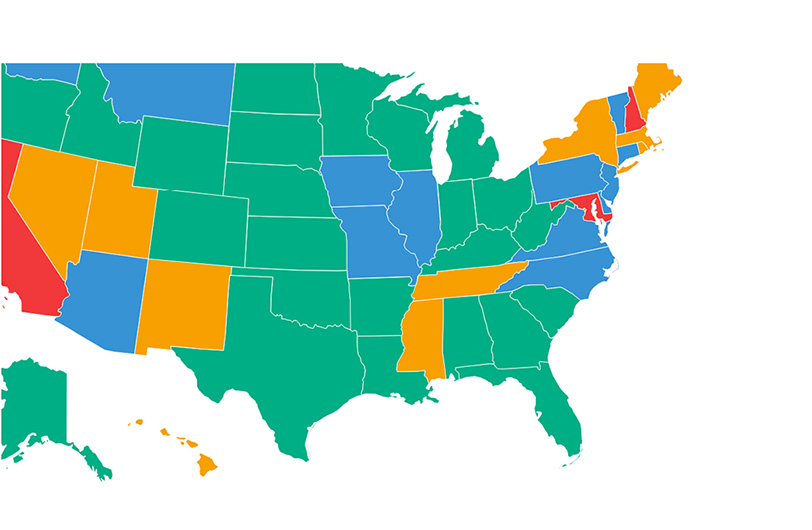
- As of July 2026, 21 state Medicaid programs cover elective abortions, thereby circumventing the impact of the Hyde Amendment in those states.
- Whenever a state abortion limit is in effect, the Hyde Amendment does not have an impact on the abortion rate. In these states, the abortion limit is preventing abortions, not the Hyde Amendment.
Introduction
The Charlotte Lozier Institute (CLI) estimates that, as of September 30, 2026, the 50th anniversary of the Hyde Amendment, approximately 2.7 million lives have been saved by the amendment.
In 1976, pro-life Rep. Henry Hyde sponsored an amendment to the annual Labor and Health, Education, and Welfare Appropriation Act to prevent taxpayer funding allocated in the bill from covering elective abortions. The Hyde Amendment has been passed every year since then and was upheld by the Supreme Court in 1980 in Harris v. McRae. The Hyde Amendment’s greatest impact is in preventing federal Medicaid dollars from covering elective abortions. Although some states use their own taxpayer dollars to pay for abortions for women enrolled in Medicaid, the lack of funding at the federal level has meant that, in states that do not pay for abortion, which still constitute the majority of the states in the country, lives are saved every year thanks to Henry Hyde.
CLI first calculated the number of lives saved by the Hyde Amendment in an On Point paper published to commemorate the 40th anniversary of the amendment in September 2016. These calculations of the number of lives saved were revised in a July 2020 addendum, a June 2023 addendum, and a September 2025 addendum. This addendum, the fifth in the series, updates these calculations as of September 30, 2026 – the 50th anniversary of the Hyde Amendment.
The 2016 paper presented a methodology to estimate the number of lives saved by the Hyde Amendment based on research indicating that restrictions on Medicaid coverage lower the abortion rate by approximately 1.52 abortions per 1,000 women of reproductive age. This addendum utilized the same methodology as the 2016 version (and the subsequent 2020, 2023, and 2025 versions) but with updated abortion data for the years 2025 and 2026. To read more about the methodology used in this series of papers, see Appendix A.
Abortion Policy Changes Affecting Hyde’s Impact
Since September 2025, there have been abortion policy changes in Colorado, North Dakota, Pennsylvania, and Wyoming that have impacted the lives saved by the Hyde Amendment. Colorado and Pennsylvania started to fund elective abortions through their respective state Medicaid programs. North Dakota had a pro-life law in effect for part of late 2025. Similarly, Wyoming had a pro-life law in effect for part of 2026.
Medicaid Funding for Elective Abortion
Two additional state Medicaid programs have begun to cover elective abortions. In November 2024, Colorado voters approved Amendment 79 with over 60 percent of the vote. This measure placed legal abortion in Colorado’s state constitution. It also repealed a 1984 state constitutional amendment that prohibited the use of public funds for abortion. In April 2025, the Colorado legislature passed and Governor Jared Polis signed legislation requiring the state Medicaid program to cover elective abortions. The Colorado Medicaid program started covering elective abortions as of January 1, 2026.
Pennsylvania’s Medicaid program had not covered elective abortions since 1985. However, on April 20, 2026, Pennsylvania’s Commonwealth Court ruled that the state’s Medicaid program must cover elective abortions. In its ruling, the court stated that existing limits on taxpayer funding of abortion violate Pennsylvania’s Equal Rights Amendment. News reports indicate that the state Medicaid program started to cover elective abortions on July 16, 2026. Overall, the federal Hyde Amendment ceases to have an effect in preventing taxpayer funding of abortion when states use their own tax dollars to cover abortions through their Medicaid programs.
Changes in Pro-Life Laws
Since September 2025, pro-life laws have taken effect in North Dakota and Wyoming. In April 2023, North Dakota Governor Doug Burgum signed a life at conception law that was struck down by a North Dakota District Court judge in September 2024. However, the law took effect on November 21, 2025, when the state Supreme Court failed to meet the supermajority required to overturn the law. On March 9, 2026, Wyoming Governor Mark Gordon signed legislation that would ban abortion after a fetal heartbeat can be detected, which is around six weeks of pregnancy. A Wyoming District court issued an injunction, stopping enforcement of the law, on April 24, 2026.
Summary
Since 2020, a number of state abortion limits have taken effect. At various points in time, 18 states have protected nearly all unborn children[1], nine state Heartbeat Acts have taken effect,[2] and five states have had other gestational age limits in effect.[3] These laws have reduced the impact of the Hyde Amendment since it is these laws and not the Hyde Amendment that is protecting unborn children.
Furthermore, since 2018 seven state Medicaid programs have started to cover elective abortions.[4] These policy changes have also reduced the impact of the Hyde Amendment. That is because when states use their own tax dollars to cover elective abortions, Hyde protections do not protect preborn children in these states. Overall, CLI has estimated that the Hyde Amendment saved 2,551,838 lives between 1976 and 2022; 36,532 lives in 2023; 33,461 lives in 2024, 33,415 lives in 2025, and 23,028 lives in 2026 (as of September 30th). It is now estimated that the Hyde Amendment has saved a total of 2,678,274 lives since 1976.
Michael J. New, Ph.D., is a Senior Associate Scholar at Charlotte Lozier Institute.
Appendix A: Methodology
To determine the overall impact of the Hyde Amendment, CLI considered data from all 50 states plus the District of Columbia for every year from 1976 to 2026. The methodology is as follows:
1) If either the federal government or a state government was funding abortion for Medicaid recipients for the entire year, we predict that the Hyde Amendment would have no impact on the abortion rate.[5]
2) If neither the federal government nor the state government was funding abortion for Medicaid recipients for the entire year, we predict the Hyde Amendment would lower the state abortion rate by 1.52 abortions per thousand women of childbearing age.
3) Whenever a state abortion limit is in effect, the Hyde Amendment would have no impact on the abortion rate. The abortion limit is preventing the abortions, not the Hyde Amendment.
4) When a state heartbeat act is in effect, the Hyde Amendment would lower the abortion rate by .82688 abortions per thousand women of childbearing age. The November 2022 Lozier Institute analysis of the Texas Heartbeat Act found that it reduced the number of in-state abortions in Texas by 45.6 percent. As such, in states with heartbeat acts, the Hyde Amendment is saving 45.6 percent fewer lives.[6]
5) When a state gestational age limit is in effect such as a 12-week limit or 15-week limit, the Hyde Amendment’s impact is reduced by the fraction of in-state abortions that occur within the gestational age limit. Women seeking abortions after the gestational age limit would be prevented by the abortion limit, not the Hyde Amendment.
Appendix B: State Medicaid Programs and Pro-Life Laws
Table 1: Medicaid Coverage of Abortion by State, 2025-2026
State 2025 Medicaid Coverage of Abortion 2026 Medicaid Coverage of Abortion
Alaska Full Year Full Year
California Full Year Full Year
Colorado No Coverage Full Year
Connecticut Full Year Full Year
Delaware Full Year Full Year
Hawaii Full Year Full Year
Illinois Full Year Full Year
Maine Full Year Full Year
Maryland Full Year Full Year
Massachusetts Full Year Full Year
Minnesota Full Year Full Year
Montana Full Year Full Year
Nevada Full Year Full Year
New Jersey Full Year Full Year
New Mexico Full Year Full Year
New York Full Year Full Year
Oregon Full Year Full Year
Pennsylvania No Coverage Starting July 16th
Rhode Island Full Year Full Year
Vermont Full Year Full Year
Washington Full Year Full Year
Table 2 Pro-Life Laws Enforcement Dates, 2025-2026
State Law in Effect 2025 Enforcement Dates 2026 Enforcement Dates
(until 9/30/2026)
Alabama Life at Conception Entirety Entirety
Arkansas Life at Conception Entirety Entirety
Florida 6 Week Law Entirety Entirety
Georgia Heartbeat Law Entirety Entirety
Idaho Life at Conception Entirety Entirety
Indiana Life at Conception Entirety Entirety
Iowa Heartbeat Law Entirety Entirety
Kentucky Life at Conception Entirety Entirety
Louisiana Life at Conception Entirety Entirety
Mississippi Life at Conception Entirety Entirety
Nebraska 12 Week Law Entirety Entirety
North Carolina 12 Week Law Entirety Entirety
North Dakota Life at Conception 11/21/25-12/31/25 Entirety
Oklahoma Life at Conception Entirety Entirety
South Carolina Heartbeat Law Entirety Entirety
South Dakota Life at Conception Entirety Entirety
Tennessee Life at Conception Entirety Entirety
Texas Life at Conception Entirety Entirety
Utah 18 Week Law Entirety Entirety
West Virginia Life at Conception Entirety Entirety
Wyoming Heartbeat Law None in effect 3/09/26-4/24/26
[1] AL, AR, AZ, ID, IN, KY, LA, MO, MS, ND, OK, SD, TN, TX, UT, WI, WV, WY
[2] FL, GA, IA, ID, OH, SC, TN, TX, WY
[3] AZ, FL, NE, NC, UT
[4] These seven states include Illinois (2018), Maine (2019), Rhode Island (2023), Nevada (2024), Delaware (2025), Colorado (2026), and Pennsylvania (2026).
[5] In cases where neither the federal government nor the state government was funding abortion for Medicaid recipients for part of the year, we predict the Hyde Amendment would lower the state abortion rate by 1.52 abortions per thousand women of childbearing age multiplied by the percentage of the year where abortion was unfunded.
[6] (1.52)*(0.544) = .82688