












Hyde Saves Lives: Analyzing the Impact of the Hyde Amendment with 2025 Addendum

This is Issue 111 of the On Point Series.
Executive Summary
- In 1976, pro-life Congressman Henry Hyde sponsored a rider to the annual Labor Health and Human Services (HHS) bill to prevent taxpayer funding allocated in the bill from covering elective abortion.
- Since 1976, 2,646,474 lives have been saved by the Hyde Amendment.
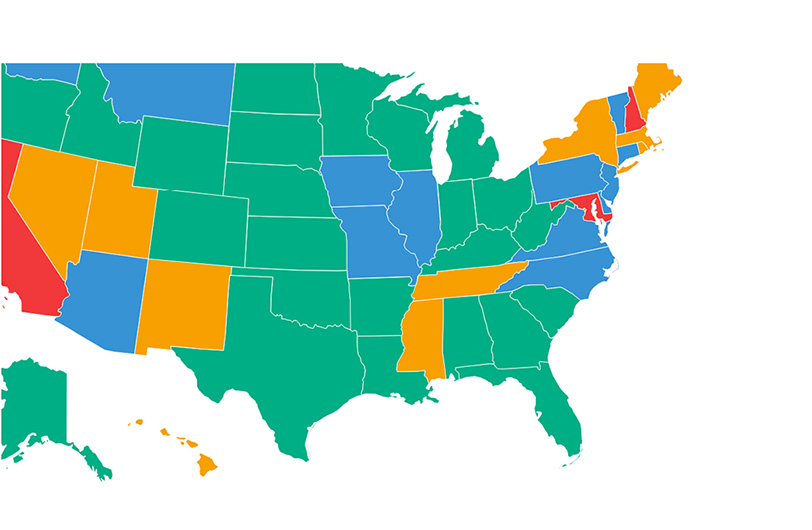
- As of September 2025, 19 state Medicaid programs cover elective abortion, thereby circumventing the impact of the Hyde Amendment in those states.
- Whenever a state abortion limit is in effect, the Hyde Amendment does not have an impact on the abortion rate. In these states, the abortion limit is preventing abortions, not the Hyde Amendment.
Introduction
The Charlotte Lozier Institute (CLI) estimates that, as of September 30, 2025, the 49th anniversary of the Hyde Amendment, approximately 2.6 million lives have been saved by the amendment.
In 1976, pro-life Congressman Henry Hyde sponsored a rider to the annual Labor Health and Human Services (HHS) bill to prevent taxpayer funding allocated in the bill from covering elective abortion. The Hyde Amendment has been passed every year since and was upheld by the Supreme Court in 1980 in Harris v. McRae. The Hyde Amendment’s greatest impact is in preventing federal Medicaid dollars from covering elective abortions. Although some states use their own taxpayer dollars to pay for abortions for women enrolled in Medicaid, the lack of funding at the federal level has meant that, in states that do not pay for abortion, which still make up the majority of the country, lives are saved every year thanks to Henry Hyde.
CLI first calculated the number of lives saved by the Hyde Amendment in an On Point paper published to commemorate the 40th anniversary of the amendment in September 2016. These calculations of the number of lives saved were revised in both a July 2020 addendum and in a May 2023 addendum. This addendum, the fourth in the series, updates these calculations as of September 30, 2025 – the 49th anniversary of the Hyde Amendment.
The 2016 paper presented a methodology to estimate the number of lives saved by Hyde based on research indicating that restrictions on Medicaid coverage lower the abortion rate by approximately 1.52 abortions per 1,000 women of reproductive age. This addendum utilized the same methodology as the 2016 version (and the subsequent 2020 and 2023 versions) but with updated abortion data for the years 2023, 2024, and 2025. To read more about the methodology used in this series of papers, see Appendix A.
Abortion Policy Changes Affecting Hyde’s Impact
Since May 2023, there have been numerous abortion policy changes that have impacted the number of lives saved by the Hyde Amendment.
Medicaid Funding for Elective Abortion
Two state Medicaid programs have begun to cover elective abortions. Nevada’s Medicaid program started paying for elective abortions on December 16, 2024, and Delaware’s state Medicaid program started paying for elective abortions on January 1, 2025. The federal Hyde Amendment ceases to have an effect in preventing taxpayer funding of abortion when states use their own tax dollars to cover abortion through their Medicaid program.
Changes in Pro-Life Laws
Multiple states have enacted or strengthened existing pro-life laws since May 2023. Indiana enacted a life-at-conception law in August 2023. Florida, Iowa, and South Carolina all enacted Heartbeat Acts. Additionally, in 2023, both North Carolina and Nebraska enacted laws that protected unborn children after 12 weeks of gestation.
Abortion limits reduce the impact of the Hyde Amendment because these laws decrease the number of abortions that take place within state boundaries. Thus, when an abortion is prevented, the abortion limit rather than the Hyde Amendment has protected the unborn child. Also, when a woman circumvents an abortion limit by obtaining an abortion in another state where the laws are more permissive, the Hyde Amendment is not having an effect since state Medicaid programs do not pay for out-of-state medical procedures.
Finally, some states’ pro-life laws have been struck down since May 2023. In November 2024, Arizona voters enacted Proposition 139 which placed legal abortion in the state constitution. In response, the state attorney general’s office quit enforcing the state’s 15-week abortion limit as of November 25, 2024. Similarly, in November 2024, Missouri voters approved Amendment 3 which placed legal abortion in Missouri’s constitution. When it took effect on December 23, 2024, it effectively struck down Missouri’s life-at-conception law. Finally, North Dakota’s life-at-conception law was struck down by a North Dakota district court judge on September 12, 2024. Appendix B provides a full list of states that either fund elective abortion through their state Medicaid program or that have enacted protective pro-life laws in the aftermath of the Supreme Court’s June 2022 Dobbs decision.
Summary
Since 2020, a number of state abortion limits have taken effect. At various points in time, 16 states have protected nearly all unborn children, six state Heartbeat Acts have been in effect, and four other states have had other gestational age limits in effect. These laws have reduced the impact of the Hyde Amendment since it is these laws and not the Hyde Amendment that is protecting unborn children. Overall, CLI has estimated that the Hyde Amendment saved 2,551,838 lives between 1976 and 2022; 36,257 lives in 2023; 33,474 lives in 2024, and 24,905 lives in 2025 (as of September 30th). It is now estimated that the Hyde Amendment has saved a total of 2,646,474 lives since 1976.
Appendix A: Methodology
To determine the overall impact of the Hyde Amendment, CLI considered data from all 50 states plus the District of Columbia for every year from 1976 to 2025. The methodology is as follows:
1) If either the federal government or a state government was funding abortion for Medicaid recipients for the entire year, we predict that the Hyde Amendment would have no impact on the abortion rate.
2) If neither the federal government nor the state government was funding abortion for Medicaid recipients for the entire year, we predict the Hyde Amendment would lower the state abortion rate by 1.52 abortions per thousand women of childbearing age.[1]
3) Whenever a state abortion limit is in effect, the Hyde Amendment would have no impact on the abortion rate. The abortion limit is preventing the abortions, not the Hyde Amendment.
4) When a state heartbeat act is in effect, the Hyde Amendment would lower the abortion rate by .82688 abortions per thousand women of childbearing age. The November 2022 Lozier Institute analysis of the Texas Heartbeat Act found that it reduced the number of in-state abortions in Texas by 45.6 percent. As such, in states with heartbeat acts, the Hyde Amendment is saving 45.6 percent fewer lives.[2]
5) When a state gestational age limit is in effect such as a 12-week limit or 15-week limit, the Hyde Amendment’s impact is reduced by the fraction of in-state abortions that occur within the gestational age limit. Women seeking abortions after the gestational age limit would be prevented by the abortion limit, not the Hyde Amendment.
Appendix B: State Medicaid Programs and Pro-Life Laws
Table 1: Medicaid Coverage of Abortions by State, 2023-2025[3]

Table 2: Pro-Life Laws’ Enforcement Dates, 2023-2025[4]

Michael J. New is an Assistant Professor of Practice at The Busch School of Business at The Catholic University of America. He also serves as a senior associate scholar at the Charlotte Lozier Institute.
Significant contributions were also made to this paper by Mia Steupert, M.A., Tessa Cox, and Elyse Gaitan.
[1] In cases where the federal government nor the state government was funding abortion for Medicaid recipients for part of the year, we predict the Hyde Amendment would lower the state abortion rate by 1.52 abortions per thousand women of childbearing age multiplied by the percentage of the year where abortion was unfunded.
[2] (1.52)*(0.544) = .82688
[3] A court decision obligated Arizona to pay for abortions to preserve health, however, Arizona is not included in this table because, in practice, very few abortions are taxpayer funded. In 2026, Colorado taxpayers will begin to pay for abortions.
[4] NA = Not in effect