











Irish Member of Parliament Dismissed Mental Health Impact of Abortion

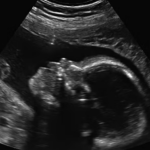
Recently Patricia Gaughran took to the internet to challenge Irish deputy Lisa Chambers TD, a member of the lower house of the Irish Parliament, on her statement that abortion regret is a “makey-uppy thing.” Chambers made the comment while railing against an amendment to the planned abortion law that would require “the relevant medical practitioner or the qualified person…[to] offer the pregnant woman, orally and in person, the opportunity to view the active ultrasound of the feotus and hear the heartbeat of the foetus, if the heartbeat is audible” at least 24 hours before the pregnancy is terminated.
Chambers responded to the proposed amendment, meant to protect women from experiencing abortion regret, by denying that abortion regret even exists: “Abortion regret is a makey-uppy thing. It doesn’t exist. It’s just your own, I don’t know what to call it, but it doesn’t exist.” The statement from the deputy struck a nerve with Gaughran, an Irish woman who had an abortion thirteen years ago. Gaughran, who now has three children, said in a video response uploaded to Facebook, “I’ve suffered for the last thirteen years from anxiety and depression… Are you telling me that my symptoms, that my abortion story, that what I’ve suffered was a makey-uppy thing? Are you telling me that I’ve made this up?” Gaughran heartbreakingly relates, “I have suffered. I’ve been in [the] hospital after my abortion twice from trying to end my own life because I couldn’t live without my child.”
Gaughran says, “My mental health problems started from after my abortion.” The topic of mental health repercussions after abortion is not a popular one. In his peer-reviewed study detailing literature on abortion and mental health and the need for future research efforts, David C. Reardon, Ph.D. asserts the need to recognize that “[c]ommon ground exists regarding the very basic fact that at least some women do have significant mental health issues that are caused, triggered, aggravated, or complicated by their abortion experience.” Gaughran offers a powerful message regarding abortion and mental health to Lisa Chambers, and women considering abortion:
People don’t understand, we’re human beings. We’ve got a conscience. Do you think you’re going to be okay after ending your own child’s life? Cause I can tell you here and now, you’re not. You’re going to live with pain for the rest of your life. You’re going to live with an emptiness, a hole that will never ever be filled, and you are always going to wonder about that child, like I’ve done for the last thirteen years. The nightmares, the depression, the anxiety, the constant crying looking for my child. I have three other kids. I should have four kids sitting with me. You know I’m lucky to be alive, to be with my three other kids. That’s the effects abortion had on me.
Abortion regret exists, and Patricia Gaughran proves it by sharing her story. Lisa Chambers is wrong about abortion regret. As Gaughran says, “I am going to open-up about my story, because…people think you’re an educated woman. I think you’re an uneducated fool because you have no idea what abortion does to a woman. I suggest you go and educate yourself on what it does to women.”
Patricia Gaughran is an inspiration to women adversely impacted by abortion. She has gone on to have three children, battle her abortion regret, and share her story. Women experiencing abortion regret should know that they are not wrong for feeling regret, and that they are not alone.
Research published in Men and Abortion, Lessons, Losses and Love by Arthur B. Shostak and Gary McLouth with Lynn Seng shows that many men also suffer severe and lasting psychological repercussions from losing a child to abortion. Contrary to the claims of abortion advocates, abortion does not liberate the parents, it often enslaves them in a lifetime of grief, guilt, and pain.
If you or someone you know is suffering from abortion regret do not be afraid to reach out for help.
Update: Chambers subsequently apologized for her comments on abortion regret after widespread criticism. She went on to say, however, that she was seeking, according to a newspaper account of her remarks, to highlight that “abortion regret is not a medical term.” David Reardon, Ph.D. has published the most recent article on the issue, a comprehensive review of more than 200 studies of abortion and mental health, which concluded that “[t]here is no disagreement over the fact that abortion may trigger, worsen, or exacerbate mental health problems, but rather the main controversy is over whether abortion is ever the sole cause of severe mental illnesses.” Reardon listed 12 consensus findings on mental health and abortion on which both sides of the abortion debate agree.
Post-abortion resources:
Rachel’s Vineyard International
Post-abortion resources for men:
Silent No More – Men
Pregnant?
USA
Ireland
International and USA
Suicide Prevention Hotline
Call 1-800-273-8255
https://suicidepreventionlifeline.org/
Other Resources:
— Hannah Howard is a research associate with the Charlotte Lozier Institute.