










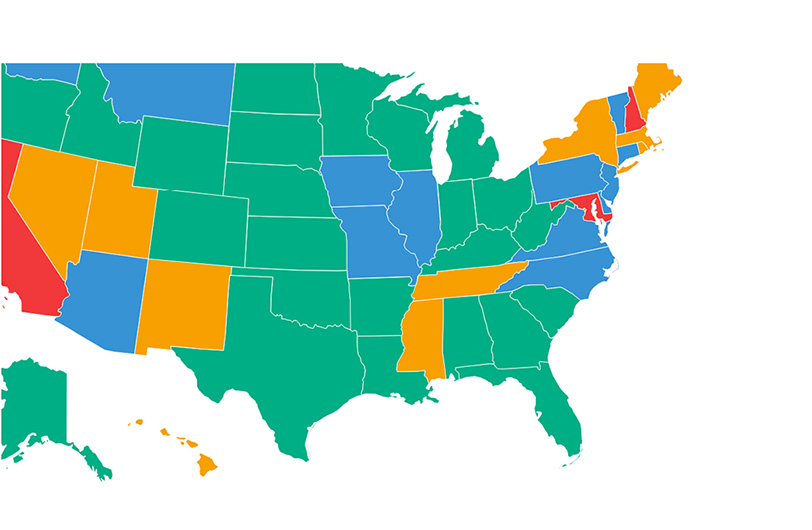







Abortion advocates have misleadingly used the topic of “maternal health” to promote a pro-abortion agenda. Since the U.S. Supreme Court’s Dobbs decision, the American public has been told repeatedly that abortion is often needed to protect the life of a pregnant woman in an emergency, and that without abortion, maternal mortality in the U.S. would skyrocket. An analysis of what constitutes maternal mortality demonstrates this is not true. The U.S. has had extremely high maternal mortality compared to other developed countries for decades, even while abortion has been widely available. Moreover, every pro-life state allows an exception permitting abortion to protect a woman’s life in a pregnancy emergency, but this action is rarely performed.
Definitions
The identification and categorization of maternal mortality begins broadly with “pregnancy-associated deaths,” that is, the death of a woman while pregnant or within one year of the end of pregnancy from any cause. This includes both deaths due to complications of pregnancy or its management and deaths due to seemingly unrelated events, such as a car accident or homicide.
Investigators then identify a subset of pregnancy-associated deaths, called “pregnancy-related deaths.” This is the death of a woman while pregnant or within a year of the end of pregnancy from any cause related to or aggravated by the pregnancy or its management, irrespective of the duration or site of the pregnancy. Examples would include death from sepsis after premature rupture of membranes or cardiac decompensation in a woman with pre-existing cardiac disease. These may be “direct maternal deaths,” resulting from obstetric complications, or “indirect maternal deaths,” resulting from a preexisting disease that was aggravated by the effects of pregnancy or a disease that developed during pregnancy.
This straightforward question is asked by investigators: “If she had not been pregnant, would she have died?” But subjectivity can be involved in the determination of pregnancy-relatedness. For example, if a woman dies from suicide a few months following childbirth, how do investigators reliably determine if her pregnancy contributed to her death? If a woman dies from a cardiac defect diagnosed as a child, how do they quantify the effects of the physiological changes of pregnancy in worsening her condition? If a woman dies from cancer diagnosed during pregnancy, how do they determine if her treatment options or response to treatment were different due to her pregnancy? It should be noted that an additional category is “unable to determine if pregnancy-related,” demonstrating the occasional difficulty in this analysis.
Additionally, there are two temporal subsets that fall under “pregnancy-related death.” A “maternal death” is the pregnancy-related death of a woman while pregnant or within six weeks of the end of her pregnancy. A “late maternal death” is the death of a woman from direct or indirect obstetric causes between six weeks and one year after the end of a pregnancy.
There is no standard definition of “maternal mortality,” with definitions differing depending on the organization compiling the data. Additionally, different systems examine different time intervals and utilize different investigative techniques. The World Health Organization (WHO) and the Centers for Disease Control and Prevention’s (CDC) National Vital Statistics System (NVSS) report pregnancy-related deaths occurring while pregnant or within six weeks after a pregnancy, and define “maternal mortality rate” as the number of maternal deaths per 100,000 live births. Both organizations use data based on the WHO International Classification of Diseases (ICD) O death codes on death certificates. This provides annual data that allows international comparisons with other countries but may be limited due to the paucity of data or coding errors on a death certificate.
An additional system at the CDC, the Pregnancy Mortality Surveillance System (PMSS), defines a pregnancy-related death as a death occurring during pregnancy or until one year after the pregnancy ends. CDC epidemiologists analyze the medical records of deceased women to determine pregnancy-relatedness, rather than merely relying on a diagnostic code. The PMSS data is more thorough than the NVSS data because their review encompasses medical records rather than merely the code on the death certificate, but it encompasses a different time period (PMSS measures until one year after the pregnancy ends whereas the NVSS measures until six weeks after the pregnancy ends), so direct comparisons of the two systems cannot be obtained.
Recently, Maternal Morbidity and Mortality Review Committees (MMRCs), comprised of experts in obstetrics, anesthesiology, psychiatry, pathology, and other pertinent fields, have convened at local, state, regional, and federal levels to comprehensively review reported pregnancy-associated deaths to determine pregnancy-relatedness and preventability. They do so by utilizing data from multiple sources, including medical records, social records, autopsy reports, and informant interviews. Collaborative reports combining the findings of multiple MMRCs are then produced with recommendations for improving clinical practice.
Data Deficiencies
The CDC relies primarily upon death certificate documentation, or deaths that come to its attention from other sources, to identify potential maternal deaths for investigation. It also searches for deaths through obituary searches, hospital discharge data, and media reports. However, the CDC does not document how systematically or thoroughly it seeks to discover these additional maternal deaths. Moreover, studies estimate that 38-50% of all U.S. maternal deaths are not reported as pregnancy-associated on death certificates. These undetected deaths will remain unknown and uninvestigated.
In light of the frequent failure of death certifiers to report a concomitant or prior pregnancy, the CDC recommended the addition of a “pregnancy checkbox” to state death certificates, asking whether a woman was pregnant or postpartum at the time of death. Implementation of the checkbox led to an immediate increase in pregnancy-associated deaths detected, yet inappropriate use of the checkbox was documented as well, with false positive rates as high as 50%. Many of the falsely positive checkboxes were inexplicably marked for women too old to have any chance of pregnancy. For example, 147 deaths in women older than 85 years old in 2013 had positive pregnancy checkboxes on their death certificates.
Linking the death certificates of reproductive aged women with infant birth or death certificates (required after 20 weeks of gestation or if the birth weight is greater than 350 grams) improves detection, but this cannot be performed for induced or spontaneous pregnancy losses in the first half of pregnancy. Spontaneous pregnancy losses, which include miscarriages, ectopic pregnancies, molar pregnancies, and stillbirths, thought to occur in 15-17% of pregnancies, and intentional losses by induced abortions, thought to occur in 18-20% of pregnancies, are not mandatorily counted and thus accurate numbers of these events are unavailable. Further, only two-thirds of maternal deaths occur in conjunction with a live birth, which leaves many deaths unrepresented in the maternal mortality ratio numerator of 100,000 live births. Relatedly, a study of data from Finland found that as few as 6% of abortion-associated deaths and 12% of miscarriage- or ectopic- pregnancy-associated deaths are noted on death certificates, causing many abortion-associated and miscarriage-associated deaths to remain unknown and uninvestigated.
Maternal mortality would best be detected by documenting how likely it is for a woman to remain alive after a pregnancy ends. Researchers can determine this by using a single-payer insurance database to link death certificates from reproductive aged women with all documented pregnancy events, detecting the number of deaths following each pregnancy outcome. European studies that have employed this methodology (such as the aforementioned study of data from Finland) have resulted in findings that undermine the common assumption that induced abortion is safer than pregnancy, with far more deaths occurring after abortion compared to childbirth.
Finally, there is no uniformity in reporting among states because there are no federal reporting mandates and the data isn’t reported by the CDC by state for single years. The release of state data is also delayed and often unhelpful to researchers who are trying to look at how policy changes and events impact maternal mortality rates.
Causes, Contributing Factors, and Risks of Maternal Mortality
Although it may be assumed that most maternal deaths occur due to catastrophic events at childbirth, direct obstetric deaths from hemorrhage, sepsis, embolism, and hypertensive crises, which in the past accounted for >90% of all pregnancy-related deaths, now account for only about a third of maternal deaths. Fortunately, these deaths are decreasing due to increased emphasis on early detection and treatment of obstetric emergencies in hospital systems and improved obstetric care in labor.
New causes of death have emerged as the aforementioned more direct causes have declined. Currently, about half of pregnancy-related deaths involve cardiovascular, cerebrovascular, and other organ system dysfunctions, sometimes occurring late in the postpartum period. This reflects the poor preconceptual health of many American women due to obesity, diabetes, hypertension, and other chronic medical conditions. Societal pressure to delay childbirth has also led to many women bearing children at older ages, which places them at higher risk of complications. Additionally, deaths may be caused by hemorrhage from an abnormally adherent placenta associated with prior uterine trauma from cesarean delivery or surgical abortion.
“Deaths of despair” from mental health disorders such as suicide or substance overdose are another common cause of maternal deaths. It is intuitive that an adverse pregnancy outcome, such as a stillbirth or coerced abortion, may affect a woman’s mental health, but due to difficulty in detecting maternal deaths associated with early pregnancy losses, there is a high likelihood that these deaths may be missed and unaccounted for in maternal mortality statistics. Determination of whether a mental health condition contributed to a woman’s death is hampered by the lack of standardized protocols, so researchers may determine causality through the use of subjective criteria.
Indirect contributions to maternal mortality, sometimes referred to as “upstream determinants of health,” include the previously mentioned preconceptual health risk factors of chronic disease and advanced maternal age, but also include single motherhood, poverty, rural location, and pre-existing mental health conditions.
The method of delivery or termination/loss resolution also affects the risk of maternal mortality. Compared with other methods of term delivery, spontaneous vaginal delivery (SVD) has the lowest risk of maternal death. A higher risk of complications, such as hemorrhage and adjacent tissue damage, is associated with operative vaginal delivery, assisted with vacuum or forceps. Cesarean section delivery has much higher risks of maternal death. This is because pregnancy complications themselves may necessitate the cesarean section, and because C-sections come with increased risks of hemorrhage, infection, thrombotic complications, and direct organ damage. The U.S., compared to many other developed countries, has a large percentage of births that occur by cesarean section—approximately one-third. This may contribute to the high maternal mortality rates in the U.S.
Preterm deliveries are inherently riskier than term deliveries because pregnancy complications often require an early delivery. Preterm births also come with increased risks for failed labor induction, fetal intolerance of labor, cesarean section due to malpresentation, or other factors. Medical interventions to delay preterm birth when labor begins early may also increase risks.
Early natural losses (spontaneous abortions or miscarriages) may resolve on their own without intervention, may require medications such as misoprostol or mifepristone to fully resolve, or may be treated with surgical dilatation and suction aspiration. However, there are risks associated with natural losses, and gestational age impacts this risk, with later miscarriages associated with more complications.
An ectopic pregnancy is implanted in a location outside the normal location in the uterus, most commonly the fallopian tube, where continued growth can stretch the tube to the point of rupture, resulting in catastrophic internal bleeding.
Gestational trophoblastic disease, otherwise known as hydatidiform mole, is a rare abnormal pregnancy with the potential for invasion and metastasis of the pregnancy tissue. It is treated with the surgical removal of the abnormal tissue but sometimes requires chemotherapy or additional surgery if invasive disease occurs.
Induced abortion is the intentional ending of an unborn baby’s life. The gestational age when an abortion is performed affects risk, as maternal mortality increases along with gestational age. The FDA’s recent removal of critical in-person safeguards has resulted in the use of the abortion drugs mifepristone and misoprostol in medically unsupervised situations, increasing the risk of harm. The true risk of maternal mortality following abortion is unknown due to substantial data deficiencies.
Mitigating the Problem of Maternal Mortality
Much attention has been directed to the determination that 80-90% of pregnancy-related deaths are considered preventable, defined as “some chance of the death being averted by one or more reasonable changes to patient, community, provider, facility, and/or systems factors.” A complex interaction of factors and characteristics contributes to preventable deaths, necessitating change not just in the actions of physicians and health care systems, but also in patient behavior and family and community support.
The lack of high-quality data in the U.S. has led abortion advocates to promote the false narrative that “abortion is safer than childbirth,” sometimes recommending abortion to women in high-risk groups, such as black women, whose maternal mortality risk is approximately three times that of white women. In promoting this narrative, however, they ignore inconvenient data, like the fact that black women already have three times as many abortions, or that preexisting medical illnesses and social risk factors are more prevalent in this high-risk population. Although fearmongering about maternal mortality has reached a crescendo since the overturning of Roe v. Wade, the U.S. has had the worst maternal mortality in the developed world for decades, even while abortion was readily available with almost no limits.
Far from being a solution to the problem of maternal mortality, it’s possible that abortion may contribute to this heartbreaking issue in some cases. In fact, there are reasons to anticipate that abortion limitations may protect some women from maternal mortality. Abortion-related deaths become more likely as gestational age increases, with a woman being 76 times more likely to die after a late second trimester abortion compared to an earlier abortion. Records-linkage studies demonstrate a woman is 2-3 times as likely to die from any cause and 6 times as likely to die from suicide in the year following abortion compared to the year following childbirth. Mental health complications following abortion, such as anxiety, depression, substance abuse, and self-harm, may lead to “deaths of despair”—suicide, substance overdose, deaths from high-risk-taking behavior, or even intimate-partner homicide as dysfunctional relationships continue to deteriorate in the aftermath of abortion.
Additionally, family breakdown has been facilitated by the pro-abortion narrative, “her body, her choice,” leading many men to disengage when a woman chooses to carry a pregnancy to term. This has resulted in many impoverished single mothers at disproportionate risk of maternal mortality if they should become ill during or following childbirth.
The majority of women with a history of abortion would have preferred to give birth if they only had more relationship, material, or financial support. Thus, pregnancy centers are uniquely positioned to impact the heartbreaking problem of maternal mortality by protecting women from the mental health harms of unwanted abortions and helping them to access the support they really need to give birth to their children.
Conclusion
The issue of maternal mortality deserves rigorous investigation and impartial discourse. Genuine concern for the well-being of women and their children is called for, rather than political and ideological rhetoric. Full and open dialogue begins with transparent and accurate data and its nonbiased interpretation. Finally, increased awareness is needed of the reality that maternal mortality can follow any pregnancy event, including induced abortion, and that these tragic deaths may be more likely to occur following mental health complications, chronic medical illnesses, and in women with poor social support.