











Fact Sheet: Deficiencies Affecting U.S. Abortion Data Collection and Application


Executive Summary:
- Extensive deficiencies affect abortion data collection in the U.S., including a lack of national reporting requirements, the miscoding of abortion-related emergency department visits as miscarriages, and the FDA’s decision not to require abortion drug prescribers to report adverse events apart from deaths.
- Abortion research that does exist is often misused or misrepresented. The relative quality of various peer-reviewed abortion studies, and their implications for public policy, have not always been carefully considered in FDA decisions or by pro-abortion media. The FDA, for example, partly relied on poor quality and irrelevant studies in loosening some regulations on abortion drugs, and many studies showing notable risks of drug-induced abortion are ignored by the media.
- U.S. abortion data collection would be improved by implementing national and state-level requirements for deidentified data collection of numbers, complications, and deaths.
Extensive deficiencies affect abortion data collection in the U.S., and the research that does exist is often misused or misrepresented. Due to the lack of mandatory data collection at the national level, the total number of abortions, complications, and deaths following induced abortion in the U.S. are unknown. Terminology related to abortion is also sometimes undefined or unclear, allowing the abortion industry to promote its products to women and girls who remain unaware of the risks for short-term and long-term complications.
While the Charlotte Lozier Institute has published several papers on various aspects of abortion data reporting issues,[i] this fact sheet summarizes some of the main ways U.S. abortion data, including complications and abortion-related mortality data, is currently insufficient for studying abortion incidence, outcomes, safety, and other related issues. Also addressed are the ways in which existing peer-reviewed research has sometimes been misused or misinterpreted both by the government and by pro-abortion media.
1. Deficiencies exist in overall abortion data collection and reporting of numbers.
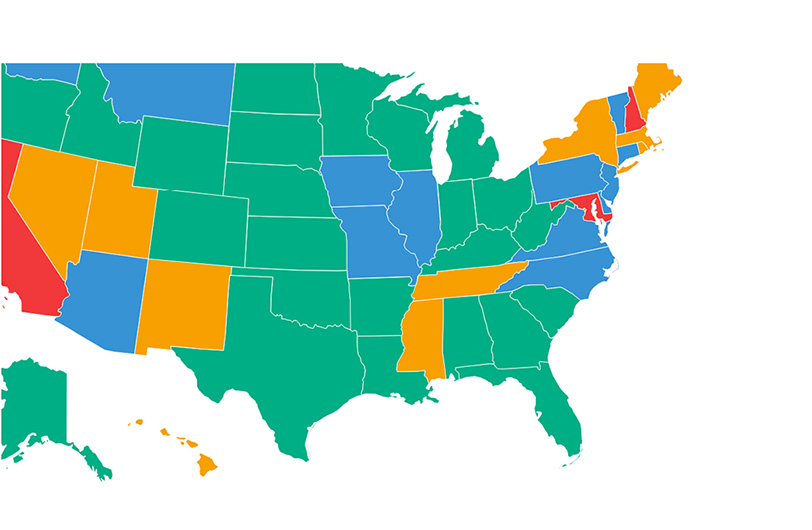
National abortion numbers are unknown. In the U.S., it is entirely voluntary whether states choose to report data on numbers of induced abortions to the federal government (if they collect this data at all). The Centers for Disease Control and Prevention (CDC) publishes a yearly report of the estimated number of legal abortions they receive from state and local health departments, but a number of states (California, Maryland, Michigan, New Jersey, New Hampshire, and North Dakota) do not contribute any data. On the other hand, the Guttmacher Institute, which receives data directly from abortion providers, has reported numbers as much as 50% higher than the CDC, as in 2020. Yet even though Guttmacher reports higher numbers, their total is still an estimate due to the number of abortions performed outside the formal healthcare system, such as through abortion drugs being mailed from overseas. The absence from official national data of states reporting high numbers of abortions is significant, as that same year the Guttmacher Institute estimated that 154,060 abortions occurred in California alone and 30,750 in Maryland.
Many states’ abortion numbers are unknown. Many states have few or no requirements for abortion reporting. The presence or absence of requirements is often correlated with state and local policies toward abortion—generally, states with permissive abortion laws simultaneously have low quality abortion reporting.
Remote prescribing and distribution of mifepristone and misoprostol for drug-induced abortions further obscure the numbers. In 2021, the FDA permanently suspended its requirement for women to have an in-person medical visit prior to obtaining mifepristone (brand name ‘Mifeprex’), which it later made official in the drug’s updated Risk Evaluation and Mitigation Strategy (REMS) in 2023 – allowing the drugs to be ordered by telemedicine or online from international and out-of-state distributors, and distributed by mail. These actions created and continue to create further challenges to data collection, as there is no mechanism for tracking the pills being illegally mailed, nor confirmation that when received, the pills are being taken to cause an abortion. Recommendations by abortion advocates for “advance provision”—obtaining the pills before pregnancy in case they are needed—is creating further obfuscation. One study noted there were more than 48,000 requests for abortion drugs via advance provision over a year and a half through April 2023.
2. Deficiencies exist in abortion complications data collection and reporting.
The FDA Adverse Event Reporting System (FAERS) is a voluntary, passive collection system. This system is inadequate for obtaining accurate abortion drug complication data, as it requires the motivation of physicians and the public who suspect drug injuries to navigate the complex and time-consuming system to create a report. As CLI has noted elsewhere, from 2020-2022, the six states that reported drug-induced abortion complications collectively documented nearly 60 times as many complications as the FAERS data, which contains adverse events reported to the FDA regardless of state.
The FDA REMS required prescriber reporting of mifepristone complications from 2000-2016, but in spite of this requirement not all complications were adequately reported. In one study, the data reported to Mifeprex’s manufacturer Danco and then relayed to the FDA between 2000-2019 was obtained through a Freedom of Information Act (FOIA) request by independent researchers. Their peer-reviewed analysis found that 17% of the reports contained such limited data that a severity grade could not be assigned. In a follow-up paper, these researchers then compared the FDA data with data Planned Parenthood published on their severe adverse events, finding that, for 2009 and 2010, Planned Parenthood reported more than twice as many adverse events as were found in the FAERS online dashboard (even though at that time they performed less than half of all U.S. abortions). Even those minimal attempts at complication detection are now obsolete, as the FDA changed its prescriber complication reporting requirements for mifepristone in 2016, and now mandates that prescribers report only deaths following mifepristone and misoprostol abortions.
States inconsistently require reporting of abortion complications. The states with the largest abortion volumes do not report any abortion complications data. Only 18 states require reporting of post-abortive complications, and only six states include the type of abortion procedure. Even when mandated by the state, lack of physician awareness and absence of penalties for noncompliance often lead these mandates to be ignored.
Women often fail to report preceding abortions when they seek emergency care for complications, leading to frequent miscoding of abortion complications. Abortion advocacy groups such as Planned Parenthood, the National Abortion Federation, and others often encourage women to omit reporting their abortion if they should seek medical help for a complication. One study analyzing claims payment data by CLI scholars and authors found that a large percentage (more than 80%) of abortion-related ER visits are miscoded as miscarriages, and these miscoded visits have been increasing. Miscoded visits receive higher acuity billing codes than correctly coded visits, meaning the visit is more severe and the treatment is more complex.
3. Deficiencies exist in abortion-related mortality data and reporting.
Many abortion-related deaths remain undetected. The CDC relies primarily upon death certificate documentation to identify deaths related to pregnancy and calculate maternal mortality statistics. Death certificates do a poor job of detecting abortion-related deaths, causing many of these deaths to remain unknown and unexamined. Better quality records-linkage data from Finland shows that reliance on death-certificates alone may miss detection of more than 90% of abortion-related deaths. A 2017 meta-analysis also found that a woman is at least twice as likely to die within a year following abortion compared to childbirth, and another study found that a woman is up to six times as likely to die from suicide after abortion than during an ongoing pregnancy or one year after giving birth.
4. The FDA does not require prescribers to report all data related to drug-induced abortion complications.
The FDA only collects data from prescribers on lethal complications. The FDA’s adverse events reports since 2016 thus do not include all possible complications resulting from drug-induced abortion, but focuses only on those leading to death. This leaves out serious, but non-lethal, complications that may follow from drug-induced abortion, such as severe bleeding, infections, retained pregnancy tissue that requires surgical removal, and even an unknown ongoing pregnancy.
5. Frequently used terms are rarely defined or fully elaborated on by abortion advocates, causing women to be unprepared for their abortion experience.
Abortion advocates frequently tout the supposed safety, efficacy, or lack of serious side effects and complications from drug-induced abortion. Terms or phrases like “safe,” “effective”, and “serious side effects/complications,” however, are flexible and can mean a variety of different things in different contexts. When they are understood in their more straightforward, intuitive sense, however, it’s far from clear that most women would consider drug-induced abortion to be entirely “safe,” “effective,” or without serious side effects and risks of complication.
“Side effects” are defined by the FDA as “unwanted undesirable effects that are possibly related to a drug.” According to mifepristone’s drug label, it is very common for women who take the drug to experience fever/chills, nausea, headache, vomiting, dizziness, and diarrhea. Moreover, bleeding is expected, on average, to last 9 to 16 days and in some cases up to 30. Surely all such symptoms most women would consider relatively serious “unwanted undesirable effects,” yet they are routinely downplayed or ignored by abortion advocates.
“Complications” can be defined as “an unanticipated problem that arises following, and is a result of, a procedure, treatment, or illness.” As CLI has discussed at length elsewhere, both drug-induced and surgical abortion come with many risks of complications. Physical complications can include hemorrhage, retained pregnancy tissue, infection, cervical damage, and uterine perforation or rupture. Abortion also comes with mental health risks, such as anxiety, depression, and, more rarely, suicide. Although the relative risk of each of these complications of course varies, abortion advocates should at minimum make women aware of the more common of these. For example, one systematic review found 7% of women required surgical completion for drug-induced abortion failure, and another study found that 4% of women will present with surgical abortion-related complications in the month following their abortion.
In light of these realities, does it really make sense for abortion advocates to casually and unequivocally refer to the “safety” and “effectiveness” of abortion? Failing to unpack or define what such terms amount to in practice leads women to be unprepared for their abortion experience. Qualitative case studies evaluating women’s discussion in online blogs, for example, have documented that the drug-induced abortion experience is often far different than women have been counseled to expect.
6. The relative quality of various peer-reviewed studies, and their implications for public policy, have not always been carefully considered.
It is important to understand the relative quality of differing study designs and methods for interpreting and applying peer-reviewed literature. The highest-quality study design is a randomized, prospective, double-blinded, and placebo-controlled trial, but most researchers agree it is inappropriate to randomize women seeking abortion to a placebo group, so this type of study is rarely performed, and when performed, they usually only compare one abortion procedure or intervention to another, but do not examine the question of whether an abortion benefits a woman in the first place.
Although not a study design in the same sense that a randomized controlled trial, retrospective cohort study, and so forth are, one method for obtaining high quality data on medical outcomes and associations is known as a “records-linkage” study. In a study that utilizes records-linkage, records regarding different but potentially related medical events or payments pertaining to the same patients are associated, or “linked,” via common identifiers in order to discern relevant patterns. In the case of abortion, this has been done by connecting insurance payments of known abortions to records of medical events and deaths following these abortions. Two Finnish studies were conducted in this way, and documented failures requiring surgery in up to 5.9-13% of women following drug-induced abortions.
Another higher quality study would be a systematic review of all available studies, allowing large numbers of abortions to be analyzed and various kinds of evidence to be consolidated. Two systematic reviews found that 3.3–4.8% of drug-induced abortions fail and require follow-up treatment.
Finally, one of the poorer studies would be a retrospective chart review in which not all outcomes are known, particularly if small numbers of abortions were studied. These types of studies lead to some of the least reliable data, and have sometimes been cited by pro-abortion media to justify the claim that drug-induced abortion is “safe and effective.”
Loss to follow-up: The abortion industry publishes studies documenting the number of abortions they have sold and the complications they are aware of, but these studies are often plagued by large numbers of women lost to follow-up (sometimes almost half) for whom complications are unknown, as examined in this previously published paper. A recent article addressing telehealth drug-induced abortions using a no-test protocol for screening claimed that complications were few. These researchers attempted to obtain outcome data through text messages, phone calls, and emailed surveys, but even so, 26% of the patients still had unknown outcomes.
Peer-reviewed research does not justify the FDA’s decisions to loosen regulations on drug-induced abortion. Almost all studies on mifepristone and misoprostol abortions evaluate their use at less than 9 weeks of gestation, but the FDA approved these drugs until 10 weeks, and many abortion providers brazenly advertise them until 11-13 weeks of gestation, when failures increase dramatically. Additionally, many studies concluding that telemedicine abortion is safe and effective, or as safe as in-person abortion, utilize standard pre-abortion testing—importantly requiring ultrasound (or a hybrid model where ultrasound is available in cases of uncertainty about pregnancy location or gestational age) to confirm intrauterine pregnancy and accurate gestational age. But when drugs are ordered from remote prescribers, as permitted by the FDA’s current protocol, an ultrasound is often not available even if a woman has risk factors for ectopic pregnancy or is unsure of her gestational age.
Moreover, most of the abortions referenced by the FDA in its 2021 label changes were performed in the United Kingdom, where CLI Vice President and Director of Medical Affairs Ingrid Skop, along with two other researchers, found that the complication rates were at least 10 times higher than reported. There is good reason to assume that extending gestational age for abortion drug use from seven weeks of gestation to 10 weeks (as the FDA allowed in 2016), and eliminating the in-person prescribing requirement (as the FDA did in 2021) would increase the risks of complications and failures, but little research has been dedicated to how these changes have impacted women in real-world use, and the FDA has as of yet published little proactive post-marketing surveillance.
Conclusion: It is important for those who care about women and want to protect them from harm to understand the extensive deficiencies in data collection surrounding abortion in the U.S., and how the research and information we do have can be and has been misused, in order to critically analyze the narrative that has been promoted by abortion advocates. The public must become aware that cherry-picked articles quoted by abortion advocacy media are usually written by abortion advocacy researchers, and this data is often misrepresented in news articles to support a narrative of “safety,” while ignoring, marginalizing, or misrepresenting those studies that draw a different conclusion, even to the point of unwarranted retractions of peer-reviewed studies with inconvenient conclusions. Just as we were able to ultimately see through the nefarious methods of the tobacco industry, which successfully delayed attention to the smoking–lung cancer connection for more than 50 years, we must do the hard work to discover the truth about induced abortion.
Abortion data can be significantly improved by the following:
- Mandatory data collection of numbers, complications, and deaths associated with abortion at the federal and state levels along with physician education, easy-to-use online reporting, and strict enforcement mechanisms to prevent noncompliance.
- Deidentified data collection of all pregnancy losses prior to 20 weeks of gestation to create an accurate numerator of all pregnancy outcomes for determining risk.
Ingrid Skop, M.D., F.A.C.O.G., is Vice President and Director of Medical Affairs for the Charlotte Lozier Institute.
[i] For more detailed discussions on these topics, see, for example: On abortion reporting at the national and state levels, https://lozierinstitute.org/the-state-of-abortion-reporting-in-2024-america-still-striving-toward-a-better-national-standard/; on estimates of total U.S. abortions and reporting challenges due to abortion drug mailing, https://lozierinstitute.org/how-many-abortions-are-occurring-in-america-post-dobbs/; on maternal mortality reporting, https://lozierinstitute.org/handbook-of-maternal-mortality-addressing-the-u-s-maternal-mortality-crisis-looking-beyond-ideology/; on studies cited by the FDA for changes to the mifepristone REMS, https://lozierinstitute.org/what-is-the-truth-about-the-alliance-for-hippocratic-medicine-v-u-s-food-and-drug-administration-lawsuit/; on miscoding of abortion drug-related ER visits, which were significantly more likely to be severe and have complex medical management over correctly coded ER visits, https://www.gavinpublishers.com/article/view/determining-the-period-prevalence-and-acuity-of-emergency-department-visits-following-induced-abortion-mistakenly-identified-as-spontaneous-abortion-an-analytic-observational-prospective-cohort-study.