







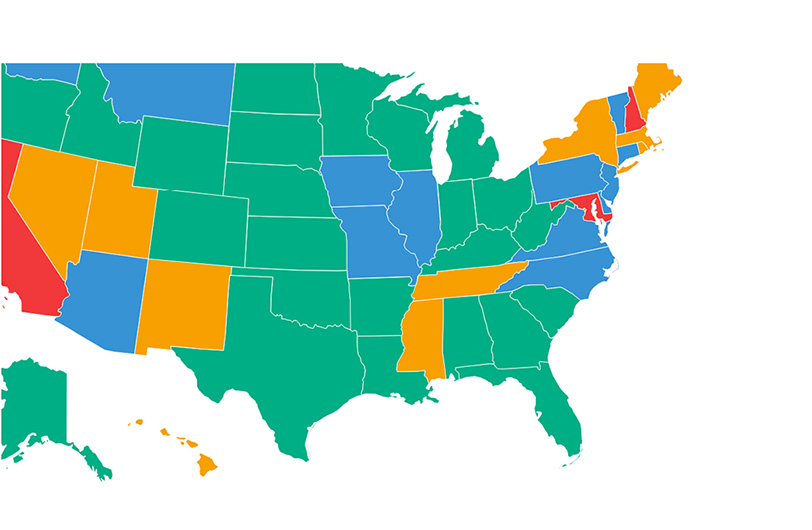






Montana’s 2024 vital statistics report, which contains the state’s abortion data, was published by the Montana Department of Public Health Services (MDPH) in March 2026. The report shows that reported Montana abortions decreased from 2023 to 2024.
The data published by the state does not include the total number of abortions obtained by Montana residents out of state or the number of self-managed abortions on women outside of the healthcare system. It is also unlikely that the report contains the total number of mail-order abortion drugs obtained by Montana residents prescribed by licensed providers in Montana or other states. In a separate section, CLI will describe data provided by the Guttmacher Institute’s Monthly Abortion Provision Study that details the number of abortions occurring in the state in 2024 as estimated by Guttmacher’s sample survey and mathematical models. Guttmacher’s abortion estimates include the number of abortions obtained at brick-and-mortar facilities and those provided via telehealth and virtual providers in the United States.
Montana’s statute code defines abortion as “the use or prescription of any instrument, medicine, drug, or other substance or device to intentionally terminate the pregnancy of a woman known to be pregnant, with an intention other than to increase the probability of a live birth, to preserve the life or health of the child after live birth, or to remove a dead fetus” (§50-20-104).
In Montana, abortion is widely available throughout pregnancy because of the state’s ineffective gestational limit at viability. While the language of the law limits abortion after viability, the law contains a broad health (life and health of the mother) exception that doesn’t differentiate between physical and mental health, which, in turn, allows abortion throughout pregnancy for nearly any reason. This law was a result of a November 2024 vote in which Montanans voted yes on an amendment to enshrine the right to an abortion into the state’s constitution, and the state’s previous viability law was rendered ineffective because the broad health exceptions mentioned above were included in the state’s existing viability law.
Statistics and Changes in Montana Abortions, 2023-2024
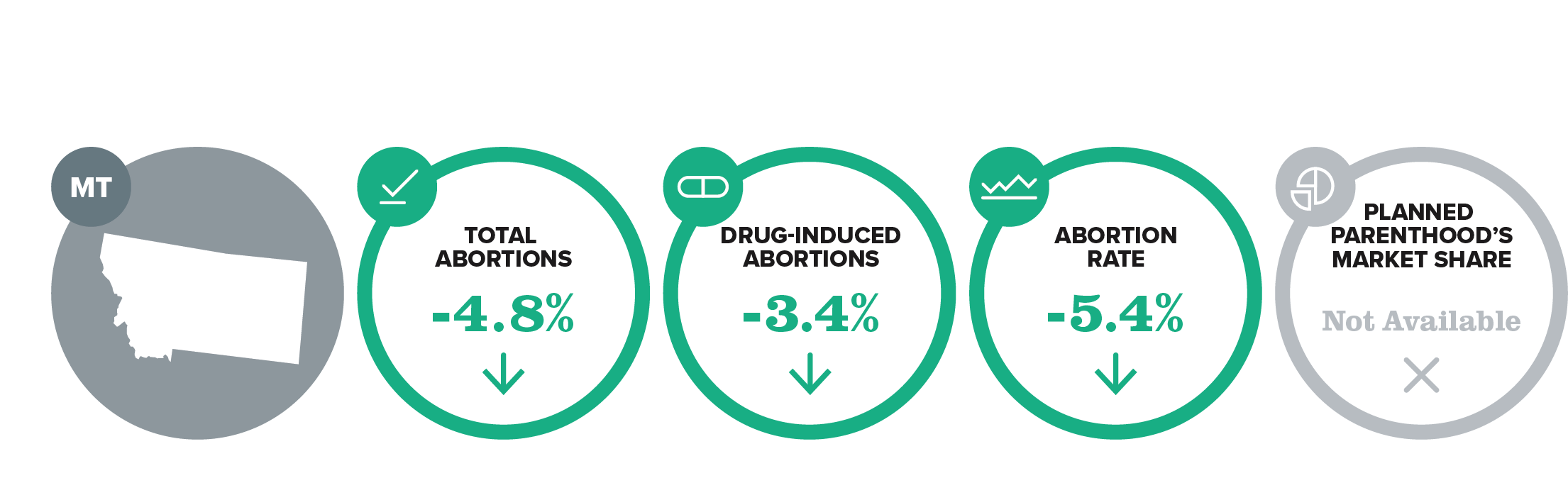
The report does not include information on Planned Parenthood’s Montana abortion market share.
Abortion Totals and Trends
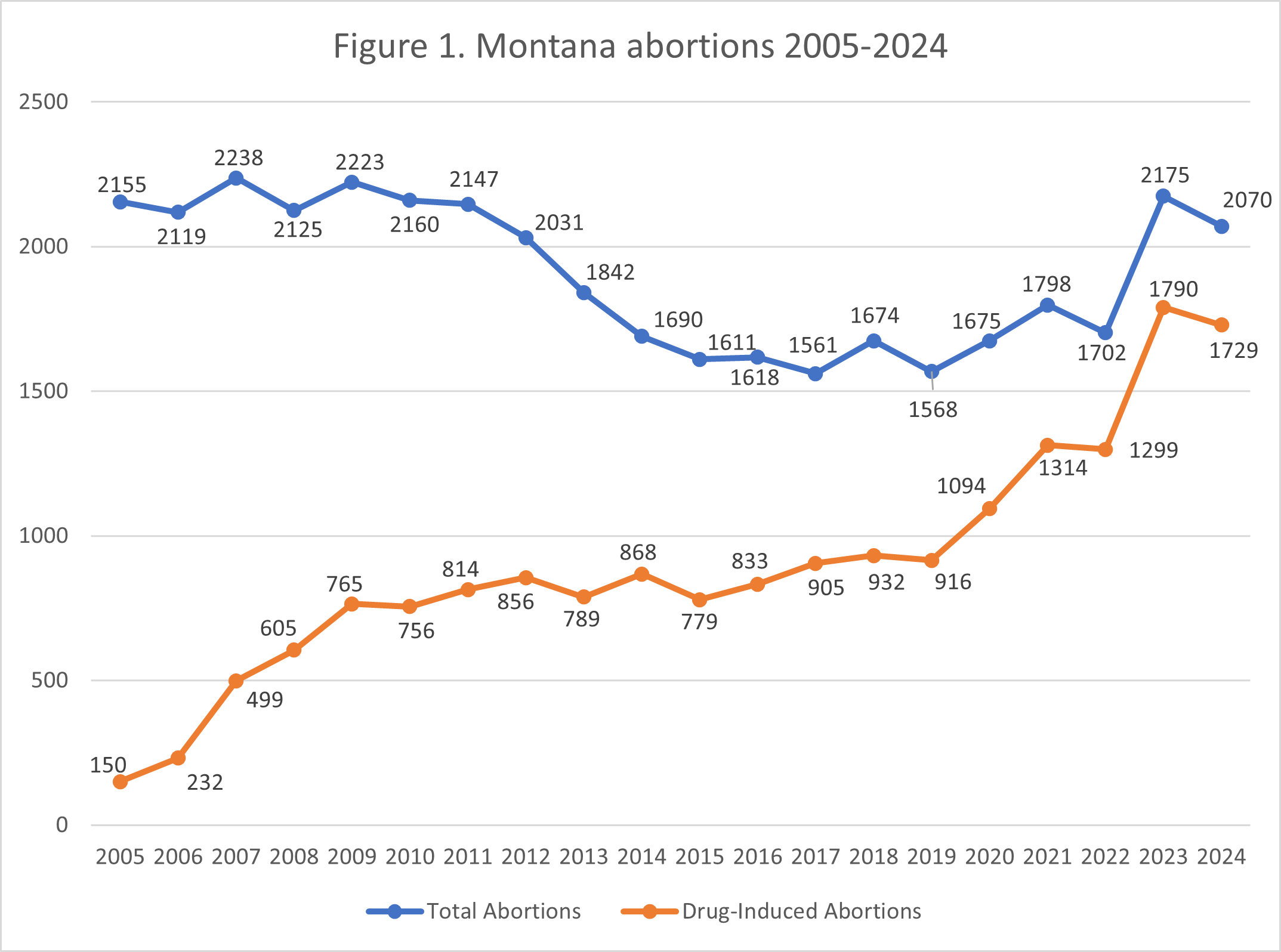
In 2024, there were 2,070 abortions in Montana, a decrease of 5% from the previous year. Drug-induced abortions decreased by 3% from 2023 and constituted 84% of the 2024 Montana total (Fig. 1). CLI estimates that Montana’s abortion rate was 9.7 abortions per 1,000 women ages 15 to 44, a decrease of 6% from 2023 (Fig. 2).1 As of June 2026, 30 states have released 2024 abortion statistics, and 13 states reported that abortions had decreased.
State Report Summary
Ninety percent of Montana abortions reported in 2024 were performed on state residents. The number of abortions on non-residents decreased by 20 abortions from 2023 to 2024, from 234 to 214 (10% of the 2024 total).
Over half of the abortions were obtained by women in their twenties, with 28% obtained by women ages 20 to 24 and 24% by women ages 25 to 29. Thirty-one percent of the abortions were performed on women ages 30 to 39. Three percent of Montana abortions were performed on women aged 40 and above, while 14% were performed on girls aged 19 and younger. A majority of Montana abortions were obtained by white women (82%), while 13% were obtained by American Indian/Alaska Native women. The woman’s race was unknown for 5% of the abortions occurring in Montana.
Over half (54%) of the abortions reported in Montana were performed on women who hadn’t previously had a live birth, 20% on women who had one previous live birth, and 26% on women with two or more previous live births. Sixty-seven percent of abortions were performed on women with no prior abortions, while 23% were performed on women with one prior abortion and 10% on women with more than one.
Eighty-four percent of Montana abortions were drug-induced, and 16% were surgical. Eighty-three percent of Montana abortions occurred at eight weeks of gestation or earlier. Twelve percent were performed between nine and 13 weeks, and 2% were performed from 14 to 15 weeks. One percent were performed between 16 and 17 weeks of gestation, and 24 abortions (1%) occurred between 18 and 20 weeks. Six abortions were performed after 21 weeks and 13 were performed at unknown gestational ages. The number of abortions performed before 18 weeks decreased from 2023 to 2024, while the number of abortions performed at 18 weeks or later increased by 10 abortions (from 20 in 2023 to 30 in 2024).
Breakdown of Abortion Providers in Montana2
| # of brick-and-mortar locations | 6 |
| # of independent centers | 2 |
| # of Planned Parenthood centers | 4 |
| # of hospitals/doctors’ offices that perform abortions | 0 |
| # of abortion drug providers | 6 |
| # of abortion drug-only providers | 3 |
| # of surgical and abortion drug providers | 3 |
| Latest gestational age that a center performs surgical abortion | Through 21 weeks |
These abortion provider totals are current as of March 5, 2026. This does not reflect the breakdown of providers available in Montana during the period that Montana’s vital statistics report covers (2024).
Guttmacher Data
In 2024, Guttmacher estimated that 2,510 abortions occurred in Montana, while the state reported 2,070. Guttmacher also estimated that of the 2,510 abortions performed in the state, 240 were obtained by nonresidents who traveled to Montana to obtain an abortion, while the state reported 214. However, neither the state nor Guttmacher specified the states from which women traveled.3
As one can see, the discrepancy in abortions reported by the states and estimated by Guttmacher (a difference of 440 abortions) is not a result of a significant discrepancy in nonresident abortions performed in Montana. The discrepancy is a result of significantly different resident abortion totals reported by the state and those estimated by Guttmacher. To see this discrepancy in the occurrence of abortions as influenced by underreported resident abortions by the state, see below.

Additional context for the underreporting of resident abortions occurring in Montana by the state is provided by email correspondence with the MDPH and the Society of Family Planning (SFP). When CLI asked the state if it included telehealth abortions in its abortion totals, the MDPH responded with two different answers. One answer was that they did not include telehealth abortions in their abortion totals. The other answer given to CLI was that all telehealth abortions provided by abortionists located in Montana were included in the total, but that only one out-of-state provider voluntarily reported to MDPH and therefore was included in the total. Although MDPH claims to include some telehealth abortions in its abortion total, they do not differentiate between the modes of provision within their vital statistics report, so researchers cannot see the breakdown.
SFP estimated that of the 2,530 abortions estimated to have occurred in Montana in 2024, 1,700 were performed in brick-and-mortar facilities, and 830 were performed via telehealth and obtained via mail-order (360 by virtual-only organizations and 470 by hybrid brick-and-mortar facilities).4 The difference in total abortions as reported by the state and Guttmacher (440) and the difference as reported by the state and SFP (460) could be due to the underreporting of telehealth abortions by the state. Montana differs from other states in that its residents obtain more telehealth abortions via hybrid brick-and-mortar organizations than virtual-only organizations. Because the two brick-and-mortar abortion facilities in Montana offer hybrid telehealth abortion services, the most plausible explanation for the underreporting of abortions by the state is that the MDPH underreported abortions performed by virtual-only organizations located outside of the state obtained by Montana residents.
State Ranking
In 2024, CLI published a paper reevaluating abortion reporting across the country, with Montana ranked as tied for 27th place. To improve its reporting, Montana could state whether any babies survived abortion attempts. Montana could also incorporate additional abortion statistics into its vital statistics report, such as information on the facilities where abortions occur in the state – data which it collects but does not publish in its report. Montana should also publish a breakdown of abortions by mode of provision (in-person or telehealth). Lastly, Montana could report any complications that women experienced during and after abortions.
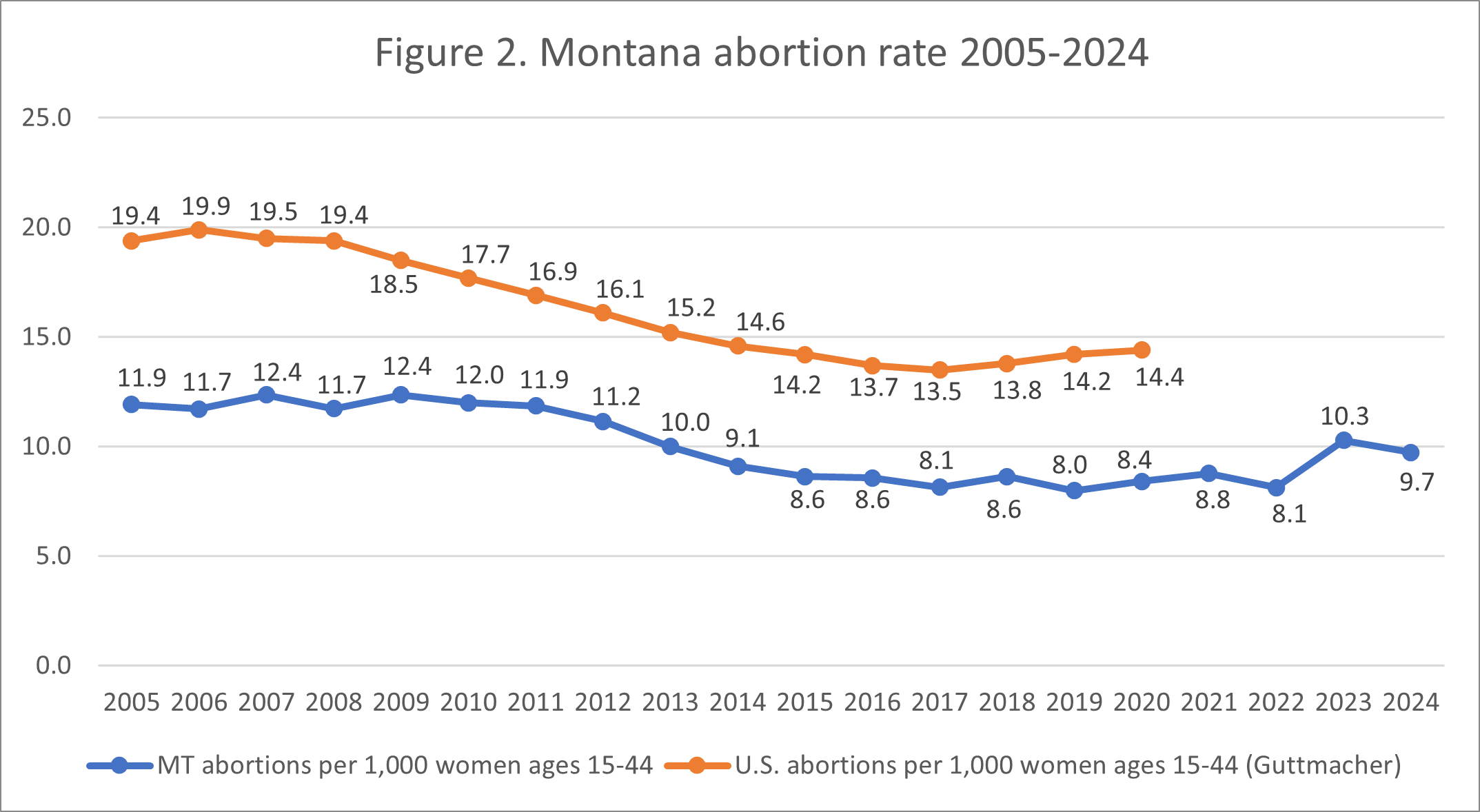
- National rates were calculated by Guttmacher Institute. Montana rates were calculated by CLI using the following formula: (total number of abortions performed in Montana ÷ number of resident women ages 15-44 [based on most recent population estimates]) x 1,000. Rates may differ slightly from previous CLI articles due to revised population estimates. Population estimates were obtained using the CDC WONDER database. Estimates for 2005-2009 are intercensal estimates of the July 1 resident population. Estimates for 2010-2019 are Vintage 2020 postcensal estimates of the July 1 resident population. Estimates for 2020-2024 are Vintage 2024 postcensal estimates of the July 1 resident population. Estimates were produced by the U.S. Census Bureau and the National Center for Health Statistics.
- Provider totals do not include hospitals or physician offices not listed in databases that compile abortion provider locations in different states, but do include Planned Parenthood locations, independent abortion centers, and hospitals/doctors’ offices included in databases like Abortion Finder and Ineedana. This information is up to date as of June 1, 2026.
- The Guttmacher Institute notes that their monthly abortion totals by state are estimates and that each state’s estimate is within a range of uncertainty. Guttmacher’s travel and residence data can be found in the CSV folder here (State_Abortion_Travel_2024.csv). This information is updated as of June 1, 2026.
- #WeCount’s data can be found here by downloading the “Report data tables [.xlsx]” document. The #WeCount report specifies that the numbers included in their tables for abortions performed under shield laws only represent the number of women to whom abortion drugs were sent, not the number of drug-induced abortions that resulted from the mailed drugs. However, because #WeCount’s data is the only source of data that delineates the number of abortions by mode of provision (in-person, telehealth/mail order, and/or abortion drugs obtained under shield laws), their data is the best available. This information is updated as of June 1, 2026.
Click here to view reporting from:20232022202120202019201820172016