












Justice Breyer is Wrong: Modern Advances in Ultrasound and Fetal Surgery Anything But “Slim”

Breyer, Sotomayor, and Kagan Ignore 50 Years of Science
Washington, D.C. – Justices Breyer, Sotomayor, and Kagan incorrectly described modern developments in our scientific understanding of unborn babies as “slim” in their dissent to the Supreme Court’s decision to reverse Roe v. Wade. In reality, science and medicine have made tremendous advancements since Roe was first decided in 1973, including major advancements in ultrasound, fetal diagnosis, and the ability to treat babies in utero prior to birth.
Dr. Tara Sander Lee, a Harvard-trained scientist who serves as senior fellow and director of life sciences at Charlotte Lozier Institute (CLI), said:
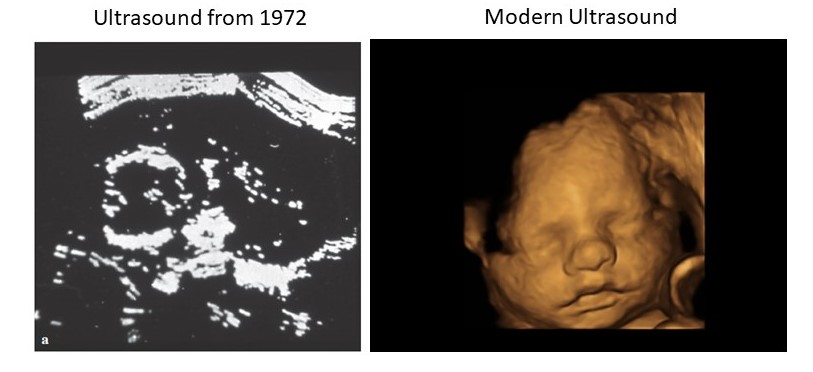
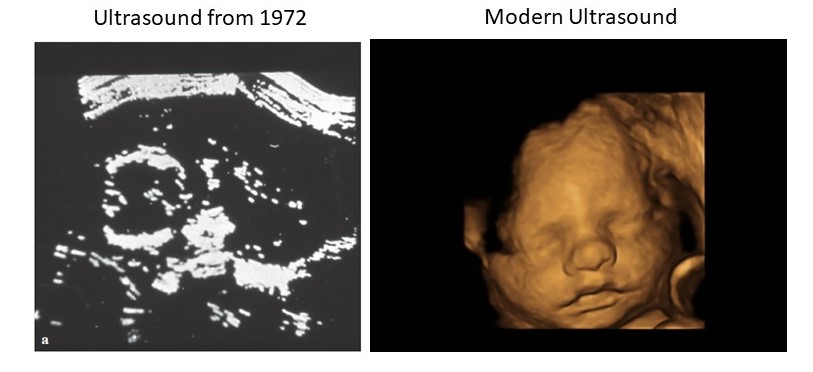
“Justices Breyer, Sotomayor, and Kagan appear stuck back in 1973, ten years before the launch of the modern internet, when ultrasound technology displayed a baby using grainy, black and white dots. It was difficult to identify major body parts, much less fetal behavior. Now, 3D and 4D ultrasound enables us to see an unborn baby cry after receiving an injection, smile, yawn, hiccup, suck their thumb, and even determine if the baby will be right-handed or left-handed. In what world are those advancements considered ‘slim?’”
Click here for 4D ultrasound video of a baby (third trimester) reacting to an injection of anesthetic prior to surgery in utero.
Dr. Katrina Furth, Ph.D., a CLI associate scholar who earned her doctorate in neuroscience at Boston University, has researched scientific advancements in our understanding of the humanity of the unborn, including:
- An unborn baby responds to both sound and taste by 14 weeks after conception.
- Brain connections that form in the second trimester last into adulthood.
- Researchers have recorded increases in circulating stress hormones after painful in utero procedures by 16 weeks after conception.
- If a twin, the unborn baby moves more gently when reaching toward her twin’s face.
- An unborn baby makes more accurate movements when using his or her dominant hand.
Since 1973, doctors have also developed life-saving surgeries for unborn babies, performing in utero procedures as early as 15 weeks’ gestation. For example, surgeries for correcting spina bifida pre-birth were so successful that clinical trials were stopped so that all children could receive the life-saving surgery.
In response to today’s dissent, Dr. Furth said:
“Modern developments in our understanding of the humanity of the unborn are anything but ‘slim.’ If you follow the science, it’s clear that unborn children at 15 weeks’ gestation are already amazingly complex human beings. In prenatal surgery, the fetus is anesthetized separately from the mom because doctors realize there are two patients. Ultrasound shows that unborn babies show preferences independent from their mothers and have goal-directed behaviors. To minimize or ignore these incredible advancements is to deny the clear evidence of science.”
Charlotte Lozier Institute was launched in 2011 as the education and research arm of Susan B. Anthony Pro-Life America. CLI is a hub for research and public policy analysis on some of the most pressing issues facing the United States and nations around the world. The Institute is named for a feminist physician known for her commitment to the sanctity of human life and equal career and educational opportunities for women.
###