




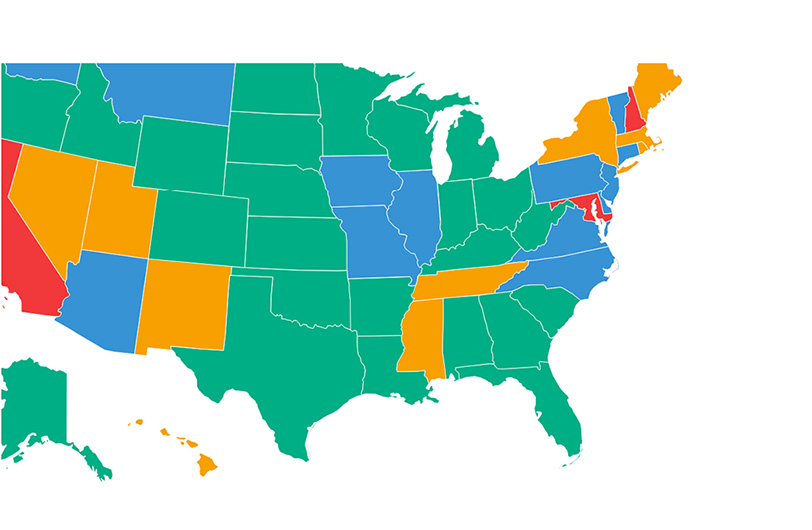




Pennsylvania Latest State to Offer Positive Information on Down Syndrome

The month of July marked a step forward for people with Down syndrome as Pennsylvania Governor Tom Corbett signed into law the Down Syndrome Prenatal Education Act, also known as Chloe’s Law, which will make sure parents are given the information and support they need to understand their child’s diagnosis.
The new legislation requires health care providers to inform pregnant women who receive a prenatal diagnosis of Trisomy 21, or Down syndrome, that they can access full information regarding the disorder and support information through the Pennsylvania Department of Health.
Resources made available to families include information regarding physical, developmental, educational, and physio-social outcomes as well as contacts for resource centers and support services.
Down syndrome is a genetic disorder characterized by an extra copy of chromosome 21 and is the most common genetic intellectual disability, occurring in approximately one in every 691 live births. The syndrome is typically associated with physical growth delays, characteristic facial features, and mild to moderate intellectual disability.
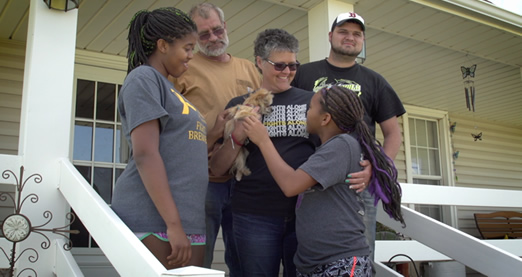
Much of the credit for pushing this legislation forward goes to families directly affected by Down syndrome and in particular the Kondrich family of Upper St. Clair, Pennsylvania. The Kondrich family became tireless advocates for improved access to information and resources following the birth of their daughter Chloe who has the condition and for whom the law is named.
“I don’t want any expectant mother to feel that pain or confusion when they get a prenatal diagnosis. I want this law to give women hope,” Mrs. Kondrich stated. “Chloe was a blessing.”
Dr. Kishore Vellody, the medical director of the Down Syndrome Center at Children’s Hospital of Pittsburgh, commented on the necessity of the new law – which will outline doctors’ responsibilities regarding delivering news of prenatal diagnosis as well as properly educating families about the nature of the syndrome and about the resources available to them.
“Our goal in medicine is to make sure people receive balance and accurate information when they make decisions about health care,” Dr. Vellody stated. “That’s why we support endeavors to help expectant parents.”
The Charlotte Lozier Institute recently released a paper by Mark Bradford, president of the Jerome Lejeune Institute, which examined the societal response to individuals diagnosed with Down syndrome and made policy recommendations to improve their lives, including providing accurate information to parents when they are given a diagnosis.
“Those living with Down syndrome have mild to moderate intellectual disability,” Bradford explained. “It may soon be possible to ensure employment and independence for many. It many also soon be possible to restore neurological development before birth, radically changing even the best story that can now be given to women who receive an unexpected prenatal diagnosis of Down syndrome.”
The Lozier Institute paper found that while challenges remain in terms of changing society’s understanding of Down syndrome, strides continue to be made to improve the lives of those living with the condition. Those living with Down syndrome are continually growing in their ability to participate in society and live independently.
Laws such as Pennsylvania’s inform families – who have been dealt some difficult news – that Down syndrome is far from the worst possible news. These laws provide families hope in what can be a dark and lonely moment. It lets them know that despite this condition their child can live a full, productive, and happy life. 99% of individuals diagnosed with Down syndrome report being happy with their lives and 97% report liking who they are. What’s more, this happiness seems to be contagious and spreads to their family and community. 99% of parents with a child who has Down syndrome said they love their child while 97% of brothers and sisters (aged 9-11) report loving their Down syndrome sibling.
Sadly, the majority of babies diagnosed with Down syndrome are aborted (in the U.S. as many as 90% of pregnancies where the baby is prenatally diagnosed with Down syndrome are terminated). The implementation of legislation such as Chloe’s Law will, one hopes, spread across the United States – empowering parents who feel they have few options and preserving the lives of some of the most joyful and inspiring individuals our world has to offer.
Nora Sullivan is a research assistant at the Charlotte Lozier Institute.