











A History of Pregnancy Loss is a Risk Factor for Severe Maternal Morbidity in a First Live Birth: A Retrospective Cohort Study








Additionally co-authored with Christopher Craver
Abstract
Purpose
Severe maternal morbidity (SMM) encompasses life-threatening complications during pregnancy or delivery. Previous studies suggest that a history of pregnancy loss—either spontaneous or induced—may contribute to increased obstetric risk in subsequent delivery, but most analyses have relied on limited clinical samples or registry populations outside the US. This study was designed to examine the associations between prior pregnancy loss and the risk of SMM at the time of a first subsequent live birth.
Methods
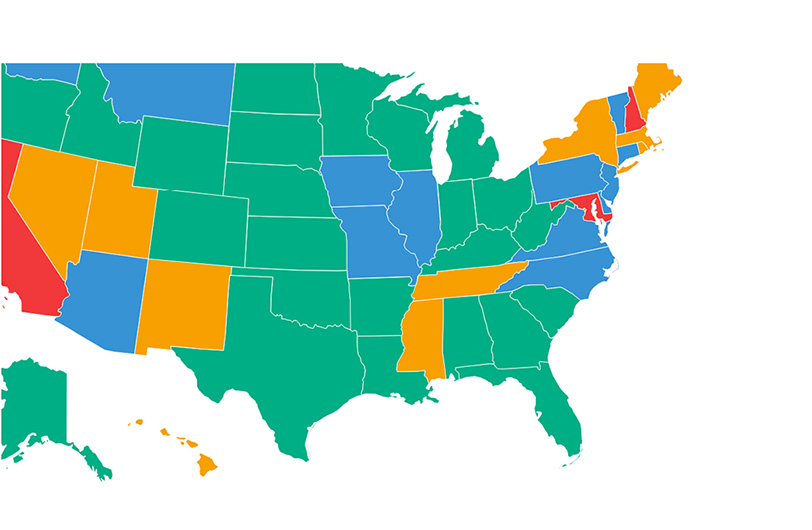
Medicaid data from 1999 through 2021 was examined for the seventeen states that paid for most induced abortion claims. The cohort included delivering women who had no prior recorded pregnancy or exactly one prior pregnancy loss. SMM was defined using the CDC 21-indicator ICD-10 criteria. Crude rates per 100,000 births and odds ratios (ORs) and fitted age-adjusted logistic models were calculated relative to the types of prior pregnancy loss.
Results
Of 1,774,910 women with a first live birth after 2015, the available records identified that 9.2% had one prior spontaneous pregnancy loss and 2.0% had one prior induced abortion before their first live birth. SMM occurred at 1,347.7 per 100,000 first live births with no prior recorded pregnancy and 2,095.0 after one prior loss (crude OR=1.57; 95% CI, 1.51– 1.62). For no prior pregnancy versus one prior loss, SMM rates were 817.3 versus 1,281.8 per 100,000 vaginal deliveries and 2,617.5 versus 3,801.4 per 100,000 cesarean deliveries.
Conclusion
Prior pregnancy loss is associated with modest but consistent elevation in severe maternal morbidity during a subsequent delivery. The association may reflect shared underlying maternal risk, effects related to prior loss, or both. Reproductive history may warrant further evaluation for risk stratification. Future studies are needed to validate and deepen these findings and to examine effects associated with multiple prior pregnancy losses.
Read Complete Article